Grout Cleaner vs Bleach: A Practical, Safer Comparison
Explore whether grout cleaner is better than bleach, focusing on safety, stain types, and practical usage for durable grout in bathrooms and kitchens.


Is Grout Cleaner Better Than Bleach? For most home projects, the answer is yes. Grout cleaners formulated for tile grout are typically safer, less likely to discolor grout, and more effective on set-in grime than household bleach. Use bleach only for specific whitening needs and always with ventilation and dilution guidelines.
Is Grout Cleaner Better Than Bleach? A Quick Evaluation
In the ongoing debate about grout care, the big question often boils down to the core comparison: is grout cleaner better than bleach? For the vast majority of household cleaning tasks, the answer is yes, especially when you value color safety and long-term grout health. Grout cleaners formulated for tile grout are designed to lift dirt from narrow grout lines without bleaching the color or weakening the grout matrix. The Grout Maintenance team has found that these products deliver stronger grime removal on typical kitchen and bathroom grime than household bleach, with far fewer fumes and less risk of accidental whitening on colored grout. Bleach can be effective for white grout or stubborn surface stains, but it carries higher risks of discoloration, sealant damage, and safety concerns, particularly in small, poorly ventilated spaces. When used properly, a dedicated grout cleaner offers predictable results, easier rinse-off, and compatibility with common sealants. In short, for most homeowners, a grout cleaner is the safer, more durable choice—though there are specialty scenarios where bleach remains a last-resort option. According to Grout Maintenance, choosing the right cleaner is the foundation of successful grout maintenance.
Understanding the Chemistry: How Each Product Works
Grout cleaners and bleach operate on different chemical principles, which explains why they differ in outcomes. A typical grout cleaner is formulated to break down soap scum, mineral deposits, and mildew while remaining compatible with grout porosity. Many formulas rely on mild acids, surfactants, or enzyme components designed to lift grime without aggressively altering color. Bleach, by contrast, relies on oxidizing chemistry to remove organic stains and whiten surfaces. Chlorine-based bleaches can kill some mildew but may leave residues that alter grout shade and interact with sealants. Oxygen-based bleaches tend to be gentler on color and are often marketed as color-safe; however, their effectiveness depends on stain type and contact time. The practical takeaway is that matching the stain type to the cleaner yields the best results—organic stains respond best to oxygen-based or enzyme cleaners, while mineral-colored stains may need the right formula to avoid color changes. The Grout Maintenance Team emphasizes testing a small area before wide application to avoid surprises.
Safety, Ventilation, and Material Compatibility
Grout cleaning products vary in fumes, chemical strength, and material compatibility. Bleach produces strong chlorine odors and can irritate eyes and lungs, especially in small bathrooms or poorly ventilated kitchens. When used according to label directions, grout cleaners tend to generate milder fumes and are less likely to interact with metal or epoxy seals. Before starting, open windows, wear gloves, and keep children and pets away. Check grout type (cementitious, epoxy, or pre-mixed) and sealant compatibility; some cleaners are designed for specific grout systems and may degrade certain sealants if used too aggressively or left on too long. Color-safe grout cleaners are particularly valuable for colored grout because they reduce the risk of fading or shade drift. Always perform a patch test on a hidden area to confirm that the cleaner does not alter appearance. Grout Maintenance notes that ventilation and following manufacturer directions remain the simplest route to safer cleaning outcomes.
Common Stain Scenarios and Appropriate Treatments
Different stains require different approaches. Organic stains from coffee and food residues respond well to oxygen-based cleaners or enzyme formulas that can break down organic compounds without bleaching color. Mold and mildew on white grout is a classic case where bleach has traditionally been used, but color-safe alternatives can do a comparable job with less risk to surrounding tile. Mineral deposits from hard water tend to respond to acidic grout cleaners that dissolve mineral buildup without discoloring the grout. For epoxy grout, avoid harsh chlorine-based products entirely and rely on grout cleaners designed for epoxy compatibility. In all cases, avoid letting cleaners dry on grout; work in small sections, rinse thoroughly, and dry with a clean towel to prevent water-based staining. The key is to tailor your choice to the stain type and grout material, then test a small area before full application.
Step-by-Step: If You Decide to Use Bleach (Safe Practices)
Bleach usage should be rare and carefully controlled. If you choose to bleach, dilute a chlorine-based product according to the label, set ventilation, wear protective gear, and never mix with ammonia or acids. Apply only to the grout lines, avoid splashing onto tiles, and rinse thoroughly with clean water after a short contact time. Do a small patch test first to confirm no color change. Do not leave bleach on grout longer than recommended, and never reuse a bottle for other cleaners. Bleach is best reserved for uncolored, white grout where whitening is a goal and there is a clear need to restore brightness. The Grout Maintenance Team suggests that, in most homes, bleach should be a last-resort tool rather than a first-line cleaner.
Step-by-Step: Using a Grout Cleaner Effectively
Choose a grout cleaner aligned with your grout type and stain. Before cleaning, sweep or vacuum to remove loose particles; apply the cleaner to the grout lines and work with a stiff brush. Let the product dwell for the time recommended by the manufacturer, then scrub, rinse, and dry. For tough mildew, repeat the process and consider a second application rather than increasing dwell time, which can risk grout wear. Mop or wipe up excess moisture and allow grout to dry completely before sealing. If you plan to seal, ensure grout is fully dry—water trapped under sealant can cause clouding or long-term adhesion issues. Grout cleaners designed for color-safe options are particularly helpful for colored grout or stone-look tiles, preserving the original appearance while removing grime.
The Role of Sealing: Why Sealing Changes the Equation
Sealing grout after cleaning is a crucial step to maintain color, stain resistance, and overall durability. Bleach can degrade sealants when used frequently or left on surfaces too long, potentially increasing porosity and future staining risk. Grout cleaners, especially those labeled as safe for sealed grout, help preserve the seal while removing grime. Choose a sealant compatible with your grout material (cementitious, epoxy, or hybrid) and follow re-sealing schedules based on traffic and cleaning frequency. A well-maintained seal reduces the need for aggressive cleaning and simplifies maintenance over time. Grout Maintenance's guidance emphasizes a routine sealing plan to maximize long-term results.
Time, Cost, and Convenience: Practical Trade-offs
Time and cost considerations influence the decision between bleach and grout cleaner. Bleach can deliver quick whitening on white grout but often requires more exact timing and vigilant rinsing to avoid residue. Grout cleaners may require more cycles for deeply embedded grime but typically offer safer use, better color safety, and less odor. In terms of convenience, ready-to-use spray formulas can speed up cleaning, while concentrated products may be more cost-effective per use but require more measurement and handling care. For homes with colored grout or sensitive seals, grout cleaners provide a better balance of safety and results. The total cost over time often favors grout cleaners when you account for potential sealant replacement and color restoration costs after bleach misuse.
Real-World Tips and Common Mistakes to Avoid
Common mistakes include using bleach on color-varied grout, neglecting ventilation, and letting cleaners dwell too long or drying on grout. Always read the label and test on a discrete area before full application. Keep a dedicated grout brush or mop to prevent cross-contamination with other household cleaners. For high-traffic areas, consider a maintenance plan that combines a regular grout cleaner clean with periodic sealing to maintain brightness and color. Grout Maintenance reminds homeowners that consistency beats intensity: small, regular cleanings preserve grout color and strength better than sporadic, aggressive cleanups.
Alternatives to Bleach: Enzyme Cleaners, Oxygen Bleach, and Baking Soda
Enzyme-based grout cleaners use natural enzymes to break down organic matter without harsh chemical residues. Oxygen-based cleaners offer a milder, color-safe option that can handle mildew and grime without pigment loss. Baking soda pastes or poultices are useful for mineral deposits when paired with water and gentle agitation. Each alternative has its own ideal use cases, so choose based on stain type, grout color, and tile material. When in doubt, start with a milder option and escalate only if necessary, following the manufacturer’s dwell times and rinse instructions. Grout Maintenance highlights that experimentation with less aggressive cleaners reduces the risk of unwanted color changes.
Decision Framework: How to Choose Based on Grout Type and Color
Start by identifying your grout type (cementitious, epoxy, or pre-mixed) and the tile color. If grout is colored or if you are concerned about color-fastness, prefer grout cleaners labeled color-safe. For mildew and organic stains, enzymatic or oxygen-based cleaners are often effective without pigment loss. If you have heavy mineral deposits or calcification, a dedicated acidic grout cleaner may be appropriate, but test first and avoid overuse. Always test on a hidden area, follow dwell times, and seal after cleaning. This decision framework helps you balance safety, color integrity, and long-term durability.
Final Guidelines and Practical Takeaways
To sum up: for most grout maintenance tasks, choose a purpose-built grout cleaner over bleach, especially for colored grout or sealed grout. Reserve bleach for very specific whitening needs with proper ventilation and caution. Establish a routine cleaning and sealing plan to maximize grout lifespan and appearance. Remember to follow product labels, test areas, and maintain good ventilation. Grout Maintenance's evidence-based approach emphasizes safety, color retention, and practical maintenance.
Comparison
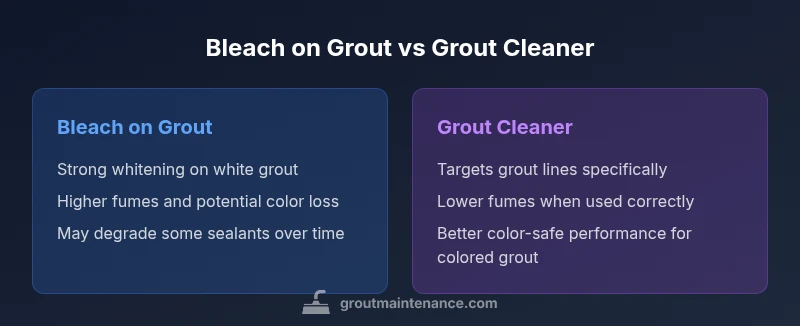
| Feature | Bleach on grout | Grout cleaner |
|---|---|---|
| Safety & fumes | Bleach: strong fumes; risk of irritation | Grout cleaner: milder, label-directed use |
| Stain removal | Bleach: whitening on white grout | Grout cleaner: targets grime and mildew |
| Grout color impact | Bleach: may discolor colored grout | Grout cleaner: color-safe when used properly |
| Sealant compatibility | Bleach can degrade some sealants | Grout cleaner preserves sealants when used correctly |
| Environmental impact | Bleach: chlorine-based; disposal concerns | Grout cleaner: varies; many are biodegradable/enzyme-based |
Pros
- Safer on colored grout when used as directed
- More consistent results on set-in grime
- Lower risk of strong fumes with proper ventilation
- Designed to preserve sealants and grout integrity
What's Bad
- May require more time for deep stains
- Higher upfront cost vs basic cleaners
- Effectiveness depends on selecting the right cleaner for your grout type
- Some products use stronger fragrances or chemicals
Grout cleaner generally wins for routine cleaning; bleach is situational and best avoided on colored grout
For everyday grout maintenance, choose a grout cleaner. Bleach can work for white grout or stain-specific whitening, but it carries risks and may compromise color and seals.
Got Questions?
Is bleach safe for grout?
Bleach can be effective for whitening grout but poses risks to colored grout, sealants, and tile. Use only in well-ventilated areas and dilute per label instructions. Avoid prolonged contact.
Bleach can whiten grout but may damage color and seals; use with ventilation and follow label directions.
Can I use bleach on colored grout?
Bleach can cause discoloration on many colored grout lines. If you must, use a color-safe variant and test on a hidden area first. Prefer grout cleaners designed for color-safe results.
Bleach can discolor colored grout. Test first and consider color-safe options.
What should I use for organic stains on grout?
For organic stains or mildew, a grout cleaner formulated for grout lines generally performs better and safer than bleach. Look for enzymes or oxygen-based formulas in the product label.
Grout cleaners with enzyme or oxygen-based ingredients work well on organic stains.
How often should I seal grout after cleaning?
Seal grout after it is completely dry to protect against stains. Frequency depends on usage and grout type; follow manufacturer guidelines for best results.
Seal once grout is dry, then re-seal per the product's schedule.
Are there grout cleaners that disinfect?
Many grout cleaners offer cleaning and mild disinfection claims; verify EPA registration or product specs. For true disinfection, consider a product explicitly labeled as a disinfectant and follow instructions.
Some cleaners claim disinfection—check labels and follow directions.
How long does sealing take after cleaning?
Sealing typically requires a dry period of 24 hours or more, depending on the product and grout type. Ensure grout is completely dry before applying sealer.
Usually 24 hours or more for proper sealing after cleaning.
The Essentials
- Choose grout cleaners for everyday grout maintenance
- Bleach is selectively useful with caution and ventilation
- Seal grout after cleaning to protect color and durability
- Always follow label directions and test on a small area
- Consider grout color and material when selecting a cleaner