Steamer on Grout: A Homeowner’s Safe Cleaning Guide
Learn when and how to use a steamer on grout safely, with prep, settings, techniques, and aftercare. Practical tips for homeowners and DIYers from Grout Maintenance to protect tile grout and maintain a clean appearance.


Using a steamer on grout can lift surface dirt when grout is sealed and heat is kept low. Always test first, use a low setting, and avoid steam on cracked grout or near caulk. For best results, pair steam with a gentle brush.
Understanding the Risks and Benefits of Steamer on Grout
Steam cleaning can be an effective way to loosen dirt, mildew, and soap scum from grout lines without harsh scrubbing. For many homes, a steamer on grout reduces grime and can refresh tile aesthetics. However, the results depend on grout type, seal status, and how you use the device. Cementitious grout that is well-sealed tends to respond better to steam than soft, unsealed grout. Epoxy grout is more resistant to heat but can still be damaged by excessive moisture. According to Grout Maintenance, the method is most successful when used as a supplementary step, not a primary cleaning method. In practice, steam should be applied in short passes, with the nozzle kept a small distance from the surface, and followed by immediate drying. If you notice limp caulk, loose tiles, or crumbling grout after steaming, stop and reassess. The goal is to lift surface soil without penetrating deeper or forcing moisture into the substrate. This approach aligns with Grout Maintenance’s long-running guidance on grout care, which emphasizes sealing, gentle technique, and post-cleaning sealing as part of a preventive strategy.
What you need before you steam: grout type, sealer, and prep
Before pulling out a steamer on grout, identify the grout type and its age. Porous cementitious grout benefits from good sealing; epoxy grout is tougher but still sensitive to heat and moisture. Gather supplies: a quality steam cleaner with a narrow tip, soft brushes, microfiber cloths, pH-neutral cleaner, and a grout sealer for aftercare. Protect adjacent surfaces with tape and towels. Test a small, inconspicuous area first and check for any changes in color or texture. If grout is cracked or crumbling, steaming can worsen damage; in those cases, repair or regrout may be more appropriate. Sealer choice matters: only seal grout after it has fully dried following a cleaning session.
Safety first: prep work, area protection, and test
Safety is essential when using heat and moisture near tile and grout. Ensure good ventilation, unplug nearby outlets during steaming sessions, and wear protective gloves and goggles. Clear the area of soak-prone items and place towels to catch any condensation. Use the steam cleaner on the lowest effective setting and avoid lingering over one spot, which can over-saturate porous grout. Always test on an inconspicuous corner first to observe any color changes or texture shifts. If any adverse reaction occurs, stop and reassess your method.
Safe steam techniques: settings, tools, and angles
Operate the steamer on a low to medium heat setting, depending on the grout type and manufacturer guidance. Use a narrow nozzle or brush attachment designed for grout lines and work in small sections. Hold the nozzle at a slight angle to avoid forcing moisture into the grout corners and caulk. Move in straight, overlapping passes to minimize water pooling. After each pass, wipe with a microfiber cloth to remove loosened soil and moisture. Always document the area you have cleaned in case follow-up maintenance is needed.
Common grout problems when steaming and how to handle them
Steaming can reveal or worsen certain grout issues. Cracking or crumbling grout should halt steam use in the affected area; consider repair or regrouting instead. Persistent stains or mold growth under cracked grout may require professional assessment. If you notice efflorescence (white salt deposits), gently wipe with a damp cloth and allow to dry before sealing. Avoid steam on pre-mixed cement boards or areas with damaged caulk, which can trap moisture and cause mold. If in doubt, perform a spot test and consult guidance from Grout Maintenance.
Alternatives and when steaming is not advisable
For very old or damaged grout, steam is often not the best option. Mechanical cleaning tools, enzymatic cleaners, or a dedicated grout brush can be effective without moisture exposure. In showers with natural stone or unsealed grout, steam can etch surfaces or lead to moisture intrusion. Consider a test-and-seal approach, or schedule professional regrouting if the grout lines show deep wear or cracking. Grout Maintenance encourages evaluating grout condition and choosing a method that preserves tile integrity.
Maintenance tips to keep grout clean after steaming
Drying thoroughly after steaming minimizes mold risk and helps grout stay sealed longer. Re-seal grout after it has fully cured from any cleaning cycle, typically 24 hours or more, following sealer manufacturer directions. Use a grout-specific sealer and apply with a clean foam brush, working in small sections for even coverage. Establish a routine cleaning plan that includes a pH-neutral cleaner and a soft brush to maintain grout brightness between sealings. Regular inspection helps catch early signs of wear so you can act before damage progresses.
Tools & Materials
- steam cleaner with narrow nozzle(Choose a model with a grout attachment; use the lowest effective setting.)
- microfiber cloths(Keep several on hand for quick wipe-downs after passes.)
- grout brush or small nylon brush(Use for stubborn spots and to agitate soil after steaming.)
- pH-neutral grout cleaner(Avoid acidic cleaners that can degrade grout over time.)
- gloves and safety goggles(Protect hands and eyes from heat and splashes.)
- tape and towels for protecting surrounding surfaces(Prevent moisture damage to adjacent fixtures.)
- grout sealer (after-drying)(Use after grout is fully dry to restore water resistance.)
- old towels or absorbent mats(Place under cleaning area to catch drips.)
Steps
Estimated time: 60-90 minutes
- 1
Inspect grout and prep area
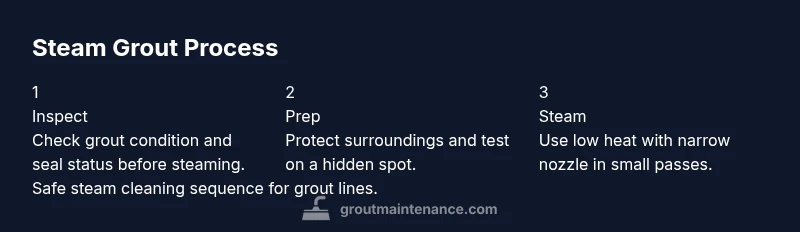
Walk the area and look for cracks, crumbling grout, or loose tiles. Clear the surface of debris and place towels to protect nearby fixtures. This step helps you decide if steaming is appropriate or if repairs are needed first.
Tip: Note any damaged sections and plan to address them before finishing the job. - 2
Protect surrounding surfaces
Apply tape to edges and lay towels to catch moisture. This reduces water intrusion and keeps cabinets, wood trim, and metal fixtures dry during steaming.
Tip: Use a corner guard or plastic sheet to shield delicate surfaces. - 3
Set up the steamer
Install the narrow grout nozzle and fill the reservoir with clean water. Select the lowest effective heat setting and test on a small, hidden patch of grout first.
Tip: If color or texture changes, stop and reassess the area. - 4
Steam grout in small passes
Work in 6–12 inch segments, held at a slight angle to avoid forcing moisture into joints. Move steadily and do not linger over one spot to prevent saturation.
Tip: Pause to wipe with a microfiber cloth after each segment. - 5
Agitate and remove loosened grime
After steaming, gently brush the grout with a nylon brush to lift loosened soil, then wipe away residue with a clean cloth. Repeat as needed for stubborn grime.
Tip: Always follow with a dry pass to prevent damp spots. - 6
Dry thoroughly
Allow the area to air-dry completely before applying sealer or normal use. Running a fan or dehumidifier speeds up the drying process and reduces mold risk.
Tip: Check grout texture—if it remains damp for hours, extend drying time. - 7
Seal if recommended
If guidelines permit, apply grout sealer after the grout is fully dry. Sealing helps resist future staining and moisture intrusion.
Tip: Follow the sealer's directions for coverage and cure time. - 8
Clean up and inspect
Wipe down tools, store them properly, and do a quick walk-through to ensure all areas are dry and clean. Note any repairs that might be needed later.
Tip: Keep a small log of areas cleaned and any maintenance actions taken.
Got Questions?
Is steaming grout safe for epoxy grout?
Epoxy grout is more resistant to moisture than cementitious grout, but excessive heat or prolonged steaming can still cause issues. Always test first and limit steam exposure. When in doubt, consult the grout manufacturer’s guidelines.
Epoxy grout can handle steam better than cementitious grout, but use caution and test first.
Can I steam grout in shower enclosures?
Shower areas pose higher moisture risk. If the grout is well-sealed and you use a low heat setting with short passes, steaming can be acceptable in small sections. Avoid prolonged exposure near caulk and metal fixtures.
Steam can be used in small shower sections if grout is sealed and you keep heat low.
What settings should I use on a steam cleaner?
Start on the lowest effective setting and increase only if necessary. Use a narrow nozzle for grout lines and keep the head moving to prevent saturation.
Begin with the lowest setting and keep the nozzle moving.
How long should grout dry after steaming?
Allow several hours to dry completely, with good air circulation. If possible, wait 24 hours before sealing grout.
Let the grout dry thoroughly, ideally 24 hours before sealing.
What if steaming reveals deep damage?
If steaming reveals cracks or crumbling grout, repair or regrouting is usually required. Steam is not a substitute for structural grout repair.
Deep damage means you may need repair or regrouting.
Watch Video
The Essentials
- Test grout and area before steam cleaning.
- Use low heat and short passes to minimize moisture risk.
- Dry completely, then seal to protect grout.
- Avoid steam on damaged grout or sensitive materials.
- Consider alternatives for heavily damaged grout.