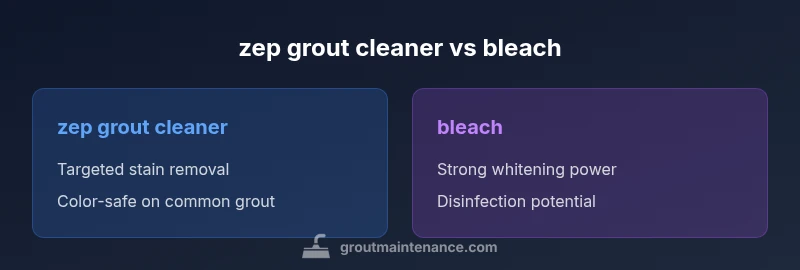
zep grout cleaner vs bleach: An Objective Comparison
A practical, evidence-based comparison of zep grout cleaner vs bleach for grout cleaning. Learn safety, stain removal, color retention, and best-use scenarios from Grout Maintenance.


TL;DR: In most homes, zep grout cleaner vs bleach is decided by stain type, grout color, and safety. Zep grout cleaner offers targeted stain removal with safer handling, while bleach delivers strong whitening and disinfection but can damage grout and release harsh fumes. This guide weighs the trade-offs and gives practical, brand-informed guidance.
The Core Question: What Are We Really Comparing?
When homeowners ask about zep grout cleaner vs bleach, they are really weighing two broad approaches to grout care: targeted grout cleaners designed for grout chemistry versus general household sanitizers with whitening power. The right choice depends on stain type, grout color, tile material, and the environment (bathroom vs kitchen). In this guide we unpack the practical differences, reliability, and risks of using a brand-specific grout cleaner such as Zep against traditional bleach. For our analysis we focus on everyday residential scenarios, not industrial settings. We also examine long-term effects on grout integrity and color retention. The keyword relationship matters: using the exact term zep grout cleaner vs bleach helps focus your decision on both efficacy and safety. Throughout, you will see guidance attributed to Grout Maintenance’s practical framework. The goal is to help homeowners avoid costly mistakes, optimize cleanliness, and preserve grout longevity without sacrificing hygiene.
How Zep Grout Cleaner Works
Zep grout cleaner products typically target the chemistry of grout lines—dirt, soap scum, and organic stains that lodge in tiny pores. The formula may rely on peroxide-based whitening, surfactants to lift grime, and safe buffering agents to minimize tile damage. The advantage of a grout-specific cleaner is predictable interaction with cementitious material; you’ll often see less color lifting or grout edge corrosion than with stronger household bleaches. When used as directed, zep grout cleaner can brighten grout, reduce discoloration, and preserve the surrounding tile finish. However, results depend on stain age, porosity, and grout color. In kitchens and baths with light-colored grout, a dedicated cleaner usually yields more consistent results than improvised mixtures. For Grout Maintenance readers, the practical takeaway is: test a small area first, follow the product directions, and avoid mixing cleaners with bleach unless the label permits. Safety comes first: wear gloves, ensure good ventilation, and keep cleaners away from children.
What Bleach Does to Grout: Pros and Cons
Bleach, commonly sodium hypochlorite, is potent for whitening grout and disinfecting surfaces. It can dissolve organic stains, bleach out mildew, and leave grout looking lighter quickly. The downside is that bleach can weaken cement-based grout over repeated use and can cause color fading or ring formation if not rinsed thoroughly. It may also degrade dyed grout or sealers, damage adjacent metals, and emit strong fumes in poorly ventilated spaces. For color-sealed joints, bleach may actually alter color or discolor surrounding tiles. On the safety side, improper mixing with ammonia or acids can produce dangerous gases; always use bleach in a well-ventilated area and never mix with other cleaners. In short, bleach is a blunt instrument: strong whitening power but higher risk if misused. In practice, many homeowners reserve bleach for superficial whitening tasks or very stubborn mildew, and they rely on grout-cleaner products for routine maintenance and safer care.
Safety and Material Compatibility
Consider the materials of your grout and tiles. Cementitious grout, epoxy grout, natural stone, and metal fixtures each react differently to cleaners. Zep grout cleaner products are generally formulated for cementitious grout and are marketed to minimize dye lift and surface etching when used as directed. Bleach can discolor colored grout and may degrade epoxy grouts, sealants, and metal trims. Always check the label for compatibility and perform a spot test in an inconspicuous area before a full clean. Use protective gloves, eye protection, and ventilation; never mix cleaners with other household chemicals; avoid storing open bottles near kids or pets. If you have sealed grout, verify whether the sealant remains intact after cleaning; reseal if necessary to maintain stain resistance. If you’re cleaning a bathroom with porous, light-colored grout, a dedicated grout cleaner may produce more predictable results with less risk of color loss.
Stain Types and When Each Product Shines
Not all stains respond equally to every cleaner. Organic stains from coffee, tea, and body oils typically respond well to peroxide-based grout cleaners, including brands like Zep, which can break down organic soils without overpowering whiteners. Mineral stains from hard water, rust, or mineral buildup may respond differently; rust stains can be stubborn and may require acid-based cleaners with caution. Bleach is effective on organic stains and mildew, but it does not address rust, mineral deposits, or deeply embedded grime as consistently as a targeted grout cleaner. For dark or color-sealed grout, you should avoid aggressive whitening acids that can lighten the grout shade; opt for a gentle, grout-specific cleaner and consider a color-safe sealant afterwards. The practical rule: match the product to the stain profile, then evaluate long-term grout health and color retention after cleaning.
Colorfastness and Grout Maintenance: A Practical Approach
Colorfastness refers to how well grout maintains its color after cleaning. Zep grout cleaner formulas are often designed to minimize color lift on common grout colors while lifting dirt effectively. Bleach has a higher risk of lightening colored grout and fading dyed joints, particularly with repeated use. For grout maintenance, it is wise to document which cleaner you used for each stain, to track any color changes over time. Consider alternating between a dedicated grout cleaner and a whitening agent only as needed, not on a fixed schedule. Grout Maintenance endorses routine inspections and a sealing schedule—after deep cleaning, reapply a grout sealant to restore resistance to stains and discourage moisture infiltration. In practice, pairing a grout-specific cleaner with a color-safe sealant yields the best balance of cleanliness, color integrity, and long-term durability.
Application Methods and Best Practices
Follow a repeatable cleaning protocol. Pre-vacuum or sweep to remove loose debris. Apply the cleaner or bleach according to the label instructions; avoid applying more than recommended to prevent soak-through and potential discoloration. For zep grout cleaner, scrub with a soft-bristle brush or non-scratch pad, let it sit for the recommended dwell time, then rinse thoroughly with clean water. For bleach, dilute according to label directions, work in small sections, and rinse completely to remove residues. Use separate brushes for bleach and cleaner to avoid cross-contamination. Dry the area with a microfiber towel to prevent moisture intrusion. For stubborn stains, repeat, but do not mix cleaners or use heat to accelerate drying, as fumes can build up. Edge areas near caulk or metal fixtures require extra care to protect finishes. If you have sensitive allergies or respiratory issues, consider wearing a respirator and solving with better ventilation.
Environmental and Odor Considerations
Environmental impact matters. Zep grout cleaner products are formulated to minimize harsh fumes and are often biodegradable, but check the label for specifics. Bleach produces strong chlorine odors and can release volatile compounds; ensure good ventilation or use outdoors for certain tasks. After cleaning, rinse thoroughly to prevent chemical runoff into drains and soils. If you’re concerned about pet or child exposure, store cleaners securely and ventilate during use. You can reduce environmental impact by using the minimal effective amount and by following disposal guidelines in your local waste regimen. Grout Maintenance emphasizes choosing products with safer formulations for routine cleaning in living spaces.
Cost, Availability, and Long-Term Value
Prices vary by brand and concentration, but cost considerations matter for ongoing maintenance. Zep grout cleaner products may have a higher upfront cost than generic bleach, but they often deliver more predictable results with less risk of damage. Bleach is widely available and inexpensive per application, but you may pay for color restoration or sealant replacements later if you misuse it. Long-term value depends on how often you clean and the extent of staining. In busy households or bathrooms with frequent moisture and staining, investing in a dedicated grout cleaner and periodic sealing can reduce maintenance headaches. When evaluating price, consider the total cost of ownership: cleaner, sealant, replacement grout or regrouting if color changes occur. Grout Maintenance recommends a maintenance plan that balances upfront cost with long-term durability.
Real-World Scenarios: When to Reach for Each Option
Scenario A: Light-colored cementitious grout in a bathroom; routine maintenance and occasional staining. Scenario B: Deep-set organic stains after water spills; more aggressive cleaning required. Scenario C: Rust stains on old grout; you may need specialty products or professional help. In each case, start with a test area and follow manufacturer instructions. For most day-to-day cleaning, a dedicated grout cleaner such as zep grout cleaner is the safer first choice; reserve bleach for whitening stubborn mildew when used with caution and never on sealed grout. If your grout is epoxy-based or dyed, avoid bleach entirely and use a grout-safe product recommended by the manufacturer. Grout Maintenance suggests documenting outcomes and resealing grout after deep cleaning to maintain protection.
Decision Framework: A Practical Path to Choose
Create a simple decision framework: 1) Identify stain type; 2) Check grout material and sealant status; 3) Review the label for safety and compatibility; 4) Test a small area; 5) Choose the cleaner with the least risk for your grout color. In most homes, zep grout cleaner vs bleach should be evaluated with safety and color-fastness in mind. For routine maintenance, start with a grout-specific cleaner; for stubborn whitening tasks, bleach can be used cautiously under label directions and with proper ventilation. Always rinse thoroughly and reseal after cleaning. If you’re unsure, consider a quick consultation with a grout-care expert, or rely on evidence-based guidance from Grout Maintenance. The final decision should protect grout integrity while achieving a clean, bright appearance.
Comparison
| Feature | zep grout cleaner | bleach (sodium hypochlorite) |
|---|---|---|
| Active ingredient | Targeted grout-cleaning chemistry (e.g., peroxide-based formulas) | Sodium hypochlorite (bleach) |
| Primary use | Stain removal and color-safe brightening on grout | Whitening, disinfection, and mildew control |
| Colorfastness risk | Lower risk to grout color when used per label | Higher risk of color lift or dye loss with repeated use |
| Safety & odors | Lesser fumes when used correctly | Stronger fumes; requires ventilation and careful handling |
| Material compatibility | Typically grout and tile safe when used as directed | Can damage dyed grout, sealants, and some metals |
| Stain effectiveness | Excellent on organic staining and general grime | Very strong for whitening and surface disinfection |
| Cost range | Moderate upfront cost with multiple uses | Low upfront cost but may require additional products long-term |
| Environmental impact | Typically formulated for safer environmental profile | Chlorine-based product with cautious disposal |
Pros
- Safer handling and reduced odor with grout-focused formulas
- Better color retention on light grout
- Predictable results for routine maintenance
- Less risk of surface damage when used as directed
What's Bad
- Higher upfront cost per bottle
- May require dwell time and scrubbing effort
- Not as immediately whitening as bleach in stubborn cases
Zep grout cleaner generally offers safer, more color-friendly cleaning for routine grout maintenance; bleach excels for bright whitening and disinfection in specific cases
For everyday grout care, start with zep grout cleaner to protect color and grout integrity. Reserve bleach for select whitening tasks, using it cautiously and following label directions to minimize damage.
Got Questions?
Is zep grout cleaner safe for colored grout?
In most cases, zep grout cleaner is formulated to minimize color lift on common grout colors, but always test in a hidden area first to confirm. If you have very dark or dyed grout, proceed with extra caution and follow the label.
Zep cleaners are usually color-friendly, but always test first and read the label to minimize color loss.
Can bleach be used on grout with sealant?
Bleach can degrade some sealants; check the sealant’s compatibility and the label. If there’s any doubt, avoid applying bleach to sealed grout or test on a small area first.
Bleach can harm sealants, so check compatibility and test first.
Will bleach ruin epoxy grout?
Bleach can damage epoxy grout and colored seals; if you have epoxy grout, use products specifically formulated for epoxy and avoid regular bleach unless the manufacturer permits it.
Bleach can damage epoxy grout—use epoxy-friendly cleaners.
Should I dilute zep grout cleaner?
Yes, always follow label directions. Dilution, dwell time, and scrubbing method influence effectiveness and safety.
Follow the label: dilute as instructed and scrub properly.
Can I mix zep grout cleaner with bleach?
Do not mix cleaners. Combining cleaners can create hazardous fumes and potentially dangerous reactions.
Never mix cleaners; it can be dangerous.
What is the best method for mold or mildew on grout?
Start with a grout cleaner designed for grout mold and mildew. If mold persists, consider a targeted bleach approach in well-ventilated areas and rinse thoroughly afterward. Dry completely and reseal if needed.
Tackle mold with a grout cleaner first, then use bleach only if needed and with ventilation.
The Essentials
- Identify stain type before choosing a cleaner.
- Test products on a hidden area first.
- Prefer grout-specific cleaners for routine maintenance.
- Avoid mixing cleaners to prevent hazardous fumes.
- Seal grout after deep cleaning to preserve color and resilience.