Zep grout cleaner vs hydrogen peroxide: a practical grout care comparison
A thorough, evidence-based comparison of Zep grout cleaner and hydrogen peroxide for grout cleaning. Learn how each performs on different stains, safety considerations, and practical tips from Grout Maintenance.


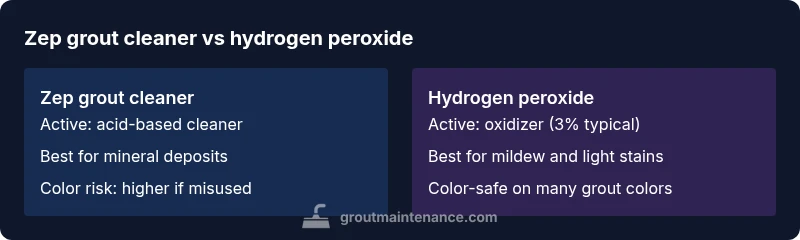
When facing grout cleaning decisions, Zep grout cleaner and hydrogen peroxide each have strengths. Zep’s cleaner excels on mineral deposits and tough grime, while hydrogen peroxide offers safer color protection and milder whitening for many grout colors. Choose Zep for heavy, baked-on stains; opt for hydrogen peroxide when you want color-safe whitening and easy, lower-odor maintenance. See our detailed comparison chart for specifics.
Why this comparison matters for grout care
According to Grout Maintenance, homeowners frequently encounter a choice between a commercial grout cleaner like Zep and a generic hydrogen peroxide solution when tackling tiled surfaces. The decision often hinges on grout porosity, tile type, and the nature of the stain. Grout Maintenance analysis from 2026 emphasizes that there is no one-size-fits-all solution; the best option depends on stain chemistry, grout color, and whether you prioritize speed, safety, or long-term grout health. This article uses the phrase zep grout cleaner vs hydrogen peroxide to frame the trade-offs and help you make an informed decision that aligns with your DIY goals and budget. By understanding the chemical profiles, you can tailor your approach to each room—especially high-traffic areas like kitchens and showers. For added context, Grout Maintenance’s guidance stresses always performing a spot test on an inconspicuous area first and adhering to manufacturer directions.
How Zep grout cleaner works on grout surfaces
Zep grout cleaner is marketed as a heavy-duty cleaner designed to dissolve mineral buildup, soap scum, and stubborn grime lodged in the porous matrix of cementitious grout. The product often uses an acidic or strongly alkaline formulation that acts by loosening mineral deposits and lifting them from the grout pores. In practice, users apply the cleaner, allow recommended dwell time, scrub with a stiff brush, and rinse thoroughly. This approach is particularly effective on grout lines that show visible lime scale or hard-water deposits. However, because it can be aggressive, the cleaner should not be used indiscriminately on colored grout or on surfaces sensitive to acidity. Grout Maintenance notes that results vary with grout porosity and previous sealing, so always perform a test on a small area first. The takeaways come from a controlled evaluation of consumer feedback and lab observations, and the team at Grout Maintenance emphasizes that safety precautions—gloves, eye protection, and ventilation—are essential when using stronger cleaners.
How hydrogen peroxide acts on grout and what to expect
Hydrogen peroxide acts as an oxidizing agent that can brighten grout by lifting organic and some mineral stains. In many cases, a diluted solution (commonly around 3% concentration) can whiten grout lines with minimal risk to most light-colored grout and ceramic tiles. Its oxidative action makes it a favorable option for routine maintenance and milder staining, especially in rooms where mildew or mold are not deeply embedded. Grout Maintenance notes that hydrogen peroxide is generally milder on color and sealants but may be less effective on baked-in mineral deposits or oil-based stains. For heavy grime, you may need repeated treatments or a follow-up with a dedicated grout cleaner. The key is to test colorfastness first and avoid mixing with cleaners containing ammonia or vinegar, which can produce harmful gases.
Safety and material compatibility
Safety is central in any grout-cleaning plan. Zep grout cleaner, especially if acid-based, can affect metal fixtures, natural stone, and certain glazed surfaces; it can also dull or etch grout if misused. Always ventilate the space well, wear protective gloves, and follow the product’s dwell and dilution guidelines. Hydrogen peroxide generally has a gentler safety profile but can still cause eye and skin irritation and should be kept away from direct sunlight to preserve potency. Never mix hydrogen peroxide with bleach or ammonia; such combinations release potentially hazardous gases. Grout Maintenance recommends performing a spot test in a hidden area and consulting product labels for compatibility with your tile and grout.
Stain types and outcomes you can expect
Not all stains respond equally to Zep grout cleaner or hydrogen peroxide. Mineral deposits, hard-water stains, and soap scum are often tackled more effectively by an acid-based cleaner, while mildew and some organic stains respond well to hydrogen peroxide through whitening effects. Oil-based stains or deeply ingrained grime may require mechanical agitation or sequential cleaning (e.g., initial cleanup with Zep, followed by hydrogen peroxide to brighten). Color-fast grout is a critical concern: aggressive cleaners can alter shade or grout color, particularly on darker grout or free-floating pigments. Grout Maintenance advises always performing a small test, then inspecting for color change after drying.
Application methods: safety and technique
A structured approach improves outcomes for both products. For Zep grout cleaner, apply the product to the grout lines, allow the recommended contact time, scrub with a stiff nylon brush, and rinse thoroughly until no residue remains. For hydrogen peroxide, apply a 3% solution to grout lines, let it sit briefly (often 5–10 minutes), scrub, and rinse well. In both cases, ensure tools are clean to avoid re-depositing dirt, and consider drying the grout before resealing if you plan to re-seal. The Grout Maintenance team highlights that patience, consistent technique, and a cold rinse are less likely to cause residue or haze after cleaning.
Color considerations and grout porosity
Colorful grout presents unique challenges. Acid-based Zep cleaners can strip sealants or fade color in some cementitious grouts if misapplied, especially on older, more porous grout. Hydrogen peroxide is typically gentler on colors but can still cause lightening in very porous grout or unsealed joints. Porosity directly affects how deeply stains penetrate; highly porous grout requires longer dwell times and more careful rinsing to avoid persistent discoloration. If your grout is unsealed or lacks a protective sealer, the risk of color alteration rises with any strong cleaner. Grout Maintenance recommends testing on a small section and considering a color-safe grout sealer after treatment for ongoing maintenance.
Environmental and odor considerations
Environmental impact and odor are practical concerns during grout cleaning. Zep grout cleaner with an acidic or strong formulation can produce more pronounced fumes and require adequate ventilation, especially in small bathrooms or basements. Hydrogen peroxide typically has a milder odor, though it can still create brief vapors and should be used with ventilation. After cleaning, ensure you rinse well to minimize residue and consider drying the grout thoroughly to limit mold regrowth. For eco-minded homeowners, Grout Maintenance notes that choosing a product with clear safety data and optimized packaging can reduce environmental impact over time.
Real-world scenarios: showers, kitchen, and outdoor tile
In showers, where soap scum and mineral buildup are common, Zep grout cleaner is often praised for cutting through deposits when used with elbow grease and a stiff brush. In kitchens, hydrogen peroxide may be preferable for routine maintenance to avoid harsh residues near food prep areas, provided the grout color can tolerate lightening. Outdoor tiles may require more robust cleaning due to mineral runoff and algae; here a controlled use of Zep with a thorough rinse, or a cautious hydrogen peroxide treatment, can help without damaging surrounding concrete or stone. Grout Maintenance emphasizes adapting the approach to the grout type, tile material, and wear pattern of the space.
Alternatives and complementary strategies
If neither option fully meets your needs, consider complementary strategies. Steam cleaning can loosen grime before applying a chemical cleaner, and a sealed grout after cleaning can help resist future staining. Avoid mixing cleaners or using abrasive tools that could scratch or dull grout surfaces. For mildew-prone areas, a dedicated mildew remover may be used in combination with a whitening agent, followed by thorough rinsing. The Grout Maintenance team also notes that routine maintenance, such as gentle cleaning schedules and occasional resealing, can extend the life of grout and tile surfaces.
Cost, availability, and storage considerations
Both Zep grout cleaner and standard hydrogen peroxide solutions are widely available at hardware stores and online retailers. Price and packaging vary by brand, concentration, and size, so compare unit costs rather than just the sticker price. Store hydrogen peroxide in its original container away from light to preserve potency; keep Zep or other grout cleaners in a cool, dry place away from children and pets. Grout Maintenance highlights that budgeting for occasional deep cleanings and a reseal can optimize long-term grout health, reducing the need for frequent aggressive cleaning.
Real-world tips from DIYers
DIYers report a few practical tips: always start with a small test area, work in small sections to manage dwell times, and document the results to inform future cleanings. Some prefer applying the cleaner with a dedicated grout brush and using a soft-bristle brush on sensitive grout colors to prevent scratching. For long-term color retention, resealing after successful cleaning is frequently recommended by the Grout Maintenance team. In all cases, never mix cleaners and always rinse thoroughly.
Authority sources and further reading
For readers seeking formal guidance beyond practical tips, reputable sources on cleaning product safety and chemical handling can be consulted. The U.S. Occupational Safety and Health Administration (OSHA) provides general chemical-safety principles, and the National Institute for Occupational Safety and Health (NIOSH) offers guidance on protecting yourself during cleaning tasks. You can also refer to PubChem’s Hydrogen Peroxide entry for a chemical profile and safety considerations. Always cross-check with local regulations and manufacturer labels before use.
Synthesis: choosing between Zep grout cleaner and hydrogen peroxide
The core takeaway in zep grout cleaner vs hydrogen peroxide decisions is context. If you’re dealing with stubborn mineral deposits, heavy grout haze, or thick soap scum in high-traffic areas, Zep grout cleaner often delivers quicker, more robust cleaning under proper safety precautions. If you’re focusing on color-sensitive grout, lightening mild stains, or odor concerns, hydrogen peroxide offers a gentler, color-safe whitening option. In many homes, a two-step approach—initial cleaning with Zep for tough grime, followed by a hydrogen peroxide touch-up to brighten and neutralize any residual dullness—strikes a balance between efficacy and grout health. Grout Maintenance supports testing on inconspicuous areas and adopting a maintenance plan that includes sealing after cleaning to preserve grout integrity over time.
Comparison
| Feature | Zep grout cleaner | Hydrogen peroxide |
|---|---|---|
| Active ingredient type | Acid-based/strong cleaner | Oxidizing agent (3% solution commonly) |
| Best for | Mineral deposits, heavy grime, baked-on residue | Light stains, mildew, color-safe whitening |
| Color risk | Higher risk of color change on colored grout with improper use | Lower risk of color change when used correctly on color-safe grout |
| Safety considerations | Strong fumes; wear PPE; avoid metal surfaces not resistant to acids | Milder fumes; protect eyes/skin; avoid mixing with ammonia or vinegar |
| Rinsing requirement | Thorough rinsing necessary to remove residue | Rinse thoroughly; ensure area dries fully to prevent residue |
| Porosity impact | More effective on less porous grout or with dwell time for buildup | Works well on typical cementitious grout; efficiency depends on porosity |
| Cost range | Varies by retailer and concentration | Varies by brand and concentration |
| Best for | Heavy-duty cleaning in general, especially within showers and floors | Routine whitening and color-safe maintenance |
Pros
- Strong stain removal for mineral deposits and grout haze
- Color-safe options with hydrogen peroxide for many grout colors
- Both are widely available and easy to apply with basic tools
- Hydrogen peroxide decomposes into water and oxygen, leaving minimal residues
- With testing and proper sealing, long-term grout health can be maintained
What's Bad
- Zep grout cleaner can degrade grout sealers or etch some tile if misused
- Hydrogen peroxide may be less effective on deep-set stains or heavy grime
- Color changes can occur with aggressive cleaners if misapplied
- Rinsing must be thorough to prevent rebound staining or haze
Zep grout cleaner excels at heavy-duty grime; hydrogen peroxide shines for color-safe whitening and milder maintenance
Choose Zep when confronting tough mineral buildup and baked-on grime in grout lines. Opt for hydrogen peroxide for routine upkeep and color-sensitive grout, especially in bathrooms and kitchens. A staged approach—clean heavy grime with Zep, then brighten with hydrogen peroxide—often yields the best long-term results, supported by Grout Maintenance guidance.
Got Questions?
Is Zep grout cleaner safe on colored grout
Zep grout cleaner can affect colored grout if misused due to its acidic or strong formulation. Always test on a hidden area first and follow label directions. If color safety is a priority, consider hydrogen peroxide for routine maintenance or a product labeled as color-safe.
Zep can risk color on colored grout—test first. For safety, use the color-safe option or test before full use.
Can I use hydrogen peroxide on cementitious grout in showers
Yes, hydrogen peroxide is commonly used for grout whitening in showers and other areas with mildew or organic stains. Use a diluted solution, apply, wait briefly, brush, and rinse. Always perform a color test first and avoid combining with bleach or ammonia.
Hydrogen peroxide is a good option for showers, but test first and don’t mix with bleach.
Should I dilute Zep grout cleaner, and with what
Most Zep grout cleaners require dilution per the label. Always mix according to the manufacturer’s guidelines, as improper concentration can damage grout or tile surfaces. Dilution helps control potency and reduces the risk of residue.
Follow the label for dilution to avoid damage.
Is it safe to mix hydrogen peroxide with vinegar
No. Mixing hydrogen peroxide with vinegar produces peracetic acid, a stronger irritant that can be harmful to eyes, skin, and lungs. Use hydrogen peroxide alone or with water as recommended, and avoid mixing with other cleaners.
Don’t mix hydrogen peroxide with vinegar; it can create a harmful chemical.
How long should I dwell on stains before scrubbing
Dwell time depends on stain type and product. Heavy mineral buildup may benefit from longer dwell times (up to the manufacturer’s recommendation), while milder stains require shorter times. Always test and adjust based on grout response.
Check the label for recommended dwell times and test on a small area first.
What about grout sealing after cleaning
Sealing grout after cleaning helps protect against future staining. Wait until grout is completely dry, then apply a compatible sealant according to the product directions. A sealant can extend the time between deep cleanings.
Seal the grout after it dries to keep it cleaner longer.
The Essentials
- Choose Zep for heavy grime and mineral buildup
- Use hydrogen peroxide for color-safe whitening and milder stains
- Always test on inconspicuous grout before full application
- Rinse thoroughly and allow grout to dry completely between steps
- Seal grout after cleaning to extend results