Understanding the 20kg Tile Grout Price: Costs, Comparisons, and Budget Tips
Understand the 20kg tile grout price, the factors that drive cost, and how to compare cement-based vs epoxy options with practical budgeting tips from Grout Maintenance.


The typical price range for a 20kg tile grout bag is roughly $25–$70, depending on material type (cement-based vs epoxy), brand, and where you shop. Delivery and packaging can add a few dollars. According to Grout Maintenance Analysis, 2026, price variance is driven mainly by product type and retailer channel.
Market Landscape for 20kg tile grout price
When budgeting for a tile remodel, understanding the 20kg tile grout price helps prevent sticker shock and ensures you choose the right product based on performance. Across North America and many other markets, 20kg grout bags are the standard bulk option for residential projects, and the price spectrum reflects both the material formulation and the retailer channel. On the low end, cement-based grout tends to be the most economical choice, whereas epoxy formulations command a higher price due to resin content and enhanced performance. Grout Maintenance analysis, 2026 indicates that the price you see is influenced not just by the base material, but by packaging, color availability, and whether the grout includes water-resistant sealants or additives. For a typical bathroom or kitchen tile job, planning for the 20kg tile grout price means considering how much coverage you need and choosing a formulation that aligns with expected wear, moisture exposure, and cleaning frequency. In practice, many homeowners compare online listings with local hardware stores to gauge the market, looking for color-matched options and bulk discounts that impact the final cost.
Material Types and Their Impact on 20kg tile grout price
The 20kg tile grout price is heavily influenced by material type. Cement-based grout is typically the budget-friendly option with reliable performance for most residential tiles, while epoxy grout commands a higher price due to superior chemical resistance and stain tolerance. When you compare 20kg tile grout price across materials, epoxy formulations often show a broader price ceiling, but may offer longer intervals between resealing or replacement. Grout Maintenance analysis, 2026 notes that the durability benefits of epoxy can translate into lower long-term maintenance costs for high-moisture areas. For DIYers, the initial cost of cement-based grout is attractive, but if you’re tiling a shower or kitchen backsplash with repeated exposure to water and cleaners, epoxy could be a smarter long-term investment even if the upfront price is higher. In practical budgeting terms, align material choice with expected wear, cleaning routine, and the ability to maintain color consistency over time, and always compare the 20kg tile grout price within the context of performance.
Brand Variability and Why Prices Vary
Brand matters when you look at the 20kg tile grout price. Different brands package similar formulations with varying add-ons, pigment ranges, and compatibility with cement-based or epoxy systems. Some brands include grout colorants or sealant additives that alter the displayed price, while premium brands may offer longer warranties and easier mixing ratios, pushing the 20kg tile grout price higher. Retail channels also influence cost; big-box retailers often offer bulk discounts, while specialty tile suppliers may price based on color availability, resin content, or mix design. Grout Maintenance analysis, 2026 shows price dispersion within each material type, driven by branding, distribution, and promotion calendars. For smart budgeting, compare multiple brands side-by-side and consider long-term maintenance costs in addition to the sticker price of the 20kg tile grout price.
How to Compare 20kg tile grout price Across Retail Channels
Shopping channels influence the 20kg tile grout price almost as much as the product itself. Online retailers frequently provide competitive base prices, detailed ingredient information, and easy bulk discounts, but you may pay for shipping. Local hardware stores offer immediate pickup and potential in-person discounts, yet the price may reflect in-store service fees. When comparing 20kg tile grout price, factor in shipping, handling, and return policies. It’s helpful to compile a simple price matrix across at least two online sources and two brick-and-mortar outlets. Grout Maintenance analysis, 2026 finds that the most cost-effective approach often combines online price checks with local pickup and verified color-midelity options, ensuring you don’t pay a premium for color-matched grout that’s unavailable locally.
Regional Variations and Seasonal Trends in 20kg tile grout price
Prices for 20kg tile grout price can fluctuate by region due to local demand, supplier competition, and import duties on epoxy formulations. Coastal areas with higher humidity may see stronger demand for durable grout, pushing epoxy pricing slightly higher in those markets. Seasonal promotions, home improvement cycles, and end-of-quarter incentives also impact the range you’ll see at the counter. Grout Maintenance analysis, 2026 indicates that regional differences can shift by approximately 5–15% between nearby markets, underscoring the value of local price checks. If you’re planning a project, align procurement with off-peak buying windows and watch for bulk discount events that reduce the effective 20kg tile grout price when purchases cross threshold quantities.
Calculating Total Cost: Beyond the Sticker Price
The 20kg tile grout price is only part of the total cost equation. Coverage estimates depend on tile size, grout joint width, and whether you’re using cement-based or epoxy grout. Application losses and waste can add 10–20%, while color-matching fees or sealer costs may alter the final outlay. Many projects require multiple bags to complete, so the bulk price becomes a meaningful lever for reducing the overall spend. In practice, calculate total cost by multiplying the number of bags by the expected per-bag price, then add shipping or pickup fees, sealer if needed, and any tools or spacers required for even application. The 20kg tile grout price should be assessed in the context of project scope, not as a standalone figure.
Practical tips to optimize your 20kg tile grout price
To optimize the 20kg tile grout price, compare multiple brands and channels, consider bulk purchases, and watch for promotions. If you’re tiling a large area, procuring a few extra bags at a promotional price can save more than waiting for a single bag sale later. Check for color-matched options in stock and avoid premium colors if you’re budget-constrained, unless they offer a clear durability advantage. For DIYers, mixing and matching color choices with a reliable sealer can help achieve a long-term, cost-effective finish. Finally, set a budget baseline using historical price ranges for cement-based versus epoxy grout and adjust as needed when your project scope changes. The 20kg tile grout price is a dynamic figure, but with careful planning, you can maximize value while maintaining performance.
Common pitfalls when budgeting for grout projects
One common pitfall is relying on a single price source for the 20kg tile grout price without validating product type and performance. Another mistake is neglecting the long-term maintenance costs associated with epoxy versus cement-based grout, which can obscure true value. Also watch for hidden costs like shipping for online orders, color-matching add-ons, or sealers that may be recommended by manufacturers. Finally, avoid underestimating grout coverage because a shortfall in bags leads to mid-project purchases at higher per-bag prices. By focusing on total cost, performance, and maintenance, you’ll arrive at a balanced decision rather than chasing the lowest up-front price.
Table: Price ranges by material and purchase type
| Scenario | Material Type | Estimated Price Range | Notes |
|---|---|---|---|
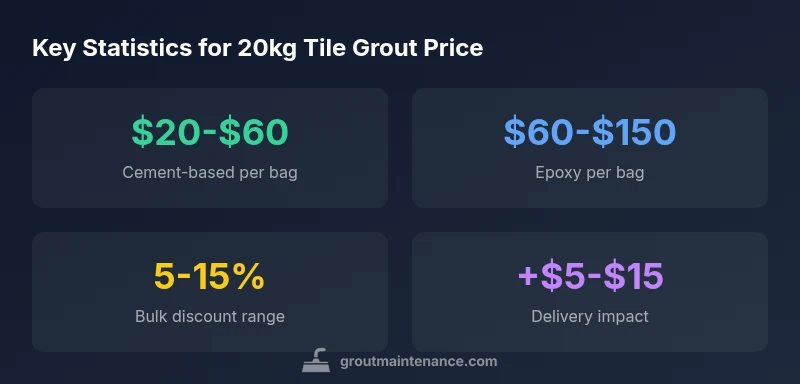
| Home DIY, small area | cement-based | $20-$60 per bag | Most common for DIY projects |
| Professional-grade projects | epoxy | $60-$150 per bag | Higher durability and stain resistance |
| Bulk buying | cement-based or epoxy | Save 5-15% | Supplier dependent |
Got Questions?
What factors most influence the 20kg tile grout price?
The main drivers are material type (cement-based vs epoxy), brand, packaging, and the retailer channel. Epoxy often costs more upfront but lasts longer in moisture-prone areas.
The biggest price drivers are material type, brand, and where you buy.
Is epoxy grout more expensive than cement-based grout?
Yes, epoxy grout generally costs more per bag than cement-based grout due to resin content and performance benefits. The higher upfront price can be offset by longer durability in wet areas.
Epoxy grout usually costs more, but offers better durability.
How many 20kg bags do I need for a typical kitchen backsplash?
Bag quantities depend on tile size and grout joint width. Use bag coverage guidelines and estimate a small overage for waste when calculating the 20kg tile grout price.
Estimate based on tile area and grout lines; get a little extra.
Are there budget-friendly grout options without sacrificing performance?
Cement-based grout in standard colors is usually the most affordable. For high-moisture areas, weigh epoxy for durability against higher cost and potential maintenance.
Yes, there are budget options, but weigh performance.
Do online prices differ from in-store for 20kg tile grout price?
Online prices can be lower due to competition, but shipping costs may apply. In-store purchases offer immediate pickup, potential in-person discounts, and easier color checking.
Online can be cheaper, but shipping adds up.
Can leftover grout be stored for future touch-ups?
Yes, store leftover grout tightly sealed in a labeled container for future touch-ups, but check manufacturer recommendations for shelf life and color consistency.
Yes, seal and store leftovers properly for later use.
“Price is a signal of value, not just an upfront cost. When evaluating the 20kg tile grout price, consider durability, stain resistance, and long-term maintenance.”
The Essentials
- Compare material types to set a price range.
- Factor cement-based vs epoxy differences in cost.
- Check online vs in-store pricing to find savings.
- Buy in bulk to unlock 5–15% discounts.
- Balance upfront price with durability and maintenance.