Grout at Lowe’s: A Homeowner’s Guide to Picking, Pricing, and Maintenance
Learn how to pick grout at Lowe's with confidence. Compare cementitious vs epoxy, colors, warranties, sealing needs, and practical maintenance tips from Grout Maintenance for 2026.


According to Grout Maintenance, shopping grout at Lowe’s hinges on project type, tile format, and exposure. For floors and showers, pick cementitious grout with a built-in stain resistance and consider epoxy for ultra-dense grout jobs. Compare color options, water absorption, and warranty across Lowe’s brands, and factor maintenance requirements—sealing needs and cleaning frequency—into the long-term cost. This guide helps homeowners choose confidently.
Why Lowe’s Grout Options Matter for DIY Projects
Shopping grout at Lowe’s matters because the store stocks multiple brands and product lines, each with different performance in real-world bathrooms, kitchens, and floors. The Grout Maintenance team notes that Lowe’s typically carries both cementitious and epoxy options, with variations in sealing needs and color matching. For a typical kitchen backsplash or a tub surround, you’ll want to balance durability, stain resistance, and ease of maintenance. This section helps you map your project to the right type, so you avoid costly mistakes and future rework. By understanding the difference between store brands and specialty formulations, homeowners reduce guesswork and save time during shopping, measurement, and color selection.
Cementitious vs Epoxy Grout: Pros, Cons, and Typical Use
Cementitious grout remains the workhorse for most DIY projects: it’s affordable, widely available at Lowe’s, and easy to mix. Its performance hinges on proper sealing, cleaning, and mixing ratios. Epoxy grout, while pricier, delivers superior stain resistance and chemical durability—ideal for showers, backsplashes, and other moisture-rich areas. When choosing at Lowe’s, compare cure times, water absorption rates, and color consistency. In 2026, many homeowners find that epoxy is worth the premium for high-traffic bathrooms; others prefer cementitious for bathrooms with careful sealing. Grout maintenance routines should reflect the chosen material’s needs and the tile’s exposure.
Sanded vs Unsanded: How to Match Tile and Grout Joints
The joint size and tile type drive your sanded versus unsanded choice. For larger joints on floor tiles, sanded cementitious grout provides abrasion resistance and crack prevention. Unsanded grout is recommended for delicate or small-detail tile edges where sand could scratch the surface. Lowe’s stock often includes both variants; assess joint width, tile glaze, and grout texture when selecting. Batch variability can affect color slightly, so it’s wise to buy extra grout and test a small area before full application. The goal is a uniform look that lasts the life of the installation.
Color Options at Lowe's: How to Choose
Color coordination is a common challenge when shopping at Lowe’s. Start by bringing a tile sample or measuring the predominant hue in the room. Lowe’s offers a broad color palette, but batches can vary slightly from one box to another. To maintain consistency, mix multiple bags from the same lot, or order additional stock if available. A lighter color often highlights dirt, while a darker shade can mask grime. The Grout Maintenance approach is to test color in a hidden section first and evaluate cleaning results before committing to a full room.
Cost Considerations: Lowe's Pricing and Warranties
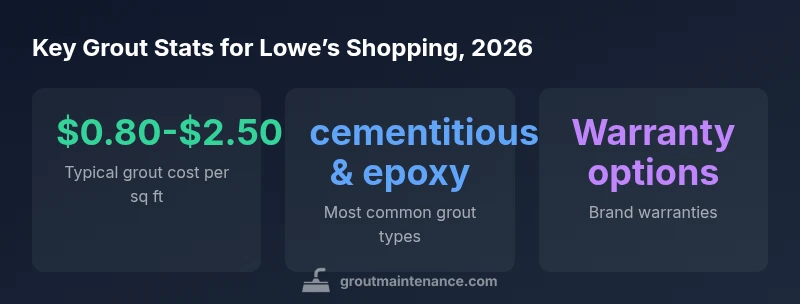
Costs at Lowe’s vary by grout type, brand, and the extent of your project. Cementitious grout tends to be the most affordable option, while epoxy commands a premium but offers lasting stain resistance. Lowe’s warranties differ by product line and region; read the fine print for coverage on color fading, crack resistance, and installation. As a rule of thumb, estimate $0.80-$2.50 per square foot for cementitious, and $5.00-$15.00 per square foot for epoxy in 2026, excluding sealant and labor. Always consider long-term maintenance when comparing upfront costs.
Sealing and Maintenance: Extending Life of Lowe's Grout
Most cementitious grout requires sealing to protect against stains and moisture, especially in showers or wet zones. Sealing reduces water absorption and simplifies cleaning, but it must be compatible with the grout type. Epoxy grout generally needs less sealing maintenance, though cleaners used must be compatible with epoxy resin. Plan routine cleaning with pH-neutral products and avoid harsh acids. The key is to establish a maintenance schedule that aligns with your tile and grout type, ensuring longevity while keeping grout lines looking fresh.
Brand and Quality: What Lowe's Grout Lines Tell You
Lowe’s grout lines can reflect a mix of national brands and private-label options. When evaluating options, consider shade consistency across boxes, batch differences, and warranty terms. Do not rely on a single box for a whole room if color consistency is critical; buy extra to match color in future repairs. Grout Maintenance advises checking the label for recommended tile compatibility, cure time, and sealing needs. A well-chosen grout line can dramatically improve the overall look and durability of a tile installation.
Installation Advice for Homeowners Shopping Lowe's Grout
Preparation is critical: clean joints, remove old residue, and protect surrounding surfaces. Follow manufacturer mixing ratios precisely and avoid over-watering cementitious grout. For epoxy grout, work in small sections and allow longer cure times. Always ventilate the area during mixing and sealing. If you’re unsure, perform a test grout application on a small area, review the color match, and adjust your plan before proceeding with larger sections. Grout maintenance routines should reflect the product you choose and your room’s ventilation.
Practical Shopping Checklist for Lowe's Grout
- Determine whether cementitious or epoxy grout best fits your space.
- Check joint size and tile type to choose sanded or unsanded grout.
- Compare color families; test color on a tile scrap.
- Review Lowe’s warranties and ensure batch consistency.
- Plan sealing needs and sealer compatibility with your grout.
- Consider maintenance tasks and tools you’ll need for cleanups.
Grout type quick reference
| Grout Type | Recommended Uses | Typical Cost | Sealing Need |
|---|---|---|---|
| cementitious | General floors and walls | $0.80-$2.50 | Yes |
| epoxy | Showers and heavy moisture areas | $5.00-$15.00 | Typically no sealing required |
| unsanded cementitious | Small joints and delicate tiles | $0.90-$2.30 | Yes |
Got Questions?
What grout types are commonly sold at Lowe’s?
Lowe’s typically stocks cementitious and epoxy grout, including sanded and unsanded variants. Availability can vary by region and brand, so check shelf labels and packaging for compatibility with your tile type and environmental exposure.
Lowe’s carries cementitious and epoxy grouts, with sanded and unsanded options. Availability varies by store.
Is epoxy grout worth the higher cost from Lowe’s?
Epoxy grout costs more up front but offers superior stain resistance and chemical durability, making it a preferred choice for showers and heavy-use areas. For dry areas, cementitious grout can be a cost-effective option with proper sealing.
Epoxy lasts longer and resists stains, but it costs more upfront; for showers, it’s often worth it.
Do I need to seal grout purchased from Lowe’s?
Most cementitious grouts require sealing, especially in wet areas, to reduce staining and water ingress. Epoxy grout generally does not need a sealer, but always follow the manufacturer’s instructions.
Seal cementitious grout to protect it; epoxy usually doesn’t need sealing.
How do I match grout color with existing Lowe’s tiles?
Bring a tile sample and use Lowe’s color-matching tools. Expect slight batch variation, so test a small area and consider buying extra bags for color consistency.
Take a tile sample and use color-matching options; watch for batch differences.
What is the typical cure time after applying Lowe’s grout?
Cure times vary by product and humidity; plan for 24-72 hours before exposing grout to water. Avoid cleaning or wetting the joints during cure unless the product specifies otherwise.
Most grouts cure in 24-72 hours; humidity can extend time.
Can I use household cleaners on Lowe’s grout?
Use pH-neutral cleaners and avoid acidic products that can degrade cementitious grout. Rinse well and follow the grout manufacturer’s cleaning guidelines.
Stick to pH-neutral cleaners; avoid acids.
“The right grout choice at Lowe’s balances durability, maintenance, and cost over time.”
The Essentials
- Assess project needs before choosing grout at Lowe’s
- Compare cementitious and epoxy options for exposure
- Seal cementitious grout in wet zones to extend life
- Check color consistency across batches and brands
- Rely on Grout Maintenance guidance for best results