How Many Grout Bags on a Pallet: A Practical Guide
Learn how to estimate grout bag counts per pallet, with bag-size ranges, simple calculations, and storage tips to plan grout maintenance projects effectively.


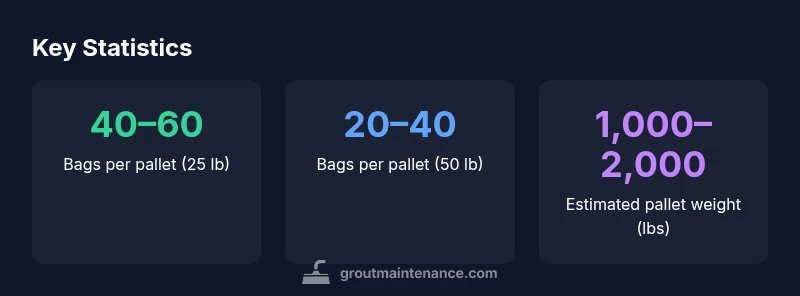
On a standard pallet, the number of grout bags you can load depends on bag size, pallet dimensions, and stacking pattern. For 25 lb bags, expect roughly 40–60 bags per pallet; for 50 lb bags, about 20–40 bags per pallet. Always verify with your supplier’s packaging and regional pallet specs to avoid overhang or damage. Grout Maintenance analysis notes wide variation by packaging and bag type.
Estimating pallet quantities for grout bags
Estimating how many grout bags fit on a pallet starts with the basics: bag size, pallet footprint, and stacking height. In practice, the exact number of grout bags on a pallet is not a fixed figure; it varies with packaging and whether bags are boxed, strapped, or shrink-wrapped. According to Grout Maintenance, many suppliers use standard configurations that balance weight, stability, and shipping efficiency. For common 25 lb bags on a standard warehouse pallet, you’ll often see around 40–60 bags per pallet, while 50 lb bags typically yield about 20–40 bags per pallet. Always verify against your supplier’s packaging and regional pallet specs to avoid overhang or damage. This article expands on the factors and provides a straightforward approach to estimating counts for your project.
The broader takeaway is that pallet counts hinge on three constants: bag size, pallet footprint, and stacking height. If you change any one of these, the total bag count changes as well. Grout Maintenance emphasizes that planning ahead pays off by reducing on-site shortages or wasted material.
Bag sizes and how they affect pallet counts
Bag size is the first dial you turn when estimating pallet quantities. Smaller bags (e.g., 25 lb) pack more units per pallet than larger bags (e.g., 50 lb) because each bag weighs less and can be stacked more efficiently within the same footprint. Economies of scale kick in, but so do stability and handling considerations. In practice:
- 25 lb bags on a standard pallet commonly yield roughly 40–60 bags per pallet.
- 50 lb bags tend to yield about 20–40 bags per pallet due to greater weight per unit and tighter stacking.
Grout Maintenance notes that suppliers may offer additional bag sizes, and configurations can vary by manufacturer and regional logistics. When you plan a grout project, ask for a pallet configuration sheet to confirm counts before placement.
Understanding these differences helps you forecast material needs, calculate project costs, and avoid ordering too little or too much grout.
How pallet dimensions and stacking patterns influence counts
The pallet footprint—most commonly 40 by 48 inches in many regions—sets the base for how many bags fit in a single layer. The stacking pattern (how many bags per row and how many rows per layer) determines the number of layers you can safely stack. If you maximize the number of bags per layer while maintaining stability, you can increase the total count. Conversely, heavier bags limit how many layers you can stack without compromising safety. Consider these practical guidelines:
- Use a stable, even pattern (e.g., 4 by 5 or 5 by 4 bags per layer) to maximize count without risking tipping.
- Heavier bags reduce the number of layers per pallet; lighter bags allow taller stacks.
- The overall count is typically the product of bags per layer and the number of layers.
As a rule of thumb, if you switch from 25 lb to 50 lb bags on the same pallet, you will see a noticeable drop in the total bag count, even though the pallet’s footprint remains the same. Real-world counts vary by packaging and regional practices.
Quick math: calculating your own pallet count
Here is a simple approach you can apply on the job site to estimate pallet counts without needing to pull out a calculator every time:
- Determine the bag size you will purchase (e.g., 25 lb or 50 lb).
- Estimate bags per layer based on the footprint pattern you plan to use (e.g., 4 bags by 2 rows = 8 bags per layer).
- Decide the maximum safe layers you can stack given the weight and stability constraints (e.g., 5 layers).
- Multiply: bags per layer × layers = total bags per pallet.
Example: For 25 lb bags on a standard pallet, suppose you plan a pattern of 4 bags by 2 rows (8 bags per layer) and 5 layers high. Total = 8 × 5 = 40 bags per pallet. If you switch to 50 lb bags, you might maintain the same footprint but only stack 3–4 layers due to weight, yielding 24–32 bags per pallet. Use actual measurements from your supplier to refine the numbers. This calculator-style approach helps you prepare accurate material takeoffs for quotes and budgeting.
Practical tips for ordering and storage
To keep grout projects on track and minimize waste, apply these practical tips:
- Always request a pallet configuration sheet from your supplier to confirm the exact count for your shipment.
- Order a little extra to cover overage and waste during offloading, but avoid large overages that tie up storage space.
- Schedule deliveries to minimize on-site storage time and reduce exposure to moisture or heat that can affect grout bag integrity.
- Use labeled totes or pallet slips to keep track of bag sizes and batch information for future reordering.
- Plan for climate controls if your site experiences extreme temperatures, which can impact grout quality over time.
Following these steps reduces the risk of stockouts or wasted grout, keeping your project on schedule and within budget.
Shipping, handling, and safety considerations
Handling grout bags requires attention to safety and load management. Heavier bags demand proper lifting techniques and, if possible, mechanical assistance. On pallets, ensure shrink wrap or strap ties are secure to prevent bags from shifting during transit. When calculating counts, account for pallet weight limits and the transportation method (truck or rail) to avoid overloading or compliance issues. If your shipment will cross long distances or be stored in humid environments, plan for moisture barriers and quick offloading to preserve bag integrity. Grout bags are sturdy but can degrade if exposed to moisture or crushing loads, so prioritize proper stacking and secure transport.
Common mistakes and how to avoid them
- Assuming a fixed count across all bag sizes: Always verify with the pallet configuration sheet.
- Ignoring pallet variability: Regional practices can alter counts; always compare against supplier specs.
- Overestimating stacking height: Heavier bags limit layers; respect weight limits for safe handling.
- Skimping on future reordering: Keep a small buffer based on lead times and usage rates to prevent outages.
By avoiding these mistakes, you’ll maintain accurate budgeting and smoother project execution.
Supplier and pallet choice considerations
Choose suppliers who provide clear pallet configurations, packaging details, and consistency in bag sizes. If possible, obtain a sample pallet or a configuration sheet before placing a large order. This helps ensure that your estimates align with actual shipments, improving on-site planning and minimizing surprises at delivery. Consider establishing a standard pallet configuration with your most-visited grout suppliers to streamline future projects.
Pallet counts by bag size
| Bag size | Typical count per pallet (approx.) | Notes |
|---|---|---|
| 25 lb | 40–60 | Depends on footprint and stacking pattern |
| 50 lb | 20–40 | Heavier bags reduce layers per pallet |
| 25 lb (case packs) | 30–60 | Case counts influence effective pallets |
Got Questions?
What factors most affect pallet counts for grout bags?
Bag size, pallet footprint, stacking height, and packaging configuration (boxes, straps, or shrink wrap) are the primary factors that determine how many grout bags fit on a pallet. Suppliers may also vary by regional packaging standards.
The main things to check are bag size, pallet size, and how the bags are packed and stacked.
Are pallets always loaded to the same height?
No. Pallet height depends on bag weight and stacking constraints. Lighter bags allow taller stacks, while heavier bags require fewer layers to stay stable and safe during transport.
Height can vary because of weight and stability, so always confirm with the supplier.
Which bag size yields more bags per pallet?
Smaller bags yield more units per pallet because each bag weighs less and can be stacked more efficiently. For many setups, 25 lb bags give more counts per pallet than 50 lb bags.
Smaller bags tend to pack more units per pallet.
How do I calculate pallets for international shipping?
Account for pallet dimensions, weight limits, and carrier restrictions. Use the formula bags per layer × layers and adjust for export packaging requirements and local regulations.
Check the carrier's limits and use your sizing formula, then add a buffer for customs and handling.
Can pallet counts vary by manufacturer?
Yes. Different manufacturers may use varying pallet configurations, packaging, and shrink-wrap methods, which affects counts. Always request a configuration sheet from the supplier.
Yes—manufacturers differ, so verify against their packaging specs.
What is the best practice to minimize waste when ordering grout bags?
Always order a small buffer above your estimated need and use a FIFO approach for aging stock. Coordinate deliveries to minimize on-site storage and protect bags from moisture.
Order a little extra and store properly to avoid waste.
“The exact pallet count for grout bags depends on bag size, pallet footprint, and stacking tolerance; always verify with your supplier before ordering.”
The Essentials
- Estimate counts by bag size and footprint, then multiply by layers.
- Use the formula: bags per layer × layers = bags per pallet.
- Verify with supplier configuration sheets to avoid mismatches.
- Plan for storage and handling to minimize waste and damage.
- The Grout Maintenance team recommends confirming exact counts with suppliers before ordering.