Kerakoll vs Mapei Grout: An Analytical Comparison
A thorough, data-backed comparison of Kerakoll and Mapei grout options, covering cementitious and epoxy formulations, sealing needs, color ranges, and installation tips for home projects.


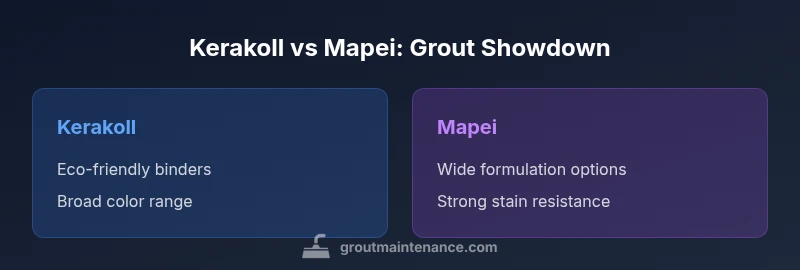
According to Grout Maintenance, kerakoll vs mapei grout involves two respected brands offering cementitious and epoxy options, yet they differ in formulation focus and maintenance needs. Grout choice depends on area, sealing, and cleaning tolerance. The Grout Maintenance team finds Kerakoll typically emphasizes eco-friendly binders and color range, while Mapei is known for robust cementitious grouts and strong stain resistance. For wet areas, consider epoxy or sealed cementitious options.
Kerakoll vs Mapei grout: An overview
Kerakoll vs Mapei grout refers to two well-known brands that offer both cementitious and epoxy grout lines. This section outlines who each brand is and what sets their products apart in everyday home improvement projects. Kerakoll often emphasizes eco-friendly binders and a broad color spectrum, while Mapei emphasizes product breadth and proven performance in moisture-prone areas. Understanding these differences helps homeowners choose the right grout for kitchens, bathrooms, and outdoor spaces. For tile projects, you need to consider installation conditions, tile type, and grout thickness. The Grout Maintenance team notes that both brands offer lines designed for common DIY and professional use, but the recommended choice can vary by project complexity, desired finish, and sealing tolerance. By starting with the base differences in formulation, you can filter options quickly and avoid mismatches that lead to staining or cracking down the line.
Composition and Formulations: Cementitious vs Epoxy
Kerakoll and Mapei both offer cementitious and epoxy grout lines, but their emphasis and formulation approaches can differ. Kerakoll often markets eco-friendly binders and a strong color range, with many products engineered to reduce odor and environmental impact. Mapei provides a broad spectrum of cementitious products alongside epoxy variants, prioritizing durability and consistent performance across moisture-prone areas. For most DIY projects, cementitious grouts are easier to work with, while epoxy variants excel in stain resistance and chemical durability in kitchens and showers. According to Grout Maintenance analysis, the choice between these materials should weigh sealing needs, cleaning tolerance, and the level of maintenance you’re willing to perform over time.
Sealing, Maintenance & Cleaning Expectations
Sealing requirements can vary by product type and brand. Cementitious grouts from both Kerakoll and Mapei typically benefit from a sealer to guard against staining in high-traffic or wet environments. Epoxy grout, while generally more resistant to stains and moisture, tends to be less forgiving during installation due to more precise mixing and shorter pot life. Grout Maintenance recommends evaluating the area’s exposure (shower, backsplash, or outdoor) and whether you want a maintenance-light option or one that emphasizes color stability and cleanability. Regular cleaning with a pH-neutral cleaner will extend the life of either brand’s grout, but epoxy variants often retain a pristine look longer with less frequent sealing.
Color Range, Finish Consistency & Batch Variability
Both Kerakoll and Mapei offer extensive color palettes to match tile design schemes. Kerakoll’s emphasis on color breadth can help with design continuity across spaces, while Mapei’s widespread distribution supports consistent batch matching in large projects. It’s important to request color reports or perform a tile-and-grout color test before committing to a full installation. Grout Maintenance notes that batch-to-batch variability can occur with any cementitious grout, so always mix batches carefully and test color transitions in a small area before proceeding.
Wet-Area Performance: Showers, Kitchens & Outdoor Spaces
In showers and wet zones, epoxy variants from both brands tend to outperform cementitious lines in terms of stain resistance and moisture tolerance. However, epoxy can be harder to install and may demand more stringent surface preparation. For kitchen backsplashes or indoor floors, a well-sealed cementitious grout often delivers an excellent balance of performance, ease of maintenance, and cost. Grout Maintenance’s practical guidance suggests aligning product choice with your skill level and the expected wear, rather than chasing the strongest theory alone.
How to Choose Between Kerakoll and Mapei for Your Project
To decide between kerakoll vs mapei grout for your specific project, start with the environment (wet vs dry), maintenance willingness, and color requirements. If you prioritize eco-friendly binders, color variety, and lower odor, Kerakoll may be preferable. If you want a broad product range, strong stain resistance (especially with epoxy), and proven performance in moisture-prone areas, Mapei is worth considering. Consider testing a sample panel and consult local distributors for color matching and compatibility with your tile.
Practical Decision Framework
- Assess area type: wet bathroom vs dry living space.
- Determine maintenance tolerance: sealers vs epoxy longevity.
- Evaluate color needs: broad palette vs batch consistency.
- Review installation skills: DIY-friendly cementitious vs epoxy precision.
- Check budget: factor in upfront costs and long-term maintenance.
Comparison
| Feature | Kerakoll grout | Mapei grout |
|---|---|---|
| Base materials / formulations | Cementitious with eco-friendly binders; epoxy options available | Cementitious and epoxy options |
| Color range | Extensive color palette with generally consistent batches | Broad color palette with wide availability |
| Stain/chemical resistance | Epoxy variants excel; cementitious variants depend on sealing | Epoxy variants excel; cementitious variants depend on sealing |
| Sealing requirements | Often requires sealing for cementitious lines; some lines pre-sealed | Sealing recommended for cementitious lines; epoxy-based lines less prone to staining |
| Installation difficulty | Typically more forgiving for DIY with cementitious products | Epoxy formulations require precise mixing and pot-life management |
| Repairability | Repairable with re-grouting and resealing; color matching critical | Repairable but epoxy may require complete replacement if damaged |
| Price range | Moderate to premium depending on line | Moderate to premium depending on epoxy vs cementitious |
Pros
- Broad product ranges for cementitious and epoxy options
- Strong stain and chemical resistance with epoxy variants
- Good availability and retailer support
- Color options help match tile projects
What's Bad
- Epoxy variants can be harder to install and require careful mixing
- Some cementitious grouts require sealing to prevent staining
- Color consistency can vary between batches
- Higher upfront cost for premium lines
Mapei offers broader versatility across cementitious and epoxy options, while Kerakoll excels for eco-friendly binders and color variety.
For most projects, Mapei provides a wider range of formulations and proven performance. Kerakoll is a solid option when eco-friendly materials and color breadth are a priority; select based on project goals and installation comfort.
Got Questions?
Are Kerakoll and Mapei grouts epoxy or cementitious?
Both brands offer cementitious and epoxy grout lines. The best choice depends on the project: cementitious for easy repair and color variety with sealing, epoxy for high stain resistance and chemical durability.
Both brands have cementitious and epoxy options; epoxy is more stain resistant, cementitious can be sealed for color and maintenance.
Is Kerakoll grout more eco-friendly than Mapei?
Kerakoll emphasizes eco-friendly binders and low-odor formulations in many products. However, formulations vary by line, so always check the product spec and SDS for environmental claims.
Kerakoll often markets eco-friendly binders, but verify the specific product details.
Which grout is best for showers, Kerakoll or Mapei?
Epoxy variants from both brands tend to offer superior moisture and stain resistance, making them strong options for showers. Cementitious options can work well with proper sealing and maintenance.
In showers, epoxy grouts usually perform best, but cementitious can work with sealing.
Do either brand require sealing?
Most cementitious grouts from Kerakoll and Mapei benefit from a sealant to prevent staining, especially in bathrooms and kitchens. Epoxy grout generally requires less sealant and maintenance.
Yes, sealing is common for cementitious grouts, but epoxy often needs less sealing.
Can I mix products from Kerakoll and Mapei on the same project?
Mixing grout brands on a single project is generally not recommended due to potential bonding and color differences. If mixing is necessary, perform thorough compatibility testing and color matching on a test panel first.
Mixing brands is usually not advised; test first if you must.
The Essentials
- Evaluate project area to choose cementitious vs epoxy
- Mapei offers broader option range for versatility
- Consider sealing needs for cementitious grouts
- Epoxy variants provide best stain resistance but harder to install
- Check batch color consistency when matching grout