Can You Put Grout on Plywood? A DIY Guide for Floors
Learn whether grout can be installed over plywood and how to prepare a proper substrate. This guide covers backer boards, moisture control, and best practices for durable tile installations.


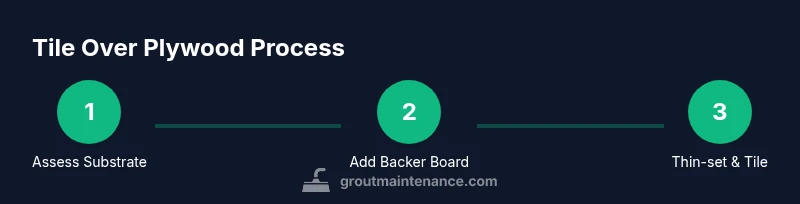
Can you put grout on plywood? Not directly. According to Grout Maintenance, plywood alone is too flexible and moisture-sensitive for grout and tile. For a reliable tile installation, install a rigid backer (like cement board or an exterior-grade underlayment with a moisture barrier) and ensure the plywood is structurally sound and properly prepared before grouting.
Can you put grout on plywood? Key considerations
When homeowners ask, can you put grout on plywood, the short answer is no for a direct application. Plywood is an engineered wood panel that can warp, cup, or delaminate with moisture and temperature changes. Grout and tile depend on a stiff, stable base to resist movement; otherwise, cracks develop and grout can stain or loosen. The Grout Maintenance team notes that successful tile installations rely on a properly prepared substrate, typically involving a cementitious backer or a compatible underlayment rather than bare plywood. In dry interior areas, you might find exceptions, but these require strict adherence to product instructions and local codes. Always verify with the tile manufacturer and follow best practices from reputable sources.
Key takeaway: your substrate choice is fundamental to tile longevity. A plywood-only setup is rarely recommended for any tile installation where moisture, weight, or foot traffic is a factor.
Why plywood isn't a good standalone substrate for grout and tile
Plywood can be problematic beneath tile for several reasons. It expands and contracts with humidity and temperature swings, which leads to tile stress and grout cracking. Its surface finish (paint, veneer, or sealants) often isn’t compatible with thin-set mortars, reducing bond strength. In wet areas, plywood is highly susceptible to rot, mold, and deterioration if moisture barriers aren’t correctly installed. Over time, fasteners can loosen, causing loose tiles and creaking floors. For these reasons, most tile manufacturers and industry guidelines recommend a rigid, moisture-controlled backer system rather than direct adhesion to plywood. While it’s technically possible to overlay plywood with the right system, a DIY install without the extra layer invites failure and costly repairs.
Practical takeaway: treat plywood as a subfloor layer that must be covered by a purpose-built backer or underlayment before grouting.
When plywood can be acceptable: conditions and exceptions
There are select cases where you can tile over plywood, but they require a prescribed approach. If allowed by the tile and mortar manufacturer, you must install a dedicated backer such as cement board, exterior-grade plywood-approved backer, or a liquid-applied membrane over a clean, sound plywood surface. The area must be completely dry, flat, and free of voids, damage, or protrusions. A moisture barrier or waterproof membrane is often recommended in wet zones, especially bathrooms and showers. Some projects rely on specific underlayments designed to tolerate plywood substrates while providing a stable base for thin-set and grout. Always confirm compatibility with your product line and consult local building codes before proceeding.
In short, can you put grout on plywood? Only when you’ve added a compliant backer system and follow the manufacturer’s installation steps.
Substrate options: cement boards, backer boards, and compatible underlayments
Several accepted options provide a solid base for tile, reducing the risk of grout failure when paired with plywood. Cement boards (like backer boards) add thickness, stiffness, and moisture resistance. Premium exterior-grade backer boards are designed for substrates that aren’t perfectly flat. In some configurations, a liquid-applied moisture barrier over a smooth plywood surface can work, but the barrier must be compatible with the tile adhesive and grout system. An uncoupling membrane can also help isolate substrate movement from tile movement, improving long-term performance. Always check that your chosen underlayment is rated for the tile type and room conditions. The goal is to create a flat, non-porous, and stable surface before grout is applied.
If you’re unsure about the right combination, consult product data sheets and consider a pro inspection to avoid hidden substrate issues.
Prep steps: surface cleaning, flattening, and moisture control
Preparation is the majority of the job. Begin by cleaning the surface to remove dust, oils, and waxes. Check for protruding nails or fasteners and countersink or fix them so the surface is flat. Inspect for soft spots, rot, or warped areas—these must be repaired or replaced. If moisture is a concern, use a moisture meter to confirm humidity levels are within the tile system’s tolerance. In wet zones, install a moisture barrier or waterproofing membrane between the plywood and the backer board. Proper priming, where recommended, can improve adhesive bonding. The goal is to achieve a smooth, clean, and stable base that won’t distort under load or moisture exposure.
Choosing the right underlayment and fastener strategy
Selecting the right underlayment is crucial when starting from plywood. Cement boards provide a rigid base, while wired or mesh tape and compatible fasteners secure the panels to the subfloor joists, preventing flex. Use corrosion-resistant screws and follow the manufacturer’s recommended screw length and spacing. If you use a liquid waterproofing membrane, apply it per the product instructions and allow for cure time before tiling. Surface flatness is essential; consider a self-leveling underlayment for high spots and low spots. Remember to maintain joint gaps and expansion allowances to prevent tile movement from damaging grout.
Grout selection, mixing, and cure considerations (over plywood-based substrates)
Grout choice should align with joint width and tile type. For joints 1/8 inch and wider, sanded grout is typically recommended; for very small joints, unsanded grout is preferred. Mix grout to the manufacturer’s specification, ensuring a consistent, lump-free texture. After grouting, follow with thorough cleaning to remove haze, and seal the grout if your product requires it. Cure times vary by product and environmental conditions, so always consult the label and give the installation ample time to cure before heavy use. If moisture exposure is ongoing, ensure the membrane’s integrity to prevent grout washout.
Maintenance, sealing, and long-term care after installation
Proper maintenance helps grout last longer, especially when used over plywood substrates. Keep moisture exposure to a minimum in bathrooms or kitchens by using good ventilation and promptly cleaning spills. Sealing grout can reduce staining and moisture ingress in susceptible joint types, but not all grouts require sealing. Follow the grout manufacturer’s guidelines for sealing intervals. Regular cleaning with non-abrasive tools protects grout from dirt buildup and mold growth. If you notice cracks or loosened tiles, address them early to prevent further damage and costly repairs.
Quick-reference planning checklist
- Confirm tile and mortar compatibility with backer boards and moisture barriers.
- Choose a backer board or underlayment suitable for the room's moisture exposure.
- Flatten and clean the plywood surface before installation.
- Ensure fasteners are properly installed and joints are correctly sealed.
- Follow curing times and manufacturer instructions for grout and sealers.
- Test for moisture and ensure the substrate remains stable after installation.
Tools & Materials
- Rigid backer board (cement board or exterior-grade backer)(Choose thickness per tile size; typically 1/2)
- Moisture barrier / waterproof membrane(Use where moisture is a concern; ensure compatibility with tile products)
- Notched trowel (size based on tile type)(Common sizes: 1/4x3/8 inch or 1/2x1/2 inch for larger tiles)
- Thin-set mortar(Polymer-modified mortar is commonly recommended for backer boards)
- Grout (sand or unsanded as appropriate)(Sand for joints 1/8 inch and wider; unsanded for narrow joints)
- Tile spacers(Maintain even joints; remove after initial set)
- Joint tape (alkali-resistant)(Used where boards join to prevent cracking)
- Backer board screws(Corrosion-resistant; length per board thickness)
- Primer/sealer (optional per product)(Follow manufacturer recommendations)
- Wet saw or tile cutter(Critical for precise cuts)
Steps
Estimated time: 2-4 hours (plus cure time per products used)
- 1
Assess the site and plan the substrate
Inspect the plywood subfloor for damage, water intrusion, or soft spots. Document tile layout and decide where a backer board will be installed. This planning minimizes waste and ensures a uniform finish.
Tip: Mark high and low spots with a chalk line, then plan lifts and cuts to minimize waste. - 2
Prepare plywood surface
Clean thoroughly to remove dust, oil, and residues. Repair any rot or delamination and address moisture issues before proceeding. A clean, flat surface improves adhesion of the backer board and tile.
Tip: Use a moisture meter to verify drying conditions before applying barrier layers. - 3
Install moisture barrier if required
Apply a compatible moisture barrier or waterproof membrane where needed. Follow product instructions for coverage and curing times. This step reduces the risk of moisture reaching plywood and underlayment.
Tip: Overlap seams and seal edges to prevent water intrusion. - 4
Attach the backer board
Install cement board or other approved backer boards over the plywood, using the recommended screws and spacing. Tape seams with alkali-resistant mesh tape to prevent crack transmission.
Tip: Do not fasten too tightly; allow for slight board movement and ensure flatness. - 5
Check flatness and level
Scan the surface with a long straight edge to identify high or low spots. Use a level and consider a light skim coat or underlayment to achieve a uniform plane.
Tip: Address high spots with gentle sanding or shaving; low spots with gradual shimming underlayment. - 6
Prime and set tile layout
Prime surfaces as required by the mortar system, then dry-fit tiles to verify layout and cuts. Mark reference lines to guide setting for straight grout lines.
Tip: Dry fit at least a row of tiles to confirm spacing and alignment before applying thin-set. - 7
Apply thin-set and lay tiles
Spread thin-set on the backer board with a notched trowel; press tiles firmly and twist slightly to set into place. Maintain consistent spacing using spacers and ensure level tiles.
Tip: Back-butter large tiles for improved contact with the substrate. - 8
Allow thin-set to cure
Let the mortar cure according to the manufacturer’s time, typically 24 hours in calm conditions. Keep the area dry and avoid foot traffic during cure.
Tip: Avoid turning on radiant heat too soon, which can cause uneven curing. - 9
Mix and apply grout
Mix grout to a smooth, consistent texture and apply with a rubber float at a 45-degree angle. Push grout into joints firmly to fill all voids and prevent air pockets.
Tip: Work in small sections to prevent grout from drying too quickly. - 10
Clean haze and initial cure
Wipe tile surfaces with a damp sponge to remove grout haze within the first few hours. Allow the grout to cure per product guidelines, then perform a final cleaning.
Tip: Change water frequently to avoid re-depositing haze on the tile face. - 11
Seal grout if required
Apply sealer after the grout has fully cured if your product requires it. Sealing reduces porosity and helps resist stains in high-traffic areas.
Tip: Use a penetrating sealer specifically rated for cement-based grouts. - 12
Final inspection and maintenance
Inspect grout lines for uniformity and check for any cracks or loose tiles. Keep moisture levels controlled and follow maintenance guidance from Grout Maintenance to extend life.
Tip: Address issues promptly to avoid mildew and water damage.
Got Questions?
Is it safe to grout directly on plywood?
No. Plywood is not a rigid or moisture-resistant substrate. Tiles and grout need a stable, approved backer or underlayment to prevent cracking and moisture damage.
Directly grouting on plywood is not safe. You need a backer board or underlayment for a stable, moisture-resistant base.
What substrate should I use under grout on plywood?
Use a cement board or exterior-grade backer board over the plywood, with a moisture barrier as needed. Ensure the area is dry and flat before tiling.
Use a cement board or backer board over plywood with a moisture barrier, and make sure the surface is flat and dry.
Do I always need a moisture barrier when tiling over plywood?
In wet areas such as showers or bathrooms, a moisture barrier is strongly recommended and often required by tile manufacturers. In dry spaces, it depends on the system and local codes.
In wet areas, yes—use a moisture barrier. In dry areas, check product recommendations and codes.
How long does grout cure after installation over plywood?
Cure times vary by product and conditions. Follow the grout manufacturer’s instructions; typical times range from 24 to 72 hours before sealing or use.
Cure time depends on the grout you use; follow the label—usually 24 to 72 hours before sealing or use.
What are the signs that my plywood-based tile installation is failing?
Cracked grout, loose tiles, warping, or water staining around the edges indicate substrate movement or moisture issues that require inspection and repair.
Look for cracked grout, loose tiles, or moisture stains—these signal substrate or moisture problems needing attention.
Can I tile a bathroom floor over plywood without extra backing?
Not recommended. A proper backer board and moisture barrier provide the required rigidity and moisture control for floor tile installations.
Tile over plywood is not recommended without a backer board and moisture barrier.
Watch Video
The Essentials
- Assess substrate thoroughly before tiling.
- Never grout directly on plywood; use a proper backer system.
- Choose compatible membranes and backer boards.
- Follow cure times and maintenance guidelines for durability.
- Inspect and address issues early to prevent repairs.