Do You Put Grout Around the Toilet? A Practical DIY Guide
Learn whether grout belongs around a toilet, why silicone caulk is preferred, and step-by-step sealing tips for a leak-free, mold-resistant bathroom.


Do you put grout around the toilet? In most cases, no. The gap between the toilet base and surrounding tile should be sealed with flexible silicone caulk rather than grout. Grout is rigid and can crack from movement, while caulk accommodates shifts and resists moisture, keeping the base dry and mold-free.
Do you put grout around the toilet? What this means for bathrooms
According to Grout Maintenance, homeowners often wonder do you put grout around toilet. The short answer is usually no. The joint between the toilet base and surrounding tile is a dynamic, moisture-prone gap that moves slightly as the toilet settles and people walk. Grout, being a rigid cementitious material, does not tolerate movement well. If you fill that gap with grout, small cracks can form, moisture can wick behind the seal, and mold can take hold along the base. The Grout Maintenance team finds that the best practice in most cases is to seal the gap with flexible silicone caulk, not grout. This creates a watertight, yet forgiving barrier that accommodates movement while keeping water from seeping into subfloor or cabinet bases. In bathrooms with poor ventilation or high humidity, a silicone bead also helps prevent mildew growth along the base. Before applying caulk, ensure the area is clean and completely dry, and select a mildew-resistant formula in a color that matches your tile for a clean, professional look.
Why grout around the toilet is risky
A toilet base sits on a shifting surface. When grout is used at this joint, any slight movement can cause the grout to crack, creating micro-gaps where moisture can travel. Over time, moisture behind cracked grout can lead to rot in wooden subfloors or water damage to adjoining cabinets. Additionally, grout is dense and can trap moisture longer than a flexible sealant, promoting mold growth along the base. For most residential bathrooms, the sealant choice should prioritize flexibility and waterproofing rather than rigidity. Grout is excellent for stable, non-moving joints, but around a toilet, it’s generally better to reserve grout for fixed tile joints away from the base and use caulk at the base.
Practical alternatives and why they work
The standard practice is to apply a bead of mildew-resistant silicone caulk along the seam where the toilet meets the tile. This material remains flexible, seals effectively against water, and resists mold. By choosing a color that matches the tile or grout line, you can achieve a seamless appearance while enjoying a durable seal. If you’re restoring a vintage tile job or working with epoxy grout in a fixed area, you may still seal the edge with silicone at the base to retain flexibility while preserving the grout’s integrity elsewhere.
Quick checklist before sealing
- Ensure the floor is dry and free of soap residue or cleaners.
- Use a mildew-resistant silicone caulk suitable for bathrooms.
- Choose a color that blends with the grout or tile for a clean look.
- Apply masking tape along the tile edge to keep the bead neat.
- Allow the caulk to cure fully before exposing to moisture.
Tools & Materials
- Grout removal tool(Precision tool for removing damaged grout near toilet base; select a blade about 1/4 inch wide)
- Putty knife(Plastic or metal; helps scrape old grout and clean the joint)
- Silicone bathroom caulk(Mildew-resistant, 100% silicone; color to match tile or grout)
- Caulk gun(Essential for controlled caulk bead application)
- Masking tape(Protects tile edges for clean, straight caulk lines)
- Isopropyl alcohol or pipe cleaner(For cleaning the joint before sealing)
- Sponge and clean water(Keeps the bead tidy and removes excess caulk)
- Gloves(Protect hands during removal and sealing)
- Rubbing alcohol or mineral spirits(For final cleanup after caulk cures)
Steps
Estimated time: 60-90 minutes
- 1
Remove old grout near the toilet base
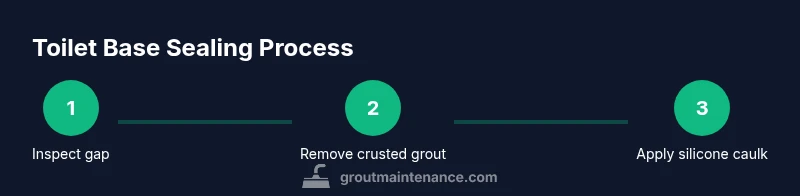
If you discover damaged grout around the base, carefully remove it with a grout removal tool. Work slowly to avoid chipping tile or scratching the toilet base. Only remove grout in the joint closest to the base; do not disturb intact tile grout elsewhere.
Tip: Use a flashlight to inspect for hidden gaps and work at a steady pace to minimize tile damage. - 2
Clean and dry the joint
Wipe the joint with an alcohol wipe or mild cleaner and allow it to dry completely. Moisture trapped under grout can prevent caulk from adhering properly and promote mildew.
Tip: A dry joint is essential for a strong seal; give it 5–10 minutes of air-drying in a fan-assisted bathroom. - 3
Mask the edges for a clean line
Apply painter’s tape along the tile edge where it meets the toilet base. This keeps the caulk bead neat and prevents excess from marring the tile surface.
Tip: Press the tape down firmly to avoid crawling caulk under it. - 4
Apply the silicone caulk bead
Cut the caulk tube nozzle to the desired bead size and slowly run a continuous bead along the base seam. Keep the toilet steady to avoid gaps caused by movement or jitter.
Tip: Apply a steady, even bead; a 1/4 inch bead is typical for most住宅 installations. - 5
Smooth and clean the bead
Use a caulk smoothing tool or a damp finger to shape the bead. Wipe away excess caulk with a damp sponge as you go to prevent a raised edge.
Tip: Keep a damp cloth ready to clean around the base before the caulk cures. - 6
Cure and verify
Allow the caulk to cure per the manufacturer’s instructions, typically 24 hours, before exposing to moisture. Check for gaps and re-treat if needed.
Tip: Avoid cleaning or flushing for at least 24 hours to ensure a complete cure.
Got Questions?
Should I grout around the toilet or caulk?
In most cases you should caulk around the toilet base rather than grout. Caulk remains flexible to accommodate movement and provides a better moisture barrier.
Usually, caulk is the right choice around the toilet base because it stays flexible and blocks moisture.
What type of caulk is best for bathrooms?
Choose 100% silicone caulk that is labeled mildew-resistant and suitable for wet environments. It adheres well to tile and porcelain.
Use 100% silicone caulk that’s mildew-resistant for bathrooms.
How long does silicone caulk take to cure?
Most bathroom caulks cure in about 24 hours. Check the product label for the exact cure time before exposing to moisture.
Caulk typically cures in 24 hours; refer to the product for exact timing.
Can grout ever be used around a toilet?
Grout is generally not recommended at the base due to movement and moisture concerns; it can crack and trap water.
Grout around the base isn’t usually recommended because it cracks with movement.
What are signs my seal is failing?
Look for cracks in the bead, water staining, or mold growth along the base. Re-seal if you notice gaps or moisture leakage.
Cracked caulk, moisture, or mold along the base means resealing is due.
Should I remove old grout before sealing?
If you find cracked or deteriorated grout near the base, remove it before applying new caulk. Leave sound grout in place.
If the old grout is cracked, remove it before sealing with caulk.
Watch Video
The Essentials
- Seal with caulk, not grout, at the toilet base
- Use mildew-resistant silicone for best moisture resistance
- Ensure a clean, dry joint before sealing
- Allow caulk to cure fully before moisture exposure
- Maintain the seal with periodic inspection