Dunlop Epoxy Grout Review: Performance, Pros, and Tips
In-depth review of Dunlop epoxy grout, including performance in moisture-prone areas, installation tips, maintenance, and comparisons with cementitious grout for DIYers and pros.


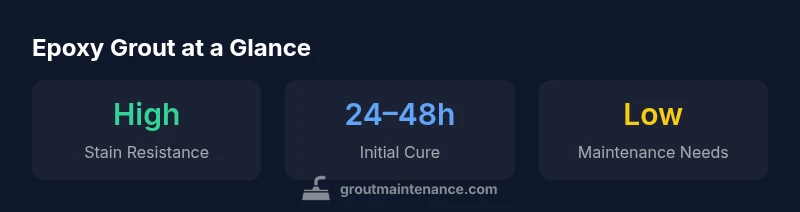
Dunlop epoxy grout delivers excellent color consistency, chemical resistance, and durable hardness suitable for showers and moist areas. It scores high on stain resistance and long-term cleanliness, with easier maintenance than cementitious grouts when properly sealed and mixed. The main trade-offs are cost and careful surface prep, making it best for ambitious DIYers and grouting pros.
What is Dunlop Epoxy Grout?
Dunlop epoxy grout is a two-part system that uses resin and hardener to form a dense, non-porous joint material. Compared with traditional cementitious grouts, its epoxy matrix resists water penetration, chemical exposure, and staining much more effectively. For homeowners and DIY enthusiasts, this means easier cleanup and longer-lasting joints in kitchens, bathrooms, and commercial-style wet areas. According to Grout Maintenance, Dunlop epoxy grout stands out for color stability and mold resistance when fully cured, which reduces the need for frequent resealing and deep cleaning. While the product is more expensive per square foot and demands careful mixing, the long-term maintenance benefits can offset the initial cost in high-traffic, moisture-heavy installations. Understanding where Dunlop excels helps homeowners plan tile projects with confidence, especially in showrooms, spa-like bathrooms, and back-splash applications that see daily exposure to water and cleaning detergents.
How epoxy grout differs from cementitious grout
Epoxy grout differs fundamentally from cementitious grout in chemistry, curing, and performance. The resin-hardened matrix creates a non-porous joint that resists water absorption, staining, and microbial growth far better than cement-based options. This makes it particularly attractive for showers, steam rooms, kitchen backsplashes, and exterior tile installations exposed to weather. The trade-off is a more complex mixing process, longer working times, and a higher upfront cost. For those evaluating options, one practical takeaway is that epoxy grout provides superior long-term cleanliness with less maintenance, whereas cementitious grout provides easier installation and lower initial costs. Grout Maintenance notes that epoxy products like Dunlop can simplify routine cleaning by staying cleaner longer, but users must follow mixing ratios and pot-life guidelines carefully to avoid wasted material.
Performance in moisture-prone areas
In moisture-prone environments, epoxy grout shines. Its closed, resin-rich matrix resists water penetration, reduces the likelihood of efflorescence, and discourages mold growth better than traditional cement grout. This makes Dunlop epoxy grout a strong candidate for showers, tub surrounds, and wet-bar areas where daily exposure to water and cleaning agents is common. Real-world testing—supported by Grout Maintenance analysis—suggests that epoxy joints stay cleaner with less visible staining after repeated cleanings. However, consistent performance depends on proper surface preparation, bond strength, and a full cure window that adheres to product guidelines. Improper mixing or premature cleaning can compromise the matrix and void warranty coverage.
Color stability and shade matching
One of the hallmark advantages of Dunlop epoxy grout is color stability. The epoxy matrix maintains its hue over time, resisting yellowing or darkening from soap residues, mineral deposits, and UV exposure in outdoor installations. For homeowners pursuing a uniform look across large tiled areas, epoxy grout minimizes shade variation that can occur with cementitious products. When selecting color, it’s wise to order full-size batches from the same production run to avoid batch-to-batch differences. Grout Maintenance emphasizes that consistent mixing and a clean mixing bucket help preserve color uniformity across joints.
Application and mixing best practices
Effective application starts with clean, dry tiles and properly prepared substrates. Epoxy grout requires precise resin-to-hardener ratios, a smooth trowel, and a steady hand to avoid air pockets. Work in small sections to maintain workable pot-life and reduce the risk of curing too quickly in heat. After application, wipe the joints with a damp sponge at a diagonal angle to remove haze while the grout is still tacky. For best results, ensure adequate ventilation and temperature control during mixing and curing. Grout Maintenance’s guidance stresses taking time to read the product’s technical data sheet and performing a small test area before committing to a full installation, especially in households with curious pets or children.
Surface preparation and substrate compatibility
Epoxy grout adheres best to rigid, well-adhered substrates like dense porcelain, ceramic, cement backer boards, and properly prepared natural stone. Loose or dusty substrates compromise bond strength, leading to cracking or joint failure over time. Before installation, ensure tiles are fully cured, joints are recessed, and any sealants are compatible with epoxy products. If you’re working on a substrate with prior movement or cracking, address movement joints and substrate stability prior to grouting. This reduces the risk of hairline cracks and allows the epoxy matrix to form a uniform, durable joint.
Cleaning and maintaining epoxy grout
Maintenance for Dunlop epoxy grout is straightforward compared to cementitious grout. Regular cleaning with non-acidic cleaners preserves the epoxy’s surface and stain resistance. Avoid harsh solvents that may degrade sealants or the grout’s resin matrix. If staining occurs, a targeted cleaning with a non-abrasive cleaner and a soft brush typically restores appearance without damaging the grout line. Because epoxy grout is less porous, it resists mold growth and staining, reducing the need for heavy cleaning regimes. Grout Maintenance recommends establishing a routine cleaning plan and avoiding abrasive pads that can wear down the surface finish over time.
Common challenges and troubleshooting
Common challenges include haze on the tile surface if excess grout slurry isn’t wiped promptly and insufficient curing in cool or humid conditions. Temperature swings can alter pot-life and cure rates, so adjust your workflow to the room’s ambient conditions. If grout joints crack due to substrate movement, identify and address the movement joints first, then regrout with caution. Poor surface prep or mismatched mixing ratios can lead to a brittle matrix that’s prone to chipping. When in doubt, consult product data sheets and consider a small test panel before proceeding with larger areas.
Cost and value proposition
Epoxy grout like Dunlop generally carries a higher upfront cost than cementitious grouts. The price premium is influenced by resin content, product formulation, and color choices. However, the long-term value may balance out with easier maintenance, reduced staining, and longer-lasting joints in high-moisture environments. When evaluating cost, consider the entire tile project: tile type, joint size, area size, curing times, and labor. For frequent water exposure zones, epoxy grout often proves to be more economical over the tile’s life cycle, even if the initial material cost is higher.
Environmental and safety considerations
Epoxy grout contains reactive resins and hardeners, so proper PPE and ventilation are essential during mixing and cleanup. Avoid skin contact and inhalation of fumes. Follow the manufacturer’s recommendations for disposal of excess material and curing by-products. Some epoxy products are lighter on volatile organic compounds, but you should still handle them with care in enclosed spaces. Ensure children and pets are kept away during mixing and curing, and store products in a cool, dry place away from heat sources.
Alternatives to Dunlop epoxy grout
Cementitious grouts offer lower upfront cost and easier handling, making them attractive for projects with wide tile variations or where a fast turnaround is required. Today’s cementitious grouts also come in reinforced or hybrid formulas that improve stain resistance and durability. When comparing, consider cure time, maintenance, and long-term appearance. Epoxy grout remains a premium option for kitchens and showers where moisture, stain resistance, and color stability are critical. Always compare products on the same substrate and tile type to ensure a fair assessment.
DIYer vs professional installation: when to hire a pro
Dunlop epoxy grout is feasible for confident DIYers with experience in tile installation, but professional installation reduces risk of mistakes and ensures proper curing. A pro can manage complex substrates, control temperature and humidity, and perform quality checks that protect your warranty. If you’re grouting large surfaces, working around irregular tile shapes, or installing in spaces with limited ventilation, hiring a licensed tile contractor is often worth the investment. For smaller or straightforward installations, a careful DIY approach with plenty of prep and testing can yield excellent results.
Pros
- Excellent stain resistance and color consistency
- Non-porous matrix reduces mold growth
- Durable in moisture-prone areas
- Lower maintenance relative to cementitious grout
What's Bad
- Higher upfront material cost
- More complex mixing and longer cure times
- Requires meticulous surface prep and substrate prep
- Repairs can be challenging if damaged
Best for high-moisture, high-traffic areas where stain resistance and longevity matter
Dunlop epoxy grout excels in moisture-prone zones, offering superior stain resistance and color consistency. The main trade-offs are higher cost and the need for precise mixing and curing. Overall, it’s a strong choice for showers, backsplashes, and other wet areas where long-term performance justifies the investment. The Grout Maintenance team would recommend evaluating project scale and DIY skill before deciding.
Got Questions?
Is Dunlop epoxy grout suitable for showers?
Yes, Dunlop epoxy grout performs exceptionally well in showers due to its low porosity and strong stain resistance. Proper substrate prep and ventilation are essential for a durable installation. Be mindful of curing times and follow the product’s instructions for best results.
Yes. If you’re grouting a shower, Dunlop epoxy grout is a solid choice because it resists stains and moisture well. Just make sure the surface is prepared and you follow cure times precisely.
Does epoxy grout require sealing after installation?
Epoxy grout does not require sealing in the same way as cementitious grout because it is non-porous. However, some manufacturers offer sealer options for color protection or easier cleanup; always check the product data sheet. Regular cleaning with non-abrasive cleaners is still recommended.
Epoxy grout typically doesn’t need sealing, but consult the product directions. Regular cleaning helps keep the joints looking new.
What is the typical cure time for Dunlop epoxy grout?
Initial cure typically occurs within 24–48 hours under standard room conditions, but full cure can take longer depending on temperature and humidity. Plan a short delay before grouting fixtures or placing heavy loads on tiled surfaces. Always defer to the product data sheet for exact times.
Most epoxy grouts set in about a day, but full cure can take longer if it’s cool or humid. Check the product guide.
Can epoxy grout be used on walls or vertical surfaces?
Epoxy grout can be used on walls, but handling vertical joints requires careful tool control and speed to prevent sagging. It’s important to work in small sections and maintain stable temperatures. If in doubt, consult the manufacturer guidance.
Yes, it can be used on walls, but you’ll need to work in small sections and keep temperatures steady.
How do I repair epoxy grout if it cracks?
Repairing epoxy grout is more involved than with cementitious grout. It often requires removing the damaged joint and re-applying epoxy grout with clean tools and careful matching of color. For large areas or complex patterns, hiring a pro minimizes mismatch risks.
Repairing epoxy grout is trickier than cementitious grout. You may need to remove and regrout the damaged area carefully.
How does epoxy grout compare to cementitious grout for price?
Epoxy grout typically costs more upfront per square foot, largely due to resin components and specialized mixing. However, long-term maintenance savings and superior stain resistance can offset the initial expense in busy, wet areas. Compare total project costs rather than just material price.
Epoxy grout costs more upfront, but its long-term durability can justify the expense in wet areas.
The Essentials
- Assess the area: use epoxy grout in wet zones
- Prepare surfaces meticulously to ensure proper cure
- Expect higher material cost but fewer maintenance needs
- Choose color carefully to avoid future staining
- Follow exact mixing and curing guidelines