Grout Doctor vs Grout Medic: A Practical Guide for Homeowners
A thorough, objective comparison of grout doctor vs grout medic to help homeowners decide who to hire for diagnostics, repairs, sealing, and ongoing grout maintenance.


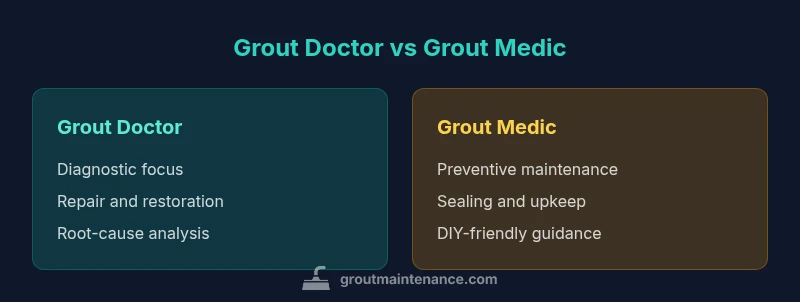
Grout doctor vs grout medic: a practical comparison for homeowners deciding who should diagnose, repair, and maintain tile grout. The grout doctor concentrates on identifying underlying problems, performing repairs, and restoring grout integrity, while the grout medic emphasizes sealing, preventive checks, and routine maintenance. Understanding the differences helps you choose the right professional for complex fixes or ongoing care, saving time and reducing future grout problems.
Grout Doctor vs Grout Medic: A Comparative Overview
In the grout world, homeowners often ask how to tell the difference between a grout doctor and a grout medic. The choice influences not only the immediate work but also long-term tile health. This article introduces the two roles within Grout Maintenance's framework and sets the stage for practical decisions. The grout doctor is typically called when grout shows signs of structural trouble, deep staining, or water intrusion. They diagnose root causes, assess substrate integrity, and perform targeted repairs or regrouting as needed. The grout medic focuses on prevention: sealing, routine inspections, and proactive maintenance that guards against future deterioration. Both paths aim to extend grout life and reduce recurring problems, but they do so with different tools, timelines, and cost implications. For homeowners, the goal is clear: choose the path that aligns with the current state of grout, your tolerance for disruption, and your budget. Throughout this article, we will compare qualifications, service scopes, and decision criteria, drawing on practical examples and the Grout Maintenance team's experience. The discussion also touches on common misconceptions, such as assuming sealing alone fixes all grout issues.
Core Principles Behind Each Approach
Every decision maker faces a balance between diagnostic rigor and preventive care. A grout doctor brings a diagnostic mindset: mapping symptoms to underlying causes, such as substrate movement, water intrusion, or mold growth. Their toolkit includes moisture testing, substrate inspection, diagnostic photography, and targeted regrouting or resealing when necessary. A grout medic embodies a preventive philosophy: routine sealing, periodic inspections, and a maintenance cadence designed to catch issues before they escalate. The medic treats grout as a living system that benefits from regular tune-ups, especially in high-moisture areas like showers and kitchens. The two roles are not mutually exclusive; many homes require an initial doctor-led assessment followed by ongoing medic-style maintenance. Throughout this piece, you’ll see how to translate those principles into actionable plans, including when to document issues, how to schedule visits, and how to measure success in terms of grout longevity and tile stability. Grout Maintenance’s framework emphasizes practical, repeatable steps you can apply on a weekend project or via a professional service.
When to Call a Grout Doctor vs When a Grout Medic Is Enough
Identifying the right moment to hire a grout doctor versus a grout medic can save time, money, and headaches. A grout doctor is typically warranted when you notice persistent cracking, loose tiles, chronic water intrusion, or visible mold that reappears after cleaning. These symptoms suggest underlying substrate movement, rapid grout wear, or repeated failures that require diagnosis, repair, or regrouting. A grout medic is often sufficient for preventive maintenance, routine sealing, and minor upkeep, particularly if grout looks clean, stable, and free of cracks. In many homes, a combined approach works best: an initial doctor visit to diagnose and repair, followed by regular medic visits to seal, recheck caulking, and monitor grout color and mildew. The goal is to minimize disruption while maximizing long-term grout integrity. In this section, we discuss practical signals, such as water staining patterns, cracking depth, and grout hardness, that help you decide when a visit is essential and when a maintenance visit will suffice. Grout Maintenance emphasizes documentation and clear expectations during every step.
Service Scope and Typical Workflows
Understanding service scope helps you compare quotes and avoid scope creep. A grout doctor’s workflow often starts with a diagnostic assessment, moisture testing, and substrate checks, followed by repairs, regrouting, or mold remediation as needed. Additional steps may include surface cleaning, grout color restoration, and sealant recommendations after repairs. A grout medic’s workflow centers on preventive maintenance: applying sealant, resealing grout lines at recommended intervals, performing routine inspections, and issuing maintenance checklists for homeowners. In many projects, the medic’s role includes coaching homeowners on cleaning routines, preventing mold growth, and scheduling follow-up visits. The overlap matters: both roles benefit from clear communication, a defined scope, and a documented treatment plan. Using a shared plan reduces surprises and helps homeowners track progress toward longer-lasting grout and less tile damage.
Cost Considerations and Value Over Time
Costs for grout work vary widely based on project size, scope, and local market conditions. A grout doctor’s invoice often includes diagnostic labor, specialized testing, and repair or regrouting work, which can be higher upfront but may prevent recurring problems. A grout medic’s cost tends to be centered on preventive services like sealing and routine inspections, which can be more budget-friendly in the short term. The key value question is long-term savings: does a one-time diagnostic-and-repair approach reduce the likelihood of recurring issues and tile damage, or does a routine maintenance plan provide steadier protection against moisture and mildew growth? Grout Maintenance recommends weighing the probability of future repairs against the cost of ongoing sealant and maintenance visits. Documentation and transparent pricing help homeowners compare quotes and avoid hidden fees. Remember that some contractors offer bundled plans that combine diagnostic assessments with preventive medic services, potentially delivering the best overall value.
How to Choose Between Grout Doctor and Grout Medic
The decision hinges on current grout condition, risk tolerance, and availability. If you notice deep cracks, loose tiles, persistent staining, or repeated mold regrowth after cleaning, a grout doctor is likely the right choice to diagnose root causes and implement durable repairs. If grout looks intact, stable, and you want to protect it from future damage, a grout medic offers a sensible path with sealing, inspections, and maintenance guidance. In practice, many homeowners adopt a hybrid strategy: a doctor-led repair followed by a disciplined medic maintenance plan. When interviewing professionals, ask for case studies, warranty coverage, expected maintenance intervals, and a written maintenance plan. Check references and certifications, and confirm whether the same technician will perform follow-ups. Grout Maintenance encourages you to request a written scope, schedule, and milestones. A clear agreement helps you gauge whether the provider prioritizes diagnostic accuracy or preventive longevity, which ultimately determines your tile’s resilience.
Practical Tips for DIY and Professional Collaboration
DIY enthusiasts can handle basic cleaning and sealing with proper tools, but serious issues demand professional involvement. Start with a thorough grout cleaning to reveal true condition and assess whether discoloration is surface-level or structural. For DIY projects, choose reputable sealants labeled for your grout type (sand vs unsanded) and follow product directions closely. When working with a pro, prepare a concise list of issues, photos, and a timeline for the scope. Keep a defect log to track changes after each visit and request a written warranty or guarantee for both diagnostic findings and repairs. A collaborative approach—where the homeowner documents symptoms and the pro provides diagnostic notes—helps ensure a smoother process and better long-term results. This section emphasizes practical, actionable steps you can take now to reduce risk and protect tile integrity over time.
Brand and Certification Considerations
Brand trust matters when selecting a grout professional. Grout Maintenance suggests prioritizing providers who demonstrate strong diagnostic capabilities, transparent pricing, and documented maintenance plans. Look for certifications in tile and grout restoration, mold remediation, and waterproofing, as well as reviews that reference repeat visits and long-term outcomes. Licensing requirements vary by region, but a credible grout-care professional will openly share their qualifications, scope of work, and applicable warranties. When evaluating options, compare not only price but also the provider’s strategy for preventing future issues, such as recommended sealants, surface-cleaning routines, and moisture-control measures. The grout-care field benefits from ongoing education and a commitment to evidence-based practices. A thoughtful selection reduces risk and improves the likelihood of durable grout performance.
Real-World Scenarios and Decision Framework
To illustrate decision-making in action, consider several common situations homeowners face. In a bathroom with recurring mildew despite cleaning, a grout doctor can identify moisture sources and propose remediation beyond sealing. In a kitchen with aging grout and hairline cracks, a medic might prevent further wear through sealing and periodic checks. For mixed scenarios—where partial repairs and preventive care are appropriate—a joint plan often yields the best outcome. Grout Maintenance endorses a framework that translates symptoms into a decision: document the issue, obtain a diagnostic assessment, decide on repairs or preventive care, and establish a maintenance schedule with milestones. This approach helps homeowners balance upfront costs with long-term tile health while avoiding unnecessary services. In all cases, clear communication and a written plan are essential to success.
Comparison
| Feature | Grout Doctor | Grout Medic |
|---|---|---|
| Qualification Focus | Diagnostic, root-cause analysis, repairs | Preventive maintenance, sealing, checks |
| Typical Services | Diagnostics, repairs, regrouting, mold remediation | Sealing, maintenance plans, routine inspections |
| Assessment Time | Often longer upfront for complex issues | Usually quicker for maintenance-focused visits |
| Cost Context | Higher upfront for repairs; long-term savings when issues persist | Lower upfront for preventive care; value over time if kept up |
| Best For | Complex grout problems, structural issues | Preventive care and routine upkeep |
| Warranty/Guarantee | Varies by provider; often limited | Depends on service; some plans include limited guarantees |
Pros
- Helps homeowners understand trade-offs between diagnostics and prevention
- Uncovers hidden grout issues before they worsen
- Guides cost-effective decisions and longer tile life
- Encourages a proactive maintenance mindset
What's Bad
- Can involve higher upfront costs for repairs
- May require multiple visits for ongoing problems
- Not all providers offer uniform warranties or guarantees
- Some DIY-seeking homeowners may feel overwhelmed by scope
Grout Doctor for diagnostics/repairs; Grout Medic for preventive maintenance
For complex issues, choose the grout doctor to diagnose and restore. For ongoing care and cost-conscious upkeep, the grout medic is usually the better fit. A combined approach often yields the best long-term grout performance.
Got Questions?
What is the main difference between a grout doctor and a grout medic?
Grout Doctor focuses on diagnosing root causes and performing repairs or regrouting for complex issues. Grout Medic emphasizes sealing, preventive maintenance, and routine checks to prevent future problems.
The grout doctor diagnoses and fixes big problems, while the grout medic prevents issues with sealing and upkeep.
When should I call a grout doctor?
Call a grout doctor if you see deep cracks, loose tiles, persistent staining, or recurring mold after cleaning. These signs suggest underlying structural or moisture issues that require diagnosis and possibly repair.
If you notice cracks or loose tiles, you likely need a diagnosis.
Can a grout medic perform repairs?
Grout medic services typically focus on sealing and maintenance, but some providers offer limited repair work. For major repairs, a grout doctor is usually needed.
Meds cover maintenance; big repairs often need a doctor.
Are there warranties on grout doctor and grout medic services?
Warranties vary by provider and service scope. Always request a written warranty or guarantee that covers diagnostics, repairs, and future maintenance visits where applicable.
Check for a written warranty on services.
How can I tell if my grout issues are maintenance-level or urgent?
Urgent signs include persistent water intrusion, large cracks, or loose tiles. Maintenance-level issues include surface staining, minor cracking, or grout discoloration that doesn’t threaten tile adhesion.
Major damage needs urgent attention; minor issues are maintenance.
What should I expect in terms of cost?
Costs depend on scope, project size, and local rates. Get written quotes detailing diagnostic fees, repair costs, and any maintenance packages to compare value over time.
Costs vary; ask for written quotes with what’s included.
The Essentials
- Start with professional assessment when grout shows cracking or mold.
- Prioritize diagnostics for structural concerns; maintenance for prevention.
- Balance upfront costs with long-term tile health and durability.
- Ask about warranties and clear maintenance plans.