How to Stop Grout Smells Like Urine: Odor-Clean Grout Care
Learn how to diagnose and fix grout smells like urine in bathrooms. Step-by-step cleaning, mold control, sealing, and prevention to restore fresh grout and prevent recurrence.


The most likely culprits behind grout smells like urine are mold/mildew and pet urine that’s penetrated grout, especially in damp, poorly ventilated areas. Quick fixes start with a thorough cleaning using an enzymatic cleaner, thorough rinsing, and complete drying, then sealing to prevent recurrence. If the odor persists, inspect for leaks or sewer gas and consider professional regrouting if needed.
What causes grout smells like urine
According to Grout Maintenance, a urine-like odor in grout is rarely caused by a single issue. More often, a combination of moisture, organic buildup, and material degradation creates that unmistakable scent. The most common culprits are mold and mildew colonies thriving in damp grout lines, producing ammonia-like smells that many describe as urine. Pet urine that soaks into porous grout also contributes, especially on floors or near pet areas. Plumbing leaks, sewer gas, and stagnant water can introduce urine-like odors, particularly in poorly ventilated bathrooms.
To diagnose and address grout smells like urine, start with a quick check of humidity, ventilation, and recent cleaners. The Grout Maintenance team emphasizes beginning with simple explanations—moisture and visible growth—before moving to more invasive fixes. If you notice persistent dampness, higher humidity, or visible mold, treat those factors first to reduce the odor.
Immediate checks to perform
- Inspect for visible mold or dark staining along grout lines.
- Check bathroom vents, exhaust fans, and windows to improve air flow.
- Look for any leaks or running water near showers and sinks.
- Note whether the odor is stronger after humid days or shower use.
- Record recent cleaning products; some cleaners leave residues that can interact with grout and odors.
If you find active mold or leaks, treat those areas promptly. Grout smells like urine often indicates moisture intrusion, so stopping moisture is the first line of defense. The goal is to minimize moisture and surface residues to prevent odor from returning.
Deep cleaning and deodorizing grout without damaging it
Cleaning grout that smells like urine requires products that break down organic material without dulling color or worsening damage. Start with an enzymatic cleaner designed for pet urine or organic stains; these products target proteins and fats left behind by urine and mold. Apply according to label directions, allow contact time, and scrub with a stiff nylon brush. Rinse thoroughly with hot water and dry completely. If the odor persists, you can repeat the enzymatic cleaning, then consider a hydrogen peroxide solution (3%) for stubborn spots, followed by a thorough rinse and drying. Avoid mixing cleaners, especially ammonia-based products with bleach. Enzymatic cleaners are generally safer for grout and tiles and can be especially effective when grout smells like urine is due to organic residues.
Diagnosing the source: moisture, mold, and contamination
Odors like grout smells like urine often stem from moisture-driven mold, but other sources exist. Conduct a moisture assessment around the affected area—check for hidden leaks behind tiles, under cabinets, or in the wall cavity. Mold growth may hide behind the grout if tiles are tightly sealed or if there’s poor ventilation. Pet urine contamination may persist in high-traffic zones, especially where pets rest or mark. In some cases, sewer gas can infiltrate the bathroom via venting issues or drain traps that aren’t sealed. A careful inspection focusing on moisture, recent water events, and pet activity will guide your next steps. If you cannot locate a clear source, consider professional air and moisture testing to confirm the odor’s origin.
When odor persists: testing odors and decisions about sealing or regrouting
If the urine-like odor remains after cleaning and moisture control, you may be watching for deeper issues. Odor persistence often means hidden moisture or deeply stained grout. Sealing grout after cleaning can help slow moisture intrusion, but it won’t fix odor if bacteria or mold remain embedded. In heavily stained or cracked grout, resealing may fail to fully stop the smell. In such cases, regrouting or removing and replacing sections of grout may be necessary. Before sealing, ensure grout is completely dry and the area is ventilated. For ongoing moisture problems, address plumbing leaks or humidity sources first. Grout smells like urine is not unusual in damp spaces, but it’s solvable with a systematic approach.
Step-by-step repair options: from cleaning to regrouting
This section outlines practical repair paths based on odor severity and grout condition. Start with non-invasive cleaning and moisture control; move to sealing; escalate to regrouting if odors persist or grout is cracked.
- Inspect, dry, and clean: Ensure all surfaces are dry before applying any sealant.
- Enzymatic clean + rinse: Use pet-urine enzymatic cleaners on grout lines, scrub, rinse, and dry.
- Seal the grout: Apply a penetrating sealant after the grout is completely dry.
- Re-seal or regrout: If odors persist or grout is cracked, consider replacing the affected grout.
- Check for leaks: If you suspect plumbing or drain issues, call a professional.
A careful, staged approach minimizes expense and disruption while restoring fresh grout.
Prevention tips and maintenance to keep grout fresh
Prevention is easier than remediation. Maintain good bathroom ventilation and reduce humidity with exhaust fans and window use. Clean grout regularly with enzymatic cleaners to prevent buildup that feeds mold and odors. Promptly address spills and pet accidents to minimize urine penetration into grout. Seal grout after each thorough cleaning and check seals periodically for wear. If you notice recurring odors, re-evaluate moisture sources and consider a full grout reseal or regrouting project when necessary.
Steps
Estimated time: 2-3 hours
- 1
Gather supplies and prep area
Collect enzymatic cleaner, stiff nylon brush, gloves, eye protection, a spray bottle, and rags. Clear the area and ensure good ventilation by opening a window or running the exhaust fan. This prepares you for a safe, effective cleaning session.
Tip: Wear protective gear to avoid skin and eye irritation from cleaners. - 2
Ventilate and dry the space
Turn on the bathroom fan and open any windows. Use towels to dry damp spots and place a small fan to promote air movement. Odor-causing moisture is the enemy of clean grout.
Tip: Better air flow now saves you from stubborn odors later. - 3
Apply enzymatic cleaner to grout
Spray or apply enzymatic cleaner along the grout lines, focusing on areas with visible staining. Allow the product to sit for 10–15 minutes to break down organic residues, then scrub with a stiff brush.
Tip: Don’t saturate surrounding tiles; excess moisture can prolong drying. - 4
Rinse and repeat as needed
Rinse thoroughly with hot water and dry completely. If odor persists, repeat the cleaning cycle once more. For stubborn odors, consider a hydrogen peroxide solution (3%) applied carefully to small spots and rinsed away.
Tip: Do not mix cleaners; stain-tolerant grout may need color-safe products. - 5
Dry thoroughly before sealing
Ensure grout is completely dry before applying a penetrating grout sealer. Moisture trapped under a sealant can seal in odors rather than lock them out.
Tip: Use a heat gun or hair dryer briefly on low to speed up drying if needed. - 6
Seal the grout
Apply a penetrating grout sealer following the product directions. A good seal helps resist moisture intrusion and future stains. Allow sufficient cure time before exposing to moisture.
Tip: Test a small area first to ensure no color change. - 7
Monitor and address leaks
Inspect plumbing and drain traps for leaks. If you suspect sewer gas or ongoing moisture issues, contact a licensed plumber to diagnose and repair.
Tip: Early detection prevents recurring odors and costly repairs. - 8
Consider regrouting if necessary
If odors persist, inspect grout integrity. Cracked or deeply stained grout may need removal and regrouting to restore a clean, odor-free surface.
Tip: Professional regrouting preserves tile integrity and odor control.
Diagnosis: Grout smells like urine despite cleaning
Possible Causes
- highMold and mildew growth in moist grout
- mediumPet urine penetrated grout lines
- lowPlumbing leaks or sewer gas entering the bathroom
Fixes
- easyImprove ventilation and reduce humidity to slow mold growth
- easyTreat grout with enzymatic cleaners and scrub thoroughly
- mediumSeal grout after cleaning; monitor and regrout if odor returns
- hardConsult a plumber or tile professional for leaks or sewer gas concerns
Got Questions?
Why does grout smell like urine even after cleaning?
Persistent odors usually indicate mold embedded in grout or urine residues that cleaning didn’t fully remove. Deep cleaning, moisture control, and possibly regrouting are often required.
Persistent grout odors usually mean mold or urine residue remains. Try deeper cleaning, sealing, or regrouting if needed.
Is it safe to use bleach on grout to remove urine smell?
Bleach can whiten grout but is not always effective for organic odors and can damage colored grout. Enzymatic cleaners are typically more effective for urine-related odors and safer for grout.
Bleach may lighten grout but enzymatic cleaners usually work better for urine odors and are gentler on grout color.
Should I seal grout to prevent odors?
Sealing helps block moisture, which can reduce future odors, but it won’t fix odor if mold or urine residues remain. Clean and dry first, then seal.
Sealing helps, but you still need to clean out any mold or urine residues first.
When should I call a professional?
If you suspect leaks, persistent sewer gas, or odor that won’t go away after cleaning, a plumber or tile professional can diagnose moisture sources and offer remediation.
Call a pro if leaks or sewer gas are suspected or odors persist after cleaning.
Does regrouting always solve the odor problem?
Not always. If moisture sources remain, or if underlying framing or leaks exist, regrouting may not fully fix the odor. Address moisture first.
Regrouting may help, but only after moisture issues are resolved.
Watch Video
The Essentials
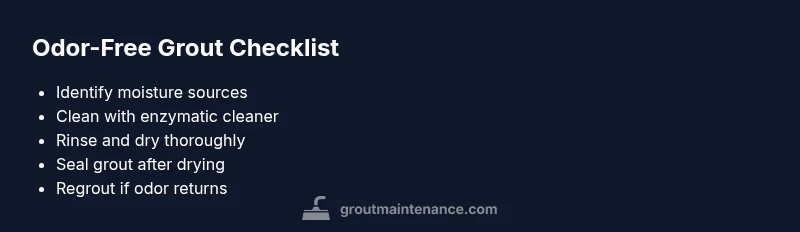
- Identify moisture sources early to stop odors.
- Deep cleaning + drying is essential before sealing.
- Seal grout after cleaning to prevent future odor buildup.
- Regrout if odor persists or grout is cracked.
- Call a professional for leaks or sewer gas concerns.