How Long Does Grout Take to Dry? Practical Drying Guide
Learn how long grout takes to dry after grouting, sealing, or cleaning. This analytical guide covers factors, ranges, environmental impacts, and practical steps to achieve proper cure without compromising tile integrity.


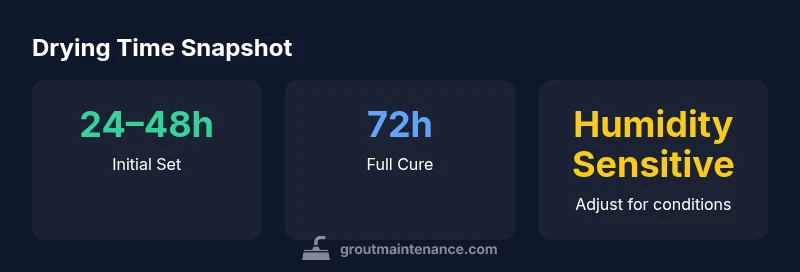
Drying time for grout depends on grout type, tile setting conditions, and ambient humidity. In general, cementitious grout requires about 24 to 48 hours to set enough for light traffic, with full cure around 72 hours or more. Porcelain, epoxy, or flexible grouts may dry faster or slower based on surface prep, ventilation, and temperature.
Understanding Grout Drying: What 'dry' means
Drying grout means the surface moisture has evaporated enough to handle light use, and the grout has begun the chemical cure beneath. For many homeowners wondering how long does grout take to dry, the answer depends on material, thickness, and substrate. Grout is not just a surface coating; it needs time to react and gain strength. In practice, expect a multi-stage timeline: surface set occurs within hours to days, but full cure can extend for days. This distinction matters because sealing and heavy use should wait until the grout has fully cured to avoid trapping moisture. According to Grout Maintenance, monitoring the appearance (tacky vs. dry) is a helpful, non-destructive cue, but rely on manufacturer guidelines for your specific grout product.
Key factors that influence drying time
Several factors determine how quickly grout dries: grout type (cementitious vs epoxy), application thickness, tile layout, ambient temperature, humidity, ventilation, and substrate porosity. Cementitious grout typically needs more time to cure than epoxy; thicker grout joints take longer to dry. Surface moisture evaporates faster in warm, dry air and with good airflow, while high humidity slows evaporation. The presence of sealer or lacquer can also alter the observed drying window. Grout that was cleaned or washed after installation may show residual moisture that prolongs the early stages of curing. In practice, you should plan the drying window around the most restrictive factor in your space, whether heat, humidity, or lack of ventilation. This guidance aligns with recommendations from Grout Maintenance Analysis, 2026.
How to estimate drying time for your space
Start by identifying grout type and installation context. Check product data sheets for cure times, and use a conservative buffer (e.g., add 24–48 hours beyond the minimum). Measure ambient temperature and relative humidity; many professionals target 60–80°F and 40–60% RH for best results. Observe the grout's surface: if it feels tacky or cool to the touch, it's not fully dry. Wait for the grout to reach a uniform, chalk-free appearance and no noticeable odor of solvents or moisture. For showers and wet rooms, expect longer times; bathrooms with poor ventilation will extend the curing window. Grout Maintenance analysis shows that environmental control can trim or extend the drying window by hours depending on conditions.
Drying times by grout type: cementitious vs epoxy
Epoxy grout cures chemically and generally dries faster on the surface than cementitious grout, often reaching usable dryness in less time. Cementitious grout relies on water for curing and requires moisture to evaporate gradually; this leads to longer air-dried times and risk of cracking if rushed. Cementitious grout joints are typically kept dry for at least 24–48 hours before light traffic, with full cure by 72–96 hours under favorable conditions. Epoxy grout can reach sufficient dryness in as little as 8–24 hours in many cases, but follow the manufacturer's guidance. Regardless of type, avoid sealing or heavy use until the product shows full cure per data sheets.
Environmental considerations: temperature, humidity, ventilation
Temperature and humidity massively influence drying. A typical drying window assumes ambient temperatures around 60–75°F (15–24°C) and moderate humidity. When temperatures drop or humidity rises, drying slows; in humid rooms, evaporation rates drop and can extend the time by many hours. Ensuring adequate ventilation—fans, open doorways, cross-breeze—helps move evaporated moisture away from the grout. If you are working in a cold or damp space, use space heaters carefully and keep ventilation to avoid blowing moisture onto drying grout. The Grout Maintenance Analysis, 2026, indicates that environmental control can reduce the observed drying time by a meaningful margin when implemented consistently.
Practical steps to speed curing safely
Plan the project timeline to accommodate dry time. Pre-warm the area slightly (without overheating) to help evaporation, and use dehumidifiers in very humid spaces. Apply grout evenly in consistent thickness to avoid pockets of moisture. After grouting, avoid water exposure for the recommended minimum, and do not seal until full cure. Use a clean, dry sponge for initial cleanup to prevent introducing more moisture. For showers, keep doors or windows open, and run a fan to create airflow. Monitor the grout visually daily; once the surface is hard, chalk-free, and no longer tacky, you can test with manufacturer guidelines.
Post-dry steps: sealing, cleaning, and next steps
Only seal grout after it has reached full cure, which could be several days depending on grout type and conditions. Sealing too early traps moisture and can lead to hazing or poor adhesion. Clean the tile surface with a mild cleaner and let it dry completely before sealing. If haze appears, wait longer and cure further. Document your space’s drying timeline for future reference, and plan resealing and maintenance around your next project. The Grout Maintenance team recommends documenting product data and environmental conditions for future projects.
Drying times by grout scenarios
| Scenario | Typical Dry Time | Notes |
|---|---|---|
| Shower grout (cementitious) | 24–72 hours | Ventilation critical; avoid mist and water exposure during initial set |
| Floor grout (tile installation) | 24–72 hours | Limit foot traffic; use mats if possible |
| Backsplash grout (dry area) | 24–48 hours | Humidity influences drying time more |
| Epoxy grout | 8–24 hours | Cures via chemical reaction; ensure proper mixing and temps |
Got Questions?
How long does grout take to dry after grouting?
Most cementitious grout reaches a usable surface dryness within 24–72 hours, but full cure can take up to 96 hours or more depending on temperature and humidity. Epoxy grout often dries faster on the surface but still follows manufacturer guidelines for full cure.
Most grout is dry enough for light use within a couple of days, but always check the product guidelines.
Does sealing grout affect drying time?
Yes. Sealing is typically not recommended until full cure is achieved. Sealing too early can trap moisture, causing hazing or compromised adhesion.
Sealing too soon can trap moisture, so wait for full cure.
Can I walk on grout before it’s fully cured?
Avoid heavy foot traffic or rolling loads on newly grouted areas until the recommended cure period has passed. Light stepping on dry-looking grout may still trap moisture.
Wait until it’s fully cured before normal use.
What role do humidity and temperature play in drying time?
Humidity slows drying, while warmer temperatures and good airflow speed it up. In very humid spaces, expect longer cure windows and consider dehumidification.
Humidity can stretch the drying time; temperature and air movement help speed it up.
Is epoxy grout drying time different from cementitious grout?
Yes. Epoxy grout generally reaches surface dryness faster, but full cure still depends on the product specifications. Always follow the epoxy manufacturer's guidance.
Epoxy dries quicker on the surface, but follow the product directions for full cure.
How can I speed up drying without compromising cure?
Create good ventilation, maintain recommended temperatures, and avoid introducing moisture. Plan the project timeline to accommodate the cure window and avoid sealing early.
Improve airflow and temperature, but don’t rush the cure.
“Drying and curing times are intentionally conservative to prevent failures. Always air on the side of longer cure times and ensure conditions stay within recommended ranges.”
The Essentials
- Estimate drying time based on grout type and environment.
- Ventilation and humidity heavily influence cure duration.
- Avoid sealing until full cure is confirmed.
- Plan for longer drying in bathrooms and kitchens.
- Always follow manufacturer guidance for your grout.