How to Know If You Have Gout: Symptoms & Diagnosis
Learn the signs, tests, and steps to confirm gout, plus practical relief tips and prevention strategies for sudden joint pain.


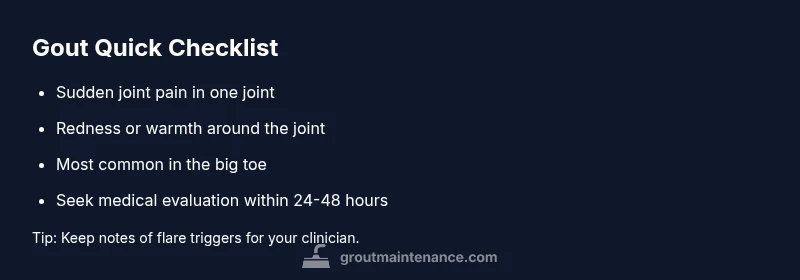
Most often, sudden, intense joint pain in a single joint—usually the big toe—points to a gout flare, especially with redness, warmth, and swelling. Quick next steps: avoid weight-bearing, stay hydrated, and take an over-the-counter anti-inflammatory only if advised by a clinician. For confirmation, a doctor may perform joint fluid analysis or blood tests. Seek care urgently if fever or severe swelling.
What gout is and why early recognition matters
Gout is a form of inflammatory arthritis caused by uric acid crystals building up in a joint. It often starts with a sudden, extremely painful flare that can wake you at night. The Grout Maintenance team emphasizes that recognizing gout early matters not only for fast relief but also to reduce the risk of future attacks and potential kidney complications. Triggers include purine-heavy foods (like red meat and certain seafood), dehydration, alcohol, and certain medications. Early recognition means you can seek medical care promptly, start appropriate treatment, and make lifestyle adjustments that lower the odds of another flare. If you’ve had intermittent toe pain before, tracking your symptoms and timing helps your clinician distinguish gout from other joint problems. Remember, getting an accurate diagnosis is the first step toward lasting relief.
Common signs and symptoms to watch for
Gout typically presents as a sudden, severe flare in one joint, most often the big toe, though it can affect the ankles, knees, wrists, or fingers. Look for:
- Intense joint pain that peaks within hours
- Redness and warmth around the joint
- Swelling that makes the joint look inflated
- Limited range of motion during an attack
- Attacks that wake you at night or occur after a rich meal or alcohol
Some people experience recurrent flares, while others have intermittent, shorter episodes. In chronic gout, persistent high uric acid can lead to tophi (firm lumps under the skin) and joint damage. If fever accompanies swelling, seek urgent care to rule out infection. Tracking uric acid levels over time can help your clinician tailor treatment.
How gout is diagnosed in clinical care
Diagnosis relies on a combination of history, physical exam, and tests. The gold standard is joint fluid analysis under polarized microscopy, which looks for needle-shaped urate crystals. Blood tests can support the diagnosis but aren’t definitive on their own because uric acid levels can be normal during flares. Imaging, such as ultrasound or dual-energy CT, may reveal crystal deposits or characteristic signs like the double contour sign. Your clinician may also review risk factors, including diet, obesity, medications, and kidney function. Self-diagnosis is risky; early professional assessment leads to targeted therapy and fewer repeat attacks.
Distinguishing gout from similar conditions
Gout can resemble other conditions, so differentiating is important:
- Pseudogout: crystals are calcium pyrophosphate; often affects the knee and wrist and may appear differently on imaging.
- Septic arthritis: infection in the joint; typically presents with fever, severe warmth, and rapid joint destruction risk; requires immediate antibiotics.
- Osteoarthritis or injury: tends to affect several joints or result from overuse rather than abrupt, intense flares.
A clinician may order imaging or aspiration to distinguish gout from these conditions and to guide treatment choices.
Practical steps you can take now for relief
While awaiting a medical evaluation, you can take steps to ease discomfort and protect the joint:
- Rest the affected joint and avoid weight-bearing activities.
- Apply a cold compress for 15-20 minutes several times a day to reduce swelling.
- Hydrate to help body functions and potential urate clearance; limit alcohol intake during a flare.
- If a clinician has approved it, consider an NSAID (e.g., ibuprofen) or colchicine as directed; never take these if you have kidney disease, ulcers, or are on certain medications without medical advice.
- Keep a symptom diary noting onset, triggers, and response to any remedies to inform your clinician.
When to see a doctor urgently
Seek immediate medical care if you experience:
- A sudden, intense joint pain with fever or swelling in multiple joints
- The joint is hot, very red, and you can’t bear weight
- A history of kidney disease or NSAID contraindications and you still have a flare
- Signs of infection or you suspect septic arthritis
Urgent evaluation helps rule out infection and confirms whether you need urate-lowering therapy or other long-term management.
Long-term management and prevention
Gout management focuses on controlling uric acid levels to prevent future flares. A clinician might recommend urate-lowering therapies (ULT) such as allopurinol or febuxostat, especially after multiple attacks or if uric acid remains high between flares. Lifestyle plays a key role: maintain a healthy weight, drink plenty of water, limit high-purine foods (organ meats, certain seafood), reduce alcohol (especially beer), and watch portion sizes. Regular monitoring of uric acid, kidney function, and potential side effects from medications helps fine-tune treatment. A personalized plan often combines medication with dietary and activity adjustments to minimize episodes and joint damage.
What to expect during tests and follow-up
After initial evaluation, you may undergo joint fluid analysis, blood tests for uric acid, and urine studies to assess uric acid excretion. Your clinician will discuss results and outline a treatment plan, including whether to start ULT, what foods to avoid, and how to manage flares. Follow-up visits monitor uric acid targets, adjust medicines if needed, and check for side effects. If flares persist, you might be referred to a rheumatologist for advanced management.
Quick recap for patients
- Gout often presents with sudden, intense single-joint pain and swelling.
- Accurate diagnosis relies on joint fluid analysis and contextual testing, not just uric acid levels.
- Early guidance can reduce future attacks and protect kidney health.
- Long-term prevention combines medication with lifestyle changes and regular monitoring.
Steps
Estimated time: 60-90 minutes
- 1
Document symptoms and onset
Record when the pain started, affected joints, your recent meals or alcohol intake, and any prior gout episodes. Note redness, warmth, and fever signs to share with your clinician.
Tip: A symptom diary helps your provider tailor treatment. - 2
Seek medical evaluation
Schedule a visit or urgent care to obtain an accurate diagnosis. Early assessment improves treatment effectiveness and lowers recurrence risk.
Tip: If you cannot reach a clinician promptly, use telemedicine for interim guidance. - 3
Undergo recommended tests
Expect joint fluid aspiration or blood and urine tests to assess uric acid and crystal presence. Imaging may be used to evaluate joint involvement.
Tip: Share any medications, kidney issues, or ulcers with your clinician to avoid adverse effects. - 4
Begin appropriate treatment
Follow prescribed anti-inflammatories or colchicine during an attack and discuss long-term management options with your clinician.
Tip: Do not start or stop meds without professional guidance. - 5
Adopt long-term prevention
Implement dietary changes, maintain hydration, and consider urate-lowering therapy if indicated.
Tip: Regular monitoring helps keep uric acid at target levels. - 6
Plan follow-up
Return for test results review and adjust treatment as needed to prevent future flares.
Tip: Ask about triggers to avoid and a plan for flare management.
Diagnosis: Sudden, intense joint pain in a single joint, commonly the big toe, with swelling and redness
Possible Causes
- highElevated uric acid crystals in the joint (gout attack)
- mediumInfection in the joint (septic arthritis)
- lowPseudogout or other inflammatory arthritis
Fixes
- easySeek urgent medical evaluation for accurate diagnosis and to discuss anti-inflammatory treatment options.
- easyIf advised, undergo joint fluid analysis and uric acid testing to confirm gout and rule out infection.
- mediumFollow a tailored treatment plan including lifestyle adjustments and, if needed, urate-lowering therapy.
Got Questions?
What are the first signs that indicate a gout flare?
The hallmark is sudden, extreme joint pain with swelling and redness, often starting at night in the big toe. Other joints can be affected. If you have fever or warmth extending beyond one joint, seek medical attention.
Look for sudden severe joint pain with swelling and redness, usually in the big toe. If you notice fever or multiple joints involved, seek medical care.
Can I diagnose gout myself?
No. A clinician uses joint fluid analysis and tests to confirm gout and exclude infection. Urine and blood tests support the picture but aren’t definitive alone.
No—gout needs a clinician’s test such as joint fluid analysis to confirm and rule out infection.
What lifestyle changes help prevent gout flares?
Maintain hydration, limit high-purine foods and alcohol, achieve and maintain a healthy weight, and follow your clinician’s plan for urate-lowering therapy if prescribed.
Hydration, diet adjustments, weight management, and prescribed meds help prevent future flares.
When should I seek urgent care for a suspected gout flare?
Seek urgent care if the joint is very hot, swollen, or you have fever, or if you suspect septic arthritis or a kidney problem that might limit treatment options.
Go to urgent care if the joint is hot, very swollen, or you have fever.
What tests confirm gout besides fluid analysis?
Blood tests for uric acid, kidney function, and liver enzymes, plus imaging like ultrasound or CT can support the diagnosis and guide treatment.
Blood tests and imaging help support a gout diagnosis alongside joint fluid analysis.
Is gout always linked to high uric acid?
Often yes, but uric acid levels can be normal during a flare. Diagnosis relies on crystals in joint fluid and overall clinical context.
Uric acid can be normal during a flare, so crystal analysis is essential for diagnosis.
The Essentials
- Identify sudden, intense joint pain that starts at night.
- Get a definitive diagnosis with joint fluid analysis and tests.
- Treat flares promptly under medical guidance to prevent recurrences.
- Adopt long-term strategies: hydration, diet changes, and possible urate-lowering therapy.