Powdery Grout Problem Troubleshooting Guide
A practical, urgent troubleshooting guide to diagnose and fix the powdery grout problem in damp areas, with steps to clean, seal, and prevent moisture-driven efflorescence.


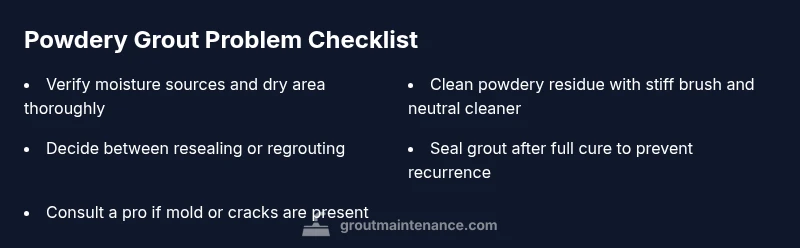
Powdery grout problem is usually caused by moisture-driven efflorescence or poor curing and cleaning habits. The quickest fix is to dry the area, scrub away the loose powder with a stiff brush and a grout cleaner, and seal the grout after it’s fully dry. For persistent residue, reseal or regrout.
What is a powdery grout problem?
Powdery grout problem refers to a chalky, white-to-gray powder that forms on cementitious grout joints after tile installation or cleaning. It is not dirt; it is often mineral salts or unbound cement particles that migrate to the surface. The situation is especially common in bathrooms, kitchens, and other damp areas where humidity stays high. According to Grout Maintenance, early signs appear as a light dusting on the grout lines and can escalate if moisture persists. In many homes, the problem is linked to moisture intrusion, improper curing, or aging grout that has lost its binding strength. Recognizing the powdery film early lets you address moisture sources, perform a targeted cleaning, and decide whether resealing or regrouting is needed to restore a clean, durable joint.
Common causes of powdery grout
Powdery grout problem arises from several interrelated factors. The top cause is moisture intrusion, which drives mineral salts to migrate to the surface (efflorescence) and creates a chalky film. Humidity in bathrooms, leaks behind walls, or poor ventilation contribute. Another frequent factor is improper curing or mixing during installation; if the cement-based grout didn’t cure fully, powdery particles can remain loose and shed with use. Aging grout also loses bonding strength, especially if it has been repeatedly cleaned with harsh or acidic cleaners. Finally, high-temperature changes or freeze-thaw cycles in some climates can cause micro-cracks that shed powder over time. Sorting these causes helps you target the right fixes: reduce moisture, clean and rebind the joints, or replace damaged sections as needed. As a general rule, persistent powder after cleaning is a sign that deeper treatment is necessary.
Quick checks you can perform now
Quick checks can help you decide if this is a superficial dusting or a sign of deeper moisture problems. Start with a visual inspection for cracks, crumbling joints, or water stains around the affected area. Test humidity levels in the room and look for condensation on walls or cabinets after showers. Perform a simple powder test by rubbing a dry cloth over the area; if powder easily transfers to the cloth, you’re likely dealing with loose cement particles or efflorescence rather than ordinary dirt. Consider running a dehumidifier for 24–48 hours in damp rooms and increasing ventilation during and after showers. If the powder returns after cleaning and drying, it points toward moisture-driven issues that require deeper restoration.
Cleaning and restoration options
Begin with a thorough cleaning using a stiff-bristle brush and a pH-neutral grout cleaner to remove loose powder. Rinse well with clean water and allow the area to dry completely. If efflorescence is suspected, you may use a mild acid cleaner designed for grout and follow product instructions, but never on natural stone without testing a hidden area first. After cleaning and drying, apply a penetrating grout sealer to deter future moisture intrusion, ensuring the grout is fully cured. For stubborn residue or damaged joints, you may need to remove and replace the affected grout. In some cases, applying epoxy grout to new installations provides superior resistance to moisture and powder formation.
Resealing vs regrouting: when to choose
If the powdery film appears only on surface joints with intact edges, resealing after thorough drying and cleaning is often sufficient. However, if you notice deep cracks, crumbling edges, or persistent powder that returns after resealing, regrouting is the better option. Regrouting replaces old, compromised cement with fresh material and creates a tighter seal against moisture. Epoxy grout is a popular choice for bathrooms and kitchens due to its higher moisture resistance, though it requires stricter mixing and curing procedures. Decide based on grout condition, tile type, and moisture levels in the room.
Long-term prevention strategies
Prevention focuses on moisture control and proper sealing. Use fans or dehumidifiers in bathrooms and kitchens, fix leaks promptly, and seal grout after adequate curing. For new installations, select epoxy grout in high-moisture areas, and ensure the area is well-ventilated during curing. Regular cleaning with non-acidic cleaners, avoiding harsh chemicals, and re-sealing every 1–2 years (or per product guidelines) significantly reduce the risk of a recurring powdery grout problem. By combining moisture management, appropriate grout products, and routine maintenance, you’ll extend grout life and keep joints looking clean.
DIY vs pro: safety and when to call a professional
Many powdery grout problems can be tackled by careful DIY restoration, but persistent moisture, mold growth, or structural cracks require professional intervention. Always wear protective gloves and a mask when handling dusty joints and cleaners. If you notice persistent leaks, mold behind tiles, or structural damage to tiles, consult a licensed contractor or tile specialist to prevent water damage and ensure proper remediation.
Common mistakes to avoid
Avoid using overly acidic cleaners or bleach on cementitious grout, as these can degrade the grout matrix. Don’t rush curing times or seal grout before it’s fully dry, which traps moisture and can worsen efflorescence. Skipping proper surface prep or using unsuitable grout products in high-moisture zones also increases the risk of a powdery residue returning. Finally, never ignore persistent moisture or mold, as this signals underlying issues that require professional assessment.
Steps
Estimated time: 2-6 hours
- 1
Gather supplies and protect area
Collect stiff-bristle brush, pH-neutral grout cleaner, protective gloves, mask, and eye protection. Lay down protective sheets to catch dust and splashes. This preparation minimizes cleanup and exposure to cleaning agents.
Tip: Always wear PPE to avoid inhaling grout dust. - 2
Isolate and vent the workspace
Close doors to the room and turn on exhaust fans or a portable fan. If possible, run a dehumidifier to reduce moisture while you work.
Tip: Good ventilation reduces moisture-driven residue formation. - 3
Dry the area thoroughly
Use towels to remove standing water, and run a hair dryer or a dehumidifier over the grout lines. Wait until surfaces feel dry to the touch before cleaning.
Tip: Drying completely prevents re-deposition of minerals. - 4
Scrub the powder away
Apply a pH-neutral grout cleaner and scrub with a stiff brush in circular motions. Rinse with clean water and repeat as needed until the powder stops shedding.
Tip: Avoid metal brushes that can scratch grout. - 5
Inspect after cleaning
Dry again and inspect for remaining powder. If powder persists, the issue may be deeper (moisture or structural damage) and require resealing or regrouting.
Tip: Persistent powder suggests moisture-driven issues. - 6
Choose your restoration path
If joints are intact and clean, apply a penetrating sealer after full dryness. If you see cracks or crumbling, plan for regrouting or epoxy grout installation in affected areas.
Tip: Epoxy grout offers superior moisture resistance but requires careful mixing. - 7
Perform restoration or reseal
Seal all joints following the product instructions, or remove damaged grout and regrout. Clean the surface again after applying grout and let cure.
Tip: Follow cure times exactly to maximize seal effectiveness. - 8
Monitor and maintain
Keep humidity in check and perform regular cleanings with non-acidic products. Periodically reseal to maintain protection against moisture intrusion.
Tip: Maintenance reduces recurrence risk.
Diagnosis: Powdery or chalky residue on grout lines after cleaning or installation
Possible Causes
- highMoisture intrusion leading to efflorescence
- mediumImproper grout mix or incomplete cure during installation
- lowMold or mildew in damp grout lines
Fixes
- easyDry the area thoroughly; improve ventilation and use a dehumidifier to reduce humidity
- easyScrub with a grout cleaner and rinse; re-seal after complete dry
- mediumIf efflorescence persists, try a mild cleaner and, if needed, remove and regrout affected sections
Got Questions?
What causes a powdery grout problem?
A powdery grout problem is typically caused by moisture-driven efflorescence, improper curing, aging grout, or mold in damp areas. Identifying the moisture source is key to choosing the right remedy.
Powdery grout is usually caused by moisture or aging grout; fix by drying and resealing.
Is powdery grout dangerous?
Powder itself is not toxic, but the underlying moisture can indicate mold growth or water damage. Address moisture and mold promptly to protect indoor air quality.
The powder isn’t dangerous on its own, but moisture and mold are concerns to fix quickly.
Can I fix it myself or do I need to regrout?
Many powdery grout problems can be fixed with cleaning, drying, and sealing. Persistent powder with damaged joints often requires regrouting or epoxy grout for long-term protection.
You can start with cleaning and sealing, but expect regrout if joints are damaged.
What cleaners should I use?
Use a pH-neutral grout cleaner for routine cleaning. Avoid harsh acids on ceramic tiles and never mix cleaners unless the manufacturer approves.
Stick to pH-neutral cleaners and follow product directions.
How long does resealing take?
Sealing typically takes a few hours from prep to cure, depending on product instructions and room conditions. Plan for a dry interval before moisture returns.
Most sealers dry in a few hours, with full cure taking longer.
Should I replace my grout with epoxy?
Epoxy grout offers superior moisture resistance and less powdering but requires precise mixing and curing. Use it in high-moisture zones or where powder recurs.
Epoxy grout can prevent future powdery issues in wet areas.
Watch Video
The Essentials
- Dry thoroughly after cleaning to stop salt migration
- Seal grout after full drying to deter moisture
- Inspect and repair damaged joints promptly
- Maintain humidity control to extend grout life