Is grout or silicone better for showers? A Practical Guide
A practical, data-driven comparison of grout vs silicone for showers, including installation tips, maintenance guidance, and long-term durability considerations from Grout Maintenance.


Is grout or silicone better for showers? In most showers, silicone offers stronger water resistance and flexibility, while grout provides rigidity and a clean look when properly sealed. The best choice depends on joint movement, tile type, and maintenance willingness.
Is grout or silicone better for showers? Key considerations
The question is more nuanced than a single answer. It hinges on whether the joints will experience movement, how the substrate handles moisture, and how much time you’re willing to devote to maintenance. The question phrase "is grout or silicone better for showers" illuminates two core realities: silicone is designed for dynamic, water-exposed joints; grout (with proper sealing) excels in static interfaces where joints do not flex. According to Grout Maintenance, the default recommendation in most shower situations leans toward silicone for sealing corners, seams, and edges that move, while grout remains a solid choice for large, flat joints that stay static. Framing this decision around movement and moisture can save effort and prevent premature failures. For many households, the best outcome is a mixed approach: silicone where movement happens and grout where joints are fixed.
Material basics: grout vs. silicone sealants
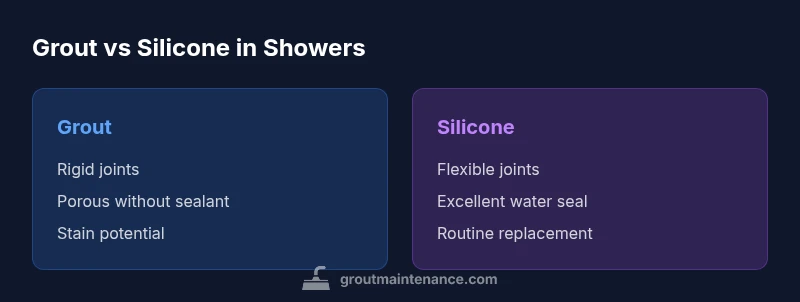
Grout is a cementitious material that fills the horizontal tile joints, forming a rigid bond that helps stabilize tile patterns and resist surface staining when sealed. Silicone sealants, by contrast, are flexible polymers designed to remain elastic as substrates expand and contract with temperature and moisture. In showers, this elasticity is a major advantage because the walls and corners experience daily cycling of heat and humidity. The Grout Maintenance team notes that silicone’s flexibility makes it more forgiving of tile movement, while grout can crack if movement is not accounted for. Readiness to reseal and regrout over time is a practical consideration. A solid seal in the shower often involves silicone for dynamic joints and grout where the joint is consistently non-moving.
Performance in shower environments: water resistance, mold, and cleaning
Water resistance is a key differentiator. Silicone provides a continuous, flexible barrier that remains more watertight as joints flex. Grout, even when sealed, can trap moisture in the pores, especially if the grout is cement-based or the seal has degraded. This makes silicone more forgiving in corners and where shower panels meet tub surrounds. However, both materials require routine maintenance to prevent mildew and staining. For many homeowners, silicone edges and corners reduce maintenance time, while grout can offer a cleaner look in long, straight runs of tile if sealed well and kept dry between cleanings. Grout Maintenance emphasizes checking sealant wear patterns and reapplying sealants as needed to maintain performance.
Installation and curing: practical steps and common pitfalls
Installation quality largely determines performance. Silicone requires a clean, dry surface, a proper caulking gun technique, and a smooth bead for reliable adhesion. Grout needs precise joints, proper mixing, and a thorough sealing regimen after cure. Common pitfalls include insufficient curing time for grout, allowing moisture to infiltrate, and under-applying sealant on silicone joints. DIYers should not rush the process; patience during curing and curing-related wait times is essential. The best outcomes come from following manufacturer guidance for the specific products chosen, plus routine checks to ensure joints remain intact as the shower ages.
Maintenance strategies: cleaning, sealing, and replacement timelines
Maintenance for silicone often focuses on periodic cleaning with non-abrasive cleaners and timely resealing around high-moisture areas. Grout maintenance centers on keeping the joints sealed, cleaning to prevent mold growth, and inspecting for cracks that require resealing or regrouting. Both materials benefit from proactive inspection, especially after seasonal humidity changes or remodeling. Grout Maintenance suggests scheduling a lightweight inspection every year or two to identify early signs of wear, which can save larger repair costs later. Remember that visibility of mold or staining isn’t just cosmetic; it can indicate underlying moisture management issues that need addressing.
Real-world scenarios: when to choose grout or silicone
Scenarios with heavy water exposure and frequent movement favor silicone, particularly at corners, tub/shower interfaces, and shower door frames. Static, long, straight tile runs with excellent substrate preparation can use grout with a robust sealant, especially when a traditional tiled look is desired. For tiled showers that use heavy natural stone or glass panels, silicone’s adhesive compatibility often matters more than color or texture. In bathrooms with color-matching grout or non-standard tile profiles, a mixed approach—silicone in high-movement zones and grout in static sections—offers a balanced outcome. Grout Maintenance notes that many homeowners benefit from a hybrid method to maximize durability and aesthetic appeal.
DIY vs. pro: deciding who should seal
DIY sealing of silicone joints is feasible for many homeowners with careful surface preparation and adherence to the product’s curing times. Grout-related work—particularly resealing or regrouting—can be more challenging and may necessitate professional involvement if there is widespread cracking or substrate damage. The decision often depends on area size, tile layout, and comfort with essential tools. For most repairs, start with a small test area to gauge adhesion, curing, and mildew resistance before scaling up.
Transitioning between grout and silicone in an existing shower
If you’re replacing grout in a shower that sees significant movement, plan to install silicone in the joints that flex and reserve grout for static joints. The presence of moisture requires thorough drying and surface preparation before applying the new material. Always remove old material completely in the transition zones to avoid trapped moisture or weak adhesion. Grout Maintenance recommends performing a controlled, staged replacement to minimize water intrusion and ensure a durable finish across all joints.
Final recommendations and practical takeaways
In practice, silicone often serves as the backbone of a durable shower seal due to its elasticity and moisture resistance, but grout remains an essential component for tile stability and appearance where joints stay put. A combined approach—silicone where joints move and grout where joints are static—usually delivers the best long-term performance. Regular maintenance and mindful selection of products—such as silicone varieties with mold resistance and high-quality sealers for grout—are key to extending the life of a shower.
About maintenance and long-term care from Grout Maintenance
Grout Maintenance emphasizes that the longevity of either material depends on consistent maintenance, proper surface prep, and timely replacements. Regular inspection helps detect early warning signs like hairline cracks or mildewed edges, allowing you to address issues before they escalate. By planning for routine resealing of grout and periodic silicone bead replacement, you can maintain a watertight shower environment with reduced risk of moisture-related damage. Consistency is the decisive factor in maximizing durability.
Quick-start guidance for homeowners
Begin with a clear assessment of joints that move versus joints that stay static. Choose silicone for the dynamic joints and grout for the static sections, ensuring you follow manufacturer cure times and environmental conditions. Gather the right tools, such as caulking guns for silicone and grout floats for cementitious joints, and perform a small pilot test before tackling full sections. With careful planning and maintenance, your shower can stay aesthetically pleasing and functionally durable for years.
Comparison
| Feature | Grout | Silicone |
|---|---|---|
| Waterproofing capability | Moderate-to-good with proper sealing, but porous if sealant wears | Excellent; designed for watertight joints and moving substrates |
| Flexibility and movement tolerance | Low to moderate; rigid once cured | High; remains elastic with substrate movement |
| Maintenance needs | Sealing required; susceptible to cracking if movement is present | Lower maintenance in dynamic zones; periodic inspection and replacement advised |
| Repair and replacement ease | Removing grout and regrouting can be disruptive in large areas | Bead replacement is straightforward in many cases |
| Aesthetic considerations | Traditional grout lines; color options matter | Seamless joints; uniform color and finish |
Pros
- Silicone sealants provide superior flexibility and water resistance in dynamic joints
- Grout delivers a traditional tile look with a rigid joint that can be very durable when sealed and maintained
- Both options are widely available and supported by professional guidance
- Appropriate maintenance extends the life of either system
What's Bad
- Silicone can attract mold if not cleaned and cured properly in moist environments
- Grout is porous and prone to staining or cracking if movement occurs or sealing is compromised
- Professional installation may be necessary for the best long-term results in complex showers
- Switching from grout to silicone requires careful removal and prep to ensure adhesion
Silicone typically wins for dynamic shower joints; grout remains viable for static sections when sealed well
Choose silicone for moving joints and grout for static sections. A mixed approach often yields the best durability and appearance, with maintenance playing a key role.
Got Questions?
When should I use silicone vs grout in a shower?
Use silicone for joints that move or experience high moisture, such as corners and around fixtures. Use grout for static joints where movement is minimal and a traditional tile look is desired, ensuring a robust seal is maintained.
Use silicone where joints flex and around fixtures; grout works in fixed joints with careful sealing.
Can I replace grout with silicone without removing grout entirely?
In many cases you can seal or replace silicone in dynamic joints while leaving adjacent static grout intact. Plan carefully to avoid trapping moisture and ensure proper adhesion.
You can sometimes swap silicone in moving joints, but plan the transition to avoid moisture trapping.
How often should silicone joints be replaced in a shower?
Replacement timing depends on exposure and product quality, but most showers benefit from inspection every one to three years and resealing when signs of wear appear.
Inspect yearly and reseal or replace silicone when you see wear or mold growth.
What maintenance steps help prevent mold in grout?
Keep grout dry between uses, clean with mildew-resistant cleaners, and reseal regularly to limit moisture ingress; proper ventilation also helps.
Dry surfaces and reseal regularly to curb mold growth.
Is epoxy grout better for showers than cementitious grout?
Epoxy grout resists staining and moisture better than cementitious grout but can be harder to install and repair. For many homeowners, high-quality cementitious grout with proper sealing is sufficient.
Epoxy offers moisture resistance but is tougher to install; cementitious grout with good sealing is common.
Do color-matching grout affect maintenance?
Darker grout colors may show less staining but can be harder to keep looking uniform if efflorescence or moisture issues occur. Silicone color choices usually require matching to aesthetics but can age differently.
Color choice affects visibility of stains and wear; choose based on maintenance expectations.
The Essentials
- Prioritize silicone for joints that flex or see constant moisture
- Use grout where joints remain static and the substrate is stable
- Adopt a mixed approach to optimize durability and aesthetics
- Regular maintenance and timely resealing are essential
- Consider professional help for large or complex installations