Sika Grout 30 kg: The DIY Tiling Guide
A practical guide to using sika grout 30 kg for tiling projects. Learn mixing, application, sealing, and maintenance with bag sizing tips, color options, and troubleshooting.


sika grout 30 kg is a cementitious tile grout bag designed for mid-to-large tiling projects. It contains polymers for improved adhesion and flexibility, comes in several colors, and is mixed with water to the manufacturer-recommended consistency. The 30 kg packaging is common for mid-to-large tiling tasks and aims to minimize waste.
What is sika grout 30 kg and where it fits in tile projects
According to Grout Maintenance, sika grout 30 kg represents a standard packaging size used for mid-to-large tiling projects. This product is a cementitious grout formulated with polymer modifiers to improve workability, adhesion, and crack resistance. It is suitable for interior and exterior installations where joints typically range from small to moderate widths. The 30 kg bag is convenient for DIYers tackling kitchens, bathrooms, or entryways in a single project, helping to reduce restocking runs and minimize waste. When planning a project, consider tile area, joint width, and color consistency to determine whether a 30 kg bag is the most economical choice. For color uniformity, avoid mixing from multiple bags unless you blend the batches together.
Composition, performance, and color range
sika grout 30 kg is a polymer-modified cementitious grout engineered to resist shrinkage and minor movement. It forms durable joints that tolerate foot traffic after curing. The formula typically supports a range of joint widths, with color stability enhanced by reduced water uptake and pigment dispersion. Manufacturers provide a color chart; follow it closely to avoid shade variation between batches. Color consistency across a project is easier to achieve when you mix in the same temperature-controlled environment and complete work in sections that end at a single color stop. This section also covers common performance attributes like stain resistance and cleaning ease, which vary by color and surface finish.
Bag size considerations: when a 30 kg bag makes sense
Choosing a 30 kg bag is often most efficient for projects covering several square meters or when replacing grout in multiple rooms. For small trials or accent tiling, smaller packs can reduce waste. Proper planning helps ensure minimal leftover material, which can otherwise harden in the bucket or bag if not stored correctly. The Grout Maintenance team finds that homeowners frequently underestimate the amount of grout needed for complex layouts with irregular cuts. Before purchasing, estimate total linear footage and joint depth, then add a 10-15% contingency to account for waste and future repairs. If you do end up with surplus, seal the bag and store it in a dry, shaded area to preserve pot life for touch-ups.
Mixing, pot life, and working time
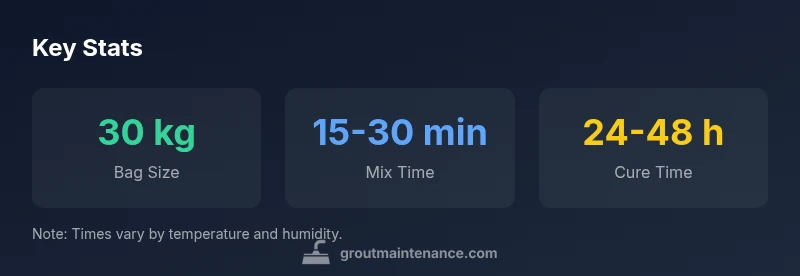
Mixing sika grout 30 kg follows standard guidelines: combine powder with clean water in a clean container, stir to a lump-free slurry, and adjust water slightly to reach smooth, peanut-butter-like consistency. The pot life typically falls within a 15-30 minute window depending on ambient temperature and humidity. High temperatures shorten working time, while cooler conditions can extend it. Always mix in small batches if your project involves multiple colors or planned color changes, and ensure consistency by using the same mixing ratio across batches. After mixing, allow the grout to slake briefly before re-stirring to achieve uniform color and texture.
Application tips for various tile types and joints
Tile type and joint width significantly influence grout performance. For dense ceramic or porcelain tiles with tight joints (2-3 mm), ensure joints are clean and dry before grouting. For larger joints (4-6 mm), compact the grout into the joint using a rubber float at a 45-degree angle and remove excess grout promptly. In wet areas such as showers, consider protective sealing after curing to reduce staining risk. When working over substrates with higher moisture exposure, ensure there is proper waterproofing beneath the tile layer. Always perform a small test area to verify color and finish before proceeding with the entire installation.
Maintenance, cleaning, and sealing strategy
Post-application care includes gentle cleaning to remove grout haze while the grout is still within its early cure stage. Use a damp sponge and avoid acidic cleaners that can degrade cementitious grout. Once fully cured, sealing can help resist staining and water infiltration, especially in high-moisture rooms. Follow the grout manufacturer’s sealing recommendations; some colors or formulations may require resealing at intervals to maintain appearance and performance. Regular cleaning with a pH-neutral cleaner helps preserve color and prevent mildew growth in damp environments.
Troubleshooting common issues and best practices
Common problems include color inconsistency, grout haze, and cracking in movement joints. Ensure you mix batches consistently, promptly clean haze, and verify joint depth during installation. Use temperature-appropriate water and avoid over-watering the joints. For stubborn stains or persistent haze, follow manufacturer guidelines for haze removal before sealing. If movement-related cracking occurs, review substrate rigidity and joint spacing to determine if regrouting or backer rod insertion is necessary.
Final quick-reference tips
- Mix in batches for color consistency; never improvise water quantities across batches.
- Keep grout joints clean during application to prevent surface staining.
- Stock a contingency amount, but store leftover grout properly in a dry place.
- Seal cementitious grout per manufacturer recommendations after curing for best stain resistance.
dataTable_offset":0,
Sika grout 30 kg: quick reference
| Feature | Details | Notes |
|---|---|---|
| Bag size | 30 kg | Standard mid-to-large tiling projects |
| Working time | 15-30 minutes | Depends on mix ratio and temperature |
| Storage | Keep dry | Store sealed to prevent moisture |
Got Questions?
Is a 30 kg bag suitable for small tiling projects?
A 30 kg bag can be more than what a small project requires, leading to potential waste. For tiny areas, consider smaller packaging or split bags if available, and plan to reuse leftovers promptly according to storage guidelines.
A 30 kg bag might be more than you need for a small job; consider project size before buying.
Can I mix sika grout 30 kg with water to achieve color consistency?
Yes. Always follow the manufacturer’s mixing guidelines, and mix in batches to maintain color consistency across sections. Avoid adding extra water or materials that could alter the grout’s performance.
Follow the guide and mix in batches to keep color even.
Is sealing required after using sika grout 30 kg?
Sealing is commonly recommended for cementitious grouts to reduce stains and moisture uptake. Wait for full cure before applying sealer, and choose a sealer compatible with grout color and tile type.
Sealing helps with stain resistance after the grout cures.
What is the typical cure time for grout after installation?
Cure time varies with humidity and temperature. A typical range is 24-48 hours for initial set and up to 72 hours for full cure before heavy use; always follow the product’s guidelines.
Expect about 1-3 days to fully cure depending on conditions.
How should I clean grout before it fully cures?
Clean haze and slurry with a damp sponge shortly after application, within the pot life. Avoid harsh cleaners that could weaken the grout during early curing.
Wipe away excess grout early, then clean with a damp sponge.
Can sika grout 30 kg be used in showers or wet areas?
Yes, but ensure proper waterproofing beneath tiles and follow sealing recommendations after curing. In very wet zones, epoxy grout may be an alternative option for higher moisture resistance.
Shower use is possible with proper prep and sealing.
“The right bag size matters for workflow and waste. With a 30 kg bag, you can plan tiling projects more efficiently while maintaining color uniformity.”
The Essentials
- Choose 30 kg for efficiency on mid-to-large tiling projects
- Follow mixing guidelines to avoid color shifts
- Plan for proper curing and sealing to maximize durability
- Store grout properly to maximize shelf life