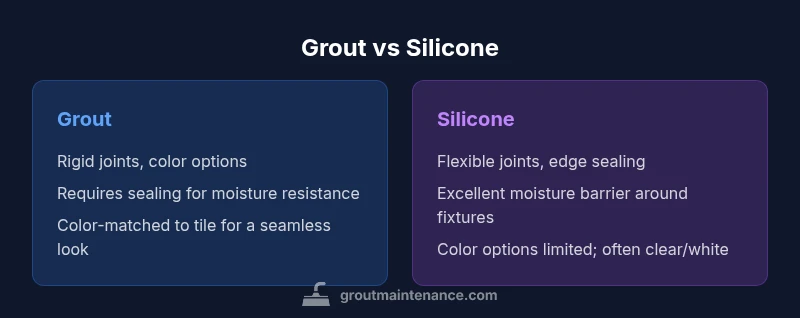
Difference Between Grout and Silicone: A Practical Guide
This guide explains the difference between grout and silicone, covering composition, performance, installation tips, and where each material is best suited.


Grout and silicone differ in composition, function, and performance. Grout is a cement-based filler used between tile joints and often needs sealing to resist moisture. Silicone is a flexible, rubber-like sealant used at edges and around fixtures to accommodate movement and water exposure. Knowing these roles helps homeowners make durable, moisture-tolerant tile installations.
What is the difference between grout and silicone?
The difference between grout and silicone is rooted in their chemistry, purpose, and behavior in tile installations. Grout is a cement-based filler designed to solidify tile joints and keep surfaces aligned; it forms a rigid joint that supports the tile matrix. Silicone, by contrast, is a flexible, polymer-based sealant engineered to bridge gaps at joints that will experience movement or direct moisture contact. This fundamental distinction affects installation methods, maintenance needs, and long-term durability. In bathrooms and kitchens, you typically see grout in the tile joints themselves and silicone at corners, around fixtures, and along edges where water exposure and expansion occur. Understanding this separation helps homeowners avoid common mistakes like using silicone where a rigid joint is required, or applying grout in dynamic corridors that flex with temperature and humidity cycles. When you combine both strategically, you can achieve long-lasting, water-resistant surfaces with minimal cracking or staining. This article will dig into the practical implications of the difference between grout and silicone for real-world projects. According to Grout Maintenance, proper material choice is the first step to success.
Material composition and properties
Grout is a cementitious material composed of cement, aggregates (sand), and pigments that give color to tile joints. It cures to a hard, dense ridge between tiles, helping to keep lines visually straight and tile alignment stable. There are sanded and unsanded varieties to suit different gap widths and substrate types. Silicone, on the other hand, is a flexible sealant made from silicone polymers. It cures to a rubbery, elastic film that can expand and contract with substrate movement. This elasticity makes silicone ideal for edges, corners, and joints exposed to frequent movement or moisture. The key takeaway is that grout is a rigid filler, while silicone remains flexible over time. For a long-lasting installation, technicians often use the two materials in tandem, applying grout in the field and silicone at edges and fixtures to accommodate movement and water barriers.
Installation considerations and preparation
Preparation is the foundation of a durable installation. When applying grout, ensure that tile joints are clean, dry, and uniformly sized; mix grout to manufacturer specifications, and apply with a rubber float, working diagonally to compress the material into joints. After initial set, wipe excess grout with a damp sponge and allow curing per product guidelines, then seal the grout if required for moisture resistance. Silicone installation begins with a clean, dry surface and a proper bead size that matches the joint location. It requires a compatible caulk gun and smooth tooling to create a continuous, uniform seal. Unlike grout, silicone needs to cure without disturbance for the full recommended time. In both cases, surface preparation and cure conditions influence adhesion, color retention, and the long-term performance of the joint.
Moisture resistance and mold considerations
Moisture management is a core reason to choose grout or silicone. Cement-based grouts can absorb moisture if not sealed or if the grout is damaged, which may lead to staining or efflorescence and mold growth in damp environments. Sealing grout helps reduce water absorption but does not eliminate it; it’s still a risk factor in high-moisture zones like showers and tub surrounds. Silicone provides a moisture barrier at joints and edges, particularly around fixtures where water is directed and movement occurs. However, silicone can degrade under UV exposure or with harsh cleaners, and mold can grow in poorly cleaned silicone gaps. Regular cleaning and timely replacement are essential to maintain a clean, hygienic installation.
Flexibility and movement accommodation
Tile substrates can experience movement due to settling, temperature changes, or structural shifts. Grout’s rigidity means it can crack if there is significant movement or deflection, especially in large-format tile installations or on floors with underlayment issues. Silicone’s elasticity helps accommodate minor shifts without cracking joints, making it a preferred choice for edge joints, expansion joints, and areas subject to vibration or thermal expansion. The practical implication is that you should reserve silicone for joints that flex, while grout should fill stable, non-moving joints. In many projects, a hybrid approach—grout in the field and silicone at perimeters and around fixtures—delivers the best balance of rigidity and movement tolerance.
Durability and longevity under bathroom conditions
Durability depends on the environment and maintenance. Cementitious grout that is well-sealed can resist moisture and staining for many years, but urine, hard water, and cleaning agents can degrade it if maintenance steps are neglected. Silicone, when properly installed and maintained, lasts for several years but can dry out, crack, or become mildewed if exposed to aggressive cleaners or UV light without regular cleaning. The durability comparison shows that grout is excellent for stable joints and color consistency, while silicone excels where movement and water exposure are significant factors. The choice should consider not only current conditions but also expected maintenance and re-sealing needs over time.
Aesthetics and color options
Aesthetics play a substantial role in choosing between grout and silicone. Grout is available in a wide range of colors to match or contrast with tile, offering uniformity across large areas. Sanded grout is preferred for wider joints to reduce shrinkage and cracking, while unsanded grout is used for very narrow joints or glass tiles. Silicone is typically clear or white, but some colored sealants exist; however, they are often less forgiving for color-matching across large fields and can stand out at joints. For most high-traffic, visually prominent areas, color-matched grout provides a cohesive look, while silicone accents are more about functional sealing at edges and movement-prone joints.
Maintenance, cleaning, and sealing needs
Maintenance routines differ for grout and silicone. Grout often benefits from a penetrating sealer that reduces water absorption and staining; re-sealing may be needed every few years depending on exposure and cleaning products. Silicone requires periodic cleaning to prevent mildew growth and cracking; replacements are necessary if the silicone becomes hard, cracked, or discolored. Choosing cleaners that are safe for both grout and silicone helps extend the life of the installation. Regular inspection of joints and timely resealing or replacement can prevent water intrusion and staining over the life of the tile project.
Use-case scenarios: showers, backsplashes, floors
In showers or around sinks, silicone is typically essential at joints that experience direct water contact or movement. For backsplashes and wall tiling, grout provides a durable, clean inter-tile surface that resists compression and shearing forces. Floors with potential movement or wide grout lines may benefit from silicone at expansion joints or perimeter edges, while grout handles the bulk of the field joints. If you’re unsure, map out the environment: high-moisture zones favor silicone at edges and around fixtures; more stable, flat surfaces favor grout for a solid, consistent field. This rule of thumb helps homeowners avoid common misapplications and ensures a longer-lasting tile installation.
Cost considerations and value over time
Cost discussions should account for material, labor, and maintenance. Grout generally has a moderate upfront material cost and may require sealing and periodic re-sealing, adding to the total long-term cost. Silicone tends to have a lower initial cost per linear foot for edges and fixtures but may require replacement every few years if it crack or yellows. Over the lifetime of a tile installation, the cost-effectiveness hinges on proper use: grout in stable fields with periodic sealing, silicone at moisture-prone joints, and maintenance plans that include cleaning and sealant checks. A balanced approach minimizes long-term maintenance while preserving aesthetics.
How to choose between grout and silicone: a decision guide
When deciding between grout and silicone, start with the environment and joint behavior. If a joint is subject to movement or continuous water exposure, prioritize silicone. If a joint is static and needs a rigid, color-stable fill, grout is the better choice. Consider the tile type, local climate, cleaning regimen, and maintenance capacity. For most homes, a hybrid solution—grout for the field and silicone at edges, corners, and fixtures—offers the best combination of durability, water resistance, and ease of maintenance.
Common mistakes and how to avoid them
Common mistakes include using grout where silicone is needed (leading to cracking), applying silicone in large field joints (leading to poor color match and higher maintenance), and neglecting to seal cementitious grout (increasing moisture uptake). Preparation errors, such as dirty or damp substrates, can compromise adhesion for both materials. To avoid these pitfalls, follow manufacturer guidelines, use the correct joint type for each location, create clean, dry joints before application, and schedule periodic maintenance checks. Proper execution saves time and extends the life of the tile installation.
Comparison
| Feature | Grout | Silicone |
|---|---|---|
| Composition | Cement-based filler (cement, sand, pigments) | Synthetic elastomer polymer (silicone-based) |
| Primary use | Tile joints in the field; provides rigidity | Edges, corners, and joints that move or contact water; provides flexibility |
| Flexibility | Low rigidity; can crack with movement | High elasticity; tolerates movement without cracking |
| Moisture resistance | Sealing reduces absorption; moisture can penetrate if seal is compromised | Excellent water-sealing at joints; remains flexible under moisture |
| Maintenance | Sealing grout helps moisture resistance; re-sealing required periodically | Replacement when degraded; avoid long-term exposure to harsh cleaners |
| Aesthetics | Wide color options to match tile; uniform appearance | Typically clear to white; less color versatility for field use |
| Installation time | More time to grout and cure; needs sealing after curing | Quicker to apply along edges; cures in hours rather than days |
| Typical cost per area | Moderate to high; dependent on sealer and joint width | Low to moderate; silicone is usually cheaper per linear foot |
Pros
- Grout provides rigid, durable joints that hold tile alignment
- Silicone offers superior water sealing and accommodates movement
- Both can enhance aesthetics when chosen to match tile color
What's Bad
- Grout can crack if the substrate moves and requires sealing and maintenance
- Silicone can degrade with UV exposure and may harbor mold if not cleaned
- Maintenance differs; replacement is not interchangeable
Grout excels in rigid tile joints while silicone shines at edges and in moist, movement-prone joints.
For most tiled installations, pair grout for the interior joints with silicone at perimeters to maximize durability and moisture resistance. This approach reduces cracking and water intrusion and supports easier maintenance over time. The Grout Maintenance team endorses using the right material for each joint to optimize longevity.
Got Questions?
What is the main difference between grout and silicone?
Grout is cement-based and fills tile joints; silicone is flexible and seals around edges to accommodate movement and moisture.
Grout fills joints; silicone seals edges and handles movement.
Can grout be used instead of silicone in showers?
Grout is not ideal for flexing joints in showers where movement occurs; silicone is preferred at corners and around fixtures.
Grout isn’t good for flexible joints in showers; use silicone there.
Is it possible to seal grout?
Yes, many cement-based grouts benefit from a penetrating sealer to reduce moisture absorption and staining.
Sealing grout helps moisture resistance and keeps color.
How often should silicone be replaced?
Silicone lasts several years but may require replacement if it cracks, hardens, or discolors.
Expect replacement every few years if it degrades.
How do I clean grout and silicone safely?
Use non-abrasive cleaners; avoid harsh acids on silicone. Use pH-neutral cleaners for grout when possible.
Clean gently; avoid harsh cleaners that damage both materials.
What factors affect the choice between grout and silicone?
Moisture exposure, movement, surface type, and maintenance preferences influence whether grout or silicone is best.
Consider moisture, movement, and maintenance when deciding.
The Essentials
- Choose grout for rigid tile joints that won't flex
- Choose silicone for flexible edges and joints around fixtures
- Seal cement-based grout to reduce moisture absorption
- Avoid using grout in joints that experience frequent movement
- Plan maintenance around moisture exposure and wear