Easy Grout for Porcelain Slabs: A Practical Guide
Learn how to achieve durable, clean grout for porcelain slabs with practical steps, recommended materials, and maintenance tips. This guide covers choosing the right grout, surface prep, application, finishing, sealing, and common pitfalls.


With the right grout mix and sealing routine, you can achieve a durable, stain-resistant grout for porcelain slabs in just a few steps. This guide shows a fast, beginner-friendly process using low-absorbency, cement-based grout, proper surface prep, and a wipe-down method to prevent haze. Expect a clean, long-lasting grout line that resists moisture and grime.
Why easy grout matters for porcelain slabs
Porcelain slabs are renowned for their density, low porosity, and minimal absorption. Those characteristics make it essential to pair the tiles with a grout that won’t soak up stains or moisture. A well-chosen grout color and type reduces maintenance needs and helps your installation stay looking fresh longer. According to Grout Maintenance, the best results come from using grout with low porosity and a compatible sealing approach tailored to porcelain surfaces. This early decision affects cleanup ease, long-term durability, and the chance of grout haze forming after installation. When you plan ahead for joint width, tile texture, and cleaning habits, you set up a simpler maintenance routine for years.
Identifying a grout that matches the porosity of porcelain slabs is a foundational step. It also minimizes the risk of efflorescence, staining, and mold growth in damp environments such as showers or kitchens. In practical terms, you’ll save time and effort on future cleaning when you choose a grout that doesn’t require aggressive scrubbing or frequent resealing. Think of this phase as setting the tone for an easy grout experience.
Choosing the right grout for porcelain slabs
Choosing the right grout is more than color; it’s about porosity, durability, and ease of maintenance. For porcelain slabs, a low-absorbency cement-based grout is typically the best balance of workability and stain resistance. Epoxy grout offers excellent longevity and resistance to moisture, but it’s harder to work with and can be overkill for most residential projects. When joints are narrow (1/8 inch or less), unsanded grout is usually preferred because it is smoother and less likely to scratch the porcelain surface. Grout color should be selected to minimize visible stains and show, especially on light-colored slabs. Grout Maintenance analysis shows that matching grout porosity to tile porosity, and choosing a suitable sealant afterward, significantly improves cleaning ease and lifespan. A light, midtone, or color-matched grout often hides grime better than white or very pale shades, depending on the tile edge.
In addition to material choice, consider the maintenance plan. If you expect high humidity or frequent damp conditions, pick a grout that remains stable and resists mold growth over time. A proper seal after curing adds another layer of protection and makes cleanup easier on a daily basis. For porcelain slabs in bathrooms or kitchens, think through aftercare routines that fit your lifestyle, such as routine wipe-downs after cooking splashes or spa-like showers that see frequent use. The Grout Maintenance team recommends aligning your grout type with your cleaning habits to make upkeep more approachable.
Surface prep: cleaning and prepping porcelain slabs
Surface preparation is the quiet hero of a successful grout job. Start by removing any old grout, dust, or residues from the tile joints. Use a gentle cleaner that is pH-neutral to avoid leaving sticky residues that can interfere with adhesion. Rinse thoroughly and let the tiles dry completely before priming the joints. Porcelain’s low porosity means that any remaining moisture can hinder grout bonding, so dry time is crucial. Use a soft cloth or microfiber towels to speed the drying process, and consider a quick vacuum pass to remove dust that could clog the joints. The cleaner you use should not leave a slippery film; this ensures the grout bed bonds evenly and cures without compromise.
As you prep, protect nearby surfaces with painter’s tape and drop cloths to prevent accidental staining. A well-prepped surface leads to fewer washings and cleaner joints once grout is applied. The result is a smoother, more uniform grout line that integrates visually with the porcelain slabs. In short, quality prep reduces rework and yields a crisper finish.
Mixing and applying grout: consistency and technique
Mix grout per the manufacturer’s instructions, aiming for a smooth, peanut-butter-like consistency that holds its shape on the trowel. Too-wet grout expands and creates voids, while too-dry grout can crumble and leave gaps. Use a mixing paddle attached to a drill to achieve a consistent blend, and let the mix rest for 5–10 minutes before rechecking texture. Apply the grout diagonally across joints to push material into the grooves, then drag the float along the joints to pack it firmly. Sweep away any excess grout from the tile surface promptly to prevent a hard-to-remove film later.
Maintain a steady pace so you don’t overwork sections; porosity in porcelain means that prolonged handling can push moisture into the grout too much, which hampers early curing and increases haze risk. Clean up immediately after each section, so the setting grout has less time to lose its sheen. The right consistency makes joints uniform and visually pleasing while reducing the need for heavy polishing after cure.
Finishing: removal of excess grout and haze
After the grout begins to set (as recommended by the product, usually within 5–15 minutes), begin cleaning the tile surface with a damp sponge. Wipe in a two-pass method: first to remove surface grout and then to smooth lines. Rinse the sponge frequently to avoid transferring grout residue back onto the tile. Don’t press too hard on porcelain edges; the goal is to remove haze without pulling grout out of the joints. Allow the grout to cure according to the manufacturer’s guidelines, then perform a final haze removal pass if necessary with a clean, damp cloth. A thorough wipe-down reduces the need for post-cure chemical haze removers and results in brighter, more even grout lines.
Sealing and maintenance: extending life
Not all grout needs sealing, but for cement-based grout on porcelain slabs, sealing after curing helps resist stains and moisture ingress in high-traffic or wet areas. Choose a penetrating sealer compatible with your grout type and tile surface, and apply as directed. Routine maintenance is simple: occasional light cleaning with a neutral cleaner, a quick wipe to remove soap residue, and resealing every few years as recommended. Sealing doesn’t restore old damage, but it will slow staining and make future cleaning easier. The Grout Maintenance team emphasizes that sealing is part of a comprehensive maintenance plan, not a one-time fix, and helps maintain the long-term appearance of porcelain slab installations.
Common pitfalls and how to avoid them
Common issues include hazing, uneven joints, and using the wrong grout type for porcelain slabs. Hazing happens when haze is not removed promptly or when grout is overworked. Avoid this by keeping joints clean and wiping haze while the grout is still workable. Uneven joints result from inconsistent application; use straight edges as guides and check joints with a level as you go. Inappropriate grout choices can lead to cracking or staining; always match the grout porosity to the tile and environment, and seal after curing when recommended. If difficulties arise, stop and reassess your approach rather than forcing more grout into the joints, which often leads to sloppy results and unnecessary rework. The Grout Maintenance team notes that starting with the right grout and following the steps carefully dramatically reduces these problems.
Quick reference: drying times and aftercare
Drying and curing times depend on the grout product and ambient conditions. Work in a space with stable temperature and low humidity to minimize rapid drying, which can cause cracking or shrinkage. After curing, avoid heavy cleaning for at least 24–48 hours, depending on the product guidelines, and then resume light cleaning. When maintaining porcelain slabs, use non-acidic cleaners and avoid abrasive scrubbers that can dull the surface or wear down the grout edges. With proper care, your grout lines remain clean and resilient for years.
Authority sources
- https://extension.psu.edu
- https://extension.illinois.edu
- https://osha.gov
Tools & Materials
- Grout float (rubber)(Use a 4-inch or larger rubber grout float for even coverage; avoid metal tools on porcelain.)
- Grout sponge(A large, soft sponge (non-abrasive) for wiping haze.)
- Bucket(For mixing and rinsing; keep separate from cleaners.)
- Mixing paddle and drill(Helps achieve a uniform grout consistency.)
- Measuring cup(For accurate water-to-grout ratio.)
- Sealer (penetrating, grout-specific)(Choose compatible sealer; apply after cure.)
- Gloves and eye protection(Nitrile gloves; splash protection as needed.)
- Painter’s tape(Protect adjacent surfaces; optional but helpful.)
- Tile spacers(Optional, for controlling joint width on large slabs.)
Steps
Estimated time: 2-3 hours active time, plus cure time per manufacturer guidelines
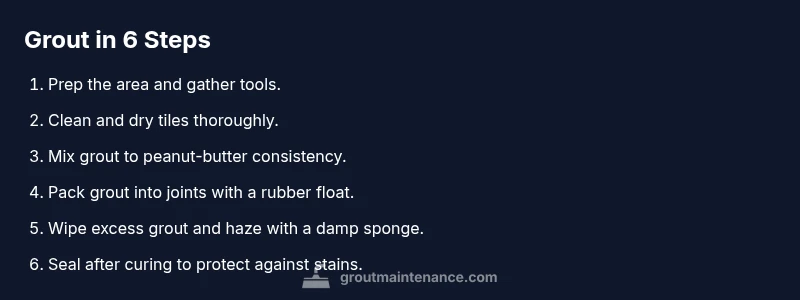
- 1
Prepare the workspace
Clear the area, protect surrounding surfaces, and lay down drop cloths. Gather all tools and materials so you won’t have to search mid-project. Temperature and humidity should be stable to promote even curing.
Tip: Protect nearby edges with painter’s tape to prevent accidental grout on non-target surfaces. - 2
Clean and dry porcelain joints
Use a pH-neutral cleaner to remove grime, residues, and oils from tile joints. Rinse thoroughly and allow tiles to dry completely before applying grout. Any moisture can impede bonding and cause weak spots in the grout bed.
Tip: Dry time is crucial—do not rush this step or you’ll trap moisture in the joints. - 3
Mix grout to proper consistency
Follow the manufacturer’s instructions for the water-to-grout ratio. Stir until the mix has a smooth, peanut-butter consistency and clings to the float without sagging. Let the mixture rest for 5–10 minutes and remix briefly before use.
Tip: Avoid over-wetting; too-wet grout loses body and can wash out of joints. - 4
Apply grout to joints
Hold the float at a 45-degree angle and press grout into joints, working in small sections. Use a diagonal stroke to force material into the grooves and prevent voids. Keep a damp sponge handy to remove excess grout from tile faces as you go.
Tip: Work in 2–3 foot sections to maintain workable texture. - 5
Initial clean and haze control
After about 5–15 minutes, begin wiping the tile surface with a damp sponge to remove surface grout and smooth joints. Rinse the sponge frequently to avoid spreading haze later in the process.
Tip: Don’t wipe too soon or you’ll pull grout out of the joints. - 6
Allow curing and seal
Let grout cure according to the product’s guidelines before sealing. After curing, apply a penetrating grout sealer following the manufacturer’s directions to protect against stains and moisture.
Tip: Seal only after full cure; reseal every few years as recommended by the product.
Got Questions?
What grout is best for porcelain slabs?
For porcelain slabs, a low-absorbency cement-based grout is usually the best balance of workability and stain resistance. Epoxy grout is durable but harder to work with. Unsanded grout is preferred for narrow joints to avoid scratching porcelain.
Low-absorbency cement-based grout is a good choice for porcelain slabs; epoxy is an option but requires more care.
Can I use epoxy grout on porcelain slabs?
Yes, epoxy grout is very durable and moisture resistant, but it’s more challenging to mix and apply. It’s best for wet areas and high-traffic installations if you’re comfortable with the technique.
Epoxy grout works, but it’s trickier to use than cement-based grout.
Do I need to seal porcelain grout?
Sealing cement-based grout helps resist stains and moisture. Porcelain tiles themselves don’t require sealing, but the grout can benefit from a penetrating sealer after curing.
Sealing helps protect the grout and makes cleaning easier after it cures.
How long should grout cure before sealing?
Wait for the grout to cure per the manufacturer’s guidelines. Then apply a penetrating sealer as directed. Avoid rushing this step to prevent trapping moisture.
Let it cure as directed, then seal for best results.
Should I use a grout haze remover after grouting?
If haze appears after curing, use a grout haze remover or a gentle cleaner recommended for cement-based grout. Follow product instructions and test on a small area first.
If haze shows up, use a remover suitable for cement-based grout and follow directions.
Can I regrout porcelain slabs without removing old grout?
In some cases you can regrout without removing old grout if it’s in good condition, but for deep stains or cracks, removing the old grout provides a cleaner base for new grout.
Sometimes you can regrout without removing old grout, but usually removal yields better results.
Watch Video
The Essentials
- Choose low-porosity grout for porcelain slabs
- Prepare and dry joints thoroughly before grouting
- Wipe haze promptly to reduce cleanup later
- Seal cement-based grout after curing to protect against stains
- Follow manufacturer guidelines for cure times and cleaning