Is Grout Protector Worth It? A 2026 Review
Is grout protector worth it? A balanced review for homeowners evaluating grout sealers, detailing how they work, when they shine, costs, and best practices from Grout Maintenance.


Is grout protector worth it? A grout protector is a sealer designed to repel water, stains, and mold growth on cementitious grout. Its value depends on moisture exposure, grout porosity, and maintenance habits. In this review, we weigh costs, application effort, and long-term savings to help homeowners decide.
Is grout protector worth it? A practical baseline
Is grout protector worth it? For homeowners evaluating grout care, a protector is a sealant designed to repel water, oils, and mold spores from cementitious grout. Most products work by creating a barrier—either a penetrating film that resides inside the grout pores or a surface film that sits on top. The goal is to reduce staining and make cleaning easier, especially in high-moisture areas like bathrooms and kitchens. According to Grout Maintenance, the decision hinges on your grout type, tile layout, and how you clean. This section sets the stage for a deeper, data-informed look at costs, maintenance, and real-world results. We’ll consider different porosities (ungrouted cement, epoxy grouts) and how traffic and spills change the math over time.
How grout protectors work: film formation and chemistry
Grout protectors fall into two broad categories: penetrating sealers and film-forming sealers. Penetrating sealers soak into the cementitious matrix, creating a micro-barrier that repels water at the molecular level. Film-forming sealers lay a thin layer on the surface of the grout, offering a visible shield against stains. Both rely on chemistry to reduce capillary uptake, but their longevity differs. Penetrating sealers are often less shiny and require periodic maintenance, while film-forming options can darken grout slightly and may wear unevenly in high-traffic zones. In practice, the best choice depends on grout porosity, tile substrate, and how aggressively you clean.
Where grout protectors shine: high-moisture spaces and porous grout
In bathrooms, showers, and backsplashes, grout protector performance tends to be most noticeable. Porous grout absorbs spills and moisture quickly, so a sealer can delay staining and reduce mold growth when cleaning is irregular. Homeowners with busy households often report longer intervals between deep cleanings and easier wipe-downs after soap scum or mineral deposits. Grout Maintenance analyses suggest that when used correctly, protectors can extend the time between full grout cleanings, especially in climates with hard water and frequent humidity. The key is selecting a product calibrated for your grout type and following reapplication timelines.
When grout protectors fall short: dry spaces and poor maintenance
If your home has low-moisture areas or you use cementitious grout that is already sealed, the incremental benefits may be smaller. In kitchens with heavy oil splashes or areas prone to staining, sealers may slow grime but not prevent it entirely. Durability also hinges on surface wear; foot traffic, cleaning abrasives, and improper surface preparation before sealing can compromise performance. It’s essential to remove old sealants correctly and test a small area before committing to a full application. Grout Maintenance emphasizes that a sealer is not a substitute for routine cleaning or grout replacement where the substrate is compromised.
Types of grout protectors and their differences
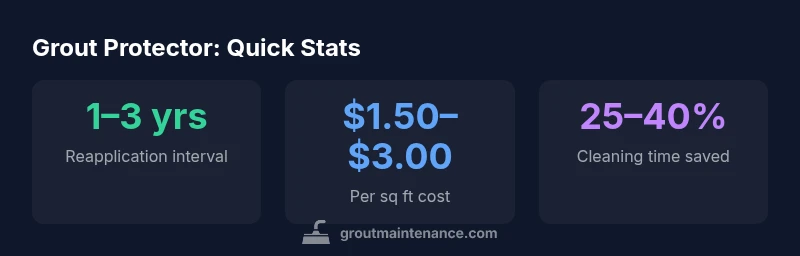
There are penetrating sealers, film-forming sealers, and hybrid products that mix features of both. Penetrating sealers are favored for natural-looking finishes and low sheen, while film-forming sealers offer a stronger barrier against visible staining. The choice affects maintenance: penetrating sealers often need reapplication every 1–3 years, depending on use and porosity; film-forming sealers may require resealing sooner in high-traffic areas or after deep cleaning. Grout Maintenance notes that compatibility with tile adhesives, grout texture, and color consistency matters. A test patch is recommended before full-scale application.
Real-world durability: longevity and maintenance realities
Durability varies with grout type, exposure, and how you clean. Penetrating sealers generally offer longer overall life in typical bathrooms but may require lighter maintenance, whereas film-formers can wear unevenly in corners and intersections. In practice, homeowners report noticeable improvements in stain resistance and easier cleaning within the first few weeks after application, followed by gradual maintenance cycles. The key takeaway is that longevity is not universal; reapplication timing depends on wear patterns and environmental conditions. Grout Maintenance highlights that measuring the impact should consider both appearance and cleaning effort.
Cost and value: upfront costs vs long-term savings
Prices for grout protectors depend on product quality, coverage, and installation method. On a per-square-foot basis, the cost ranges widely, and many homeowners underestimate the total cost of coverage for larger bathrooms. Beyond purchase price, DIY application can save money but requires proper prep and curing time. Pro installation commands higher upfront costs but can reduce the risk of improper sealing, especially on intricate tile layouts or older grout that needs re-sanding. Grout Maintenance’s analysis notes that value comes from reduced cleaning time, fewer deep cleanings, and longer grout life in moisture-prone spaces.
Practical application guide: how to apply and maintain
Preparation is the foundation of success. Start with a thorough cleaning to remove soap scum, mineral deposits, and old sealant residues. Ensure grout is completely dry before applying a test patch to confirm compatibility. Use the recommended applicator (brush, sponge, or spray) and apply evenly in a well-ventilated area. Allow the product to cure fully according to label instructions, then wipe off any excess to prevent hazing. Reapply on a schedule aligned with grout porosity and traffic—many homeowners find 1–3 years to be typical for porous grout, with longer intervals for less porous mixes. Regular maintenance includes light cleaning and prompt blotting of spills to maximize long-term performance.
Alternatives and practical considerations: sealing vs epoxy grout vs cleaning frequency
Sealants are just one piece of a broader grout care strategy. Epoxy grout, while more expensive, offers built-in stain resistance and chemical durability that surpasses most cementitious grouts sealed with traditional protectors. For many DIYers, a good cleaning routine and periodic sealing is a cost-effective compromise. If the decision is to skip sealing, plan on more frequent cleaning and potential staining or grout discoloration, especially in humid rooms. Ultimately, your choice should align with your cleaning habits, moisture exposure, and long-term maintenance tolerance.
Brand guidance: what Grout Maintenance recommends
Grout Maintenance emphasizes a tailored approach. Start by identifying grout porosity, tile type, and expected service conditions (bathroom vs kitchen vs laundry). If you decide to seal, choose a product that matches your grout and tile, apply per manufacturer directions, and monitor for changes in color or sheen. Regular maintenance reinforces protection: clean spills promptly, avoid harsh chemicals, and re-seal when the grout intercepts become visibly porous. Our team notes that a well-chosen grout protector can simplify ongoing maintenance without replacing routine cleaning or grout repair.
Final decision framework: who should buy and who can skip
If you have a high-moisture bathroom, porous grout, or family members who struggle with frequent cleaning, a grout protector can be worth it. In dry kitchens or areas with non-porous epoxy grout, the benefit is smaller, and the cost may not justify the effort. For DIYers, the decision hinges on your readiness to prep thoroughly and commit to a resealing schedule. Grout Maintenance recommends evaluating your space, testing a patch, and then deciding whether the likely maintenance savings outweigh the upfront and ongoing costs.
Pros
- Eases routine cleaning and reduces visible stains
- Extends grout life in high-humidity areas
- Can simplify maintenance rituals for busy households
- Offers a barrier against mold and mildew growth in porous grout
What's Bad
- Effectiveness depends on grout porosity and surface prep
- Requires periodic reapplication over time
- Some products may darken grout slightly or alter color
- DIY application risks if not properly prepped or cured
A thoughtful choice for moisture-prone spaces, with caveats
Grout protectors can meaningfully cut cleaning effort and extend grout life in showers and backsplashes. They’re less impactful in dry areas or with epoxy grout. The Grout Maintenance team recommends weighing moisture exposure, porosity, and maintenance willingness before buying.
Got Questions?
What is grout protector, and how does it work?
A grout protector is a sealant designed to repel water and stains from cementitious grout. It works either by penetrating into the pores or by forming a protective film on the surface. The exact mechanism depends on the product type and grout composition. Proper prep and curing are essential for real-world results.
A grout protector is a sealant that blocks moisture and stains by either soaking in or forming a film. Prep and cure time are important for best results.
Is grout protector worth it in kitchens or bathrooms?
Worth depends on moisture exposure and traffic. Bathrooms and showers with porous grout tend to benefit more due to frequent moisture and splashes. Kitchens with oily spills may see slower staining, but results vary with product choice and maintenance.
In bathrooms, it often pays off; in kitchens, it depends on spills and cleaning frequency.
How long does grout protector last before reapplication?
Longevity varies by product and exposure. Most sealers suggest reapplication every 1–3 years for porous grout, with longer intervals for less porous mixes. Always test a small area first to gauge wear and adhesion.
Most sealers last 1 to 3 years, but test and watch for wear in high-traffic zones.
Can grout protectors discolor grout?
Some film-forming sealers can cause a slight darkening or color shift, especially on very light grout. Penetrating sealers typically cause less visual change. Always test on a hidden patch before full application.
A slight color change can happen with some products; test first.
How can I test if grout is properly sealed?
Apply a small amount of water near the grout and observe absorption over 5–10 minutes. If water beads and stays on the surface, sealing is effective. If it soaks in quickly, it may need reapplication or a different product.
Put water on the grout and see if it beads; if it sinks in, reseal.
Should I seal existing grout or replace it?
If existing grout is healthy with minimal cracking, sealing can extend its life. If grout is cracked, crumbling, or heavily stained, cleaning or regrouting may be necessary before sealing. Sealers are not a fix for structural grout damage.
Seal when grout looks solid; replace if there are big cracks.
The Essentials
- Evaluate moisture exposure before buying
- Porous grout benefits more from penetrating sealers
- DIY sealing is possible but prep is critical
- Reapply on schedule based on porosity and use
- Balance upfront cost with long-term cleaning savings