1 8 vs 1 16 grout line wood look tile: A Practical Comparison
Compare 1/8 in vs 1/16 in grout lines for wood-look tile. Practical guidance on aesthetics, installation tolerances, and maintenance to help you choose.


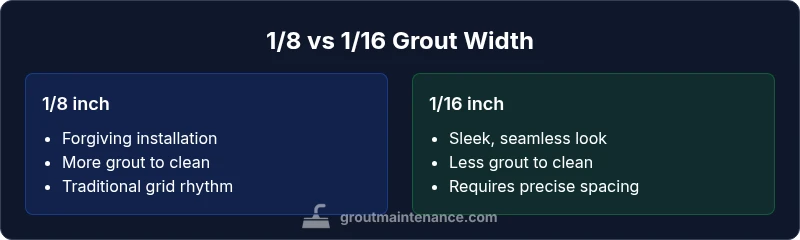
When considering 1 8 vs 1 16 grout line wood look tile, the choice mainly affects aesthetics and maintenance. The 1/8 inch (about 3.2 mm) line is more forgiving during installation, emphasizes the tile grid, and simplifies filling. The 1/16 inch (about 1.6 mm) line yields a sleeker, more seamless wood-look floor with less grout to clean but tighter tolerances. Pick based on skill, traffic, and desired look.
Choosing the right grout width for wood-look tile
Selecting the right grout width for a wood-look tile installation is a decision that affects both appearance and performance. The two common widths—1/8 inch and 1/16 inch—each carry tradeoffs that influence how your space reads, how easy the project is to finish, and how it will perform over time. According to Grout Maintenance, starting with a realistic plan for tile tolerances, substrate flatness, and expansion gaps helps ensure the final result matches your expectations. In practice, the width you choose interacts with tile size, edge craftsmanship, and even your cleaning routine. For typical plank sizes like 6x24, 8x24, or larger, a 1/8 inch grout line often tolerates minor lippage better while still delivering a classic wood-plank rhythm. A 1/16 inch line offers a more contemporary, minimal seam for a sleeker wood-look floor, but requires careful layout and consistent spacing. Both widths can perform well if you maintain the surface with proper sealing or using epoxy grout where appropriate.
Aesthetic impact of grout width on wood-look tile
The width of the grout line dramatically affects how a wood-look tile reads in a room. A broader 1/8 inch line creates a bold, grid-driven rhythm that can enhance traditional or rustic spaces. It also tends to visually hide minor edge irregularities of planks. In contrast, a 1/16 inch line reduces the visual break between planks, producing a seamless, spa-like effect that faux-wood lovers often crave. When you choose 1 8 vs 1 16 grout line wood look tile, consider the room size, lighting, and how much grout color contrast you want. For lighter grouts, a smaller gap may appear even more subtle, while a darker grout with a wide gap can emphasize the grid pattern. These aesthetic effects are why many designers test both widths on a sample board before committing. Grout color experiments can also shift the perceived width, so plan color strategy alongside width choices.
Installation considerations and tolerances
Installation tolerances play a central role in deciding between 1/8 and 1/16 inch grout gaps. Tile flatness, edge cut accuracy, and substrate prep influence how evenly gaps can be maintained across a floor. A wider 1/8 inch line offers more tolerance for minor lippage and unflat subfloors, which helps when DIY installers work with moderately imperfect substrates. A 1/16 inch gap demands consistent spacing, precise troweling, and careful control of adhesive bed height. In projects where plank edges vary or where long runs risk telegraphing unevenness, the wider gap can be a practical safeguard. Regardless of width, use quality spacers, a straightedge, and a consistent grout float technique to achieve uniform joints. For moisture-prone areas, consider grout types that maintain performance across slightly imperfect joints, and do not overlook substrate movement over time. These factors collectively determine whether you should lean toward 1/8 inch or 1/16 inch in real-world installs.
Maintenance and cleaning implications
Grout width affects cleaning frequency and the amount of grout area that collects grime. A wider 1/8 inch line has more grout surface per square foot to maintain, which can mean more cleaning effort and a higher likelihood of staining if you don’t seal or use stain-resistant grout. Conversely, the narrower 1/16 inch line yields less grout to clean, reducing routine maintenance and often hiding dirt in the grout color when sealed well. The key is choosing a grout type that resists staining and applying sealant appropriate to your grout material. Epoxy grout, for example, tends to resist staining and can make cleaning easier, especially on wide joints. Regardless of width, proactive maintenance—regular mopping with a pH-safe cleaner, immediate spill cleanup, and resealing when recommended—extends the life of the joint.
Grout materials and their impact on width choice
The material you select for grout—cementitious, epoxy, or latex-modified variants—interacts with width to determine performance. Cementitious grout is most common and benefits from sealing, especially in showers or kitchens with moisture exposure. Epoxy grout, while more expensive, provides stain resistance and chemical resistance that can negate some maintenance concerns of wider joints. When you compare 1/8 inch versus 1/16 inch lines, the choice of grout material can tip the balance toward one option. For instance, a narrow 1/16 inch line paired with epoxy grout can deliver a low-maintenance, modern look, but requires precise tile spacing during installation. In spaces with heavy foot traffic or variable humidity, test a small area with your chosen grout type to confirm how width and sealant interact over time.
Durability and maintenance in high-traffic areas
In busy kitchens and entryways, grout joints endure more wear and staining. A wider 1/8 inch line tends to accumulate more dirt but can be easier to refresh with re-grouting or deep cleaning if the grout is cementitious and sealed. A 1/16 inch line limits grout exposure, which is favorable for cleanliness but places more emphasis on consistent spacing during installation to prevent lippage from becoming visually unacceptable. High-traffic areas also benefit from choosing a grout with good stain resistance and a color that tolerates grime gracefully. In all cases, routine cleaning, prompt spill management, and periodic resealing (if your grout requires it) extend the life of either width. The goal is to balance appearance with resilience against wear and staining over time.
Cost and labor implications
Labor cost and material choices influence the overall affordability of your grout width decision. A 1/8 inch line typically provides a more forgiving installation, potentially reducing labor time for DIY projects or less experienced tilers. The 1/16 inch line, while offering a cleaner look, demands tighter tolerances and careful placement, which can increase labor time if you hire a professional. Material costs are generally driven by grout type rather than width alone, but some premium grouts may have slightly higher cost-per-joint for precise applications. Budget for extra sample boards, a test panel, and time to ensure even gaps. In short, your choice between 1/8 and 1/16 inches has downstream effects on time, effort, and total project cost.
Room-specific recommendations
Room context matters when selecting grout width. In kitchens or mudrooms where dirt and spills are common, many homeowners favor 1/8 inch lines for their forgiving installation and ease of maintenance over long runs. Bathrooms and accent spaces with strong lighting can benefit from 1/16 inch lines for a minimal seam that matches a modern aesthetic, though you must ensure tile edges are consistent and you’re using edge-banding or full planks to reduce edge irregularities. For living areas with natural light and a calm palette, the sleeker look of 1/16 inch lines can visually enhance space without appearing cluttered, provided you have skilled installation. Remember that grout color, sealant choices, and tile size all influence the final appearance and performance.
Practical design scenarios and tips
To translate theory into practice, consider some common design scenarios. For large plank wood-look tiles (6x24, 8x24), a 1/8 inch line strikes a balance between a wood-grain rhythm and practical maintenance. If your tiles are uniform and edges are well-cut, you may opt for a 1/16 inch line for a contemporary, seamless look that visually enlarges rooms. In very small rooms with tight corners, a slightly wider grout line can help mask minor spacing inconsistencies and mask tiny edge defects that become noticeable under strong lighting. Always validate your choice with physical tile samples laid in the same pattern and lighting as the final install. Test panels save time by revealing how each width interacts with color grout, room lighting, and wear over a few weeks.
Comparison
| Feature | 1/8 inch grout line | 1/16 inch grout line |
|---|---|---|
| Aesthetic effect | Bold grid emphasizing plank pattern | Sleeker, near-seam appearance |
| Installation tolerance | More forgiving of minor lippage and edge irregularities | Requires higher precision and consistent spacing |
| Maintenance and cleaning | More grout area to clean; easier to stain if not sealed | Less grout to clean; tighter joints can stain if not sealed well |
| Tile size compatibility | Works well with varied plank sizes (6x24, 8x24) | Best with uniform tiles and tight tolerances |
| Moisture resistance / grout type impact | Performance depends on grout choice; epoxy helps with cleaning | Epoxy or stain-resistant cementitious options reduce maintenance |
| Best for | Classic, traditional feel; forgiving layout | Modern, seamless look; demands precise layout |
Pros
- Offers a balance between aesthetics and practicality
- More forgiving during DIY installations
- Enables flexible design with common plank sizes
- A wider option can visually anchor larger rooms
What's Bad
- Wrong width can highlight tile defects or misalignment
- Narrow widths require precise layout and consistent spacing
- Wider joints increase grout maintenance and cleaning effort
- Color choice of grout becomes more critical with wider gaps
1/8 inch grout line generally offers the best balance for wood-look tile in most homes
For most projects, 1/8 inch provides forgiving installation and a classic look. If you have excellent tile tolerances and want a sleeker appearance, 1/16 inch is worth testing on sample boards; however, it requires careful installation to avoid lippage.
Got Questions?
What grout width is best for wood-look tile installations?
The best width depends on tile tolerances and desired aesthetics. Typically, 1/8 inch is a balanced choice for most homes, offering forgiving installation and easier maintenance. If your tiles are uniform and you want a sleeker look, a 1/16 inch gap can work well with precise layout and high-quality grout.
For most wood-look tile projects, start with 1/8 inch. If you have tight tolerances and professional help, you can try 1/16 inch for a sleeker look.
Do tile tolerances affect the decision between 1/8 and 1/16 inch grout lines?
Yes. Higher tile tolerance and straighter edges help achieve a consistent 1/16 inch joint. If edges vary or your substrate isn't perfectly flat, 1/8 inch is more forgiving and reduces the risk of visible lippage.
If your tiles aren’t perfectly flat, 1/8 inch is safer.
Is sealing grout more important with wider lines?
Sealing is important for most cementitious grouts, but epoxy grout doesn't require sealing. Wider joints expose more grout surface, so sealing a cementitious grout matters more for stain resistance and easier cleaning.
Seal wider lines to keep them looking clean longer.
Can I switch widths mid-project if I don’t like the result?
If you haven’t completed the install, you can adjust the grout width, but it may require reworking nearby joints and resealing. Plan carefully and lay sample panels before committing to full width.
It’s best to test widths first; changing width later can be costly.
How do I clean grout lines to keep color consistent?
Use a pH-neutral cleaner appropriate for your grout type and sealant. Regular cleaning prevents staining, and in high-traffic areas, frequent quick cleanups help maintain color consistency across widths.
Keep grout looking uniform with regular cleaning.
Do large-format planks prefer a specific width?
Large planks often benefit from a slightly wider joint (1/8 inch) to accommodate slight variations and reduce telegraphing, while still maintaining a modern look. If tolerances are tight and edges are precise, 1/16 inch can work for a seamless appearance.
For big planks, 1/8 inch is usually safer unless your tiles are very precise.
The Essentials
- Assess tile tolerances before choosing width
- 1/8 inch is forgiving and versatile
- 1/16 inch creates a modern look with precise installation
- Choose grout type that complements width and maintenance
- Test widths on a sample board before full installation