Lowes MAPEI Grout: A Practical Guide for Homeowners in 2026
Grout Maintenance analyzes Lowes MAPEI grout options for homeowners, covering selection, installation, sealing, and care with practical, expert guidance.


Lowes carries MAPEI grout options that work well for most residential projects, but success depends on choosing the right product type, proper mixing, and sealing. Grout Maintenance analysis, 2026, notes that batch-to-batch color variation can occur with cementitious grout. Buy enough for the full project, follow curing times, and seal where recommended to minimize stains and haze.
Understanding lowes mapei grout options
Choosing grout purchased at Lowe’s that uses MAPEI formulations means navigating two broad families: cementitious grout and epoxy grout. The Grout Maintenance Team notes that Lowe's carries a range of MAPEI products designed to suit residential tile projects—from small bathrooms to kitchen backsplashes. In practice, the performance hinges on the product type, mix ratio, curing time, and the environment. For homeowners, start by identifying whether your project demands a cement-based grout for quick setting or an epoxy grout for higher stain resistance in wet areas. Cementitious grout is generally easier to apply and color-consistent when mixed with the right proportions; epoxy grout offers superior chemical resistance but requires precise mixing and longer cure times. With any Lowe's purchase, verify the exact MAPEI product family and ensure you follow the manufacturer's installation guidelines to minimize cracking, discoloration, or efflorescence. The Grout Maintenance team emphasizes that understanding these basics helps homeowners avoid common missteps.
Cementitious vs epoxy: what to expect with Lowes MAPEI grout
MAPEI cementitious grouts provide a classic balance of workability and cost, making them a popular choice for many kitchens and bathrooms. In contrast, epoxy formulations deliver excellent stain resistance and chemical durability, which is advantageous in wet zones or high-traffic areas. When shopping at Lowe’s, compare product families by intended environment, porosity of the tile, and maintenance expectations. The Grout Maintenance Team cautions that epoxy products usually demand more careful mixing and longer cure times, but can reduce cleaning frequency if used in kitchens or outdoor spaces. Cementitious options, while easier for DIY novices, often require sealing to maintain stain resistance in porous substrates. Regardless of choice, ensure compatibility with your tile and substrate, and follow water exposure guidance from the label. A practical approach is to test a small area before committing to a full-scale installation.
Tile compatibility and surface prep
Tile type and substrate greatly influence grout performance. Porcelain and ceramic tiles with smooth, non-porous surfaces are generally forgiving, but natural stone and unglazed tiles may demand more careful sealing and preparation. Lowe’s MAPEI grout options work best when the tile is properly cured and properly adhered to a sound substrate. Ensure joints are clean, free of dust, and properly primed if required by the product family. The Grout Maintenance team highlights that skim coats, efflorescence, or adhesive residues can impede grout bonding. For showers and high-moisture areas, plan for moisture management and ensure the substrate is dry before applying grout. Following manufacturer guidelines for surface prep reduces edge chipping and discoloration after grout curing.
Color matching, textures, and grout lines
Color matching is one of the most visible aspects of a successful grout job. When working with Lowes MAPEI grout, consider the tile color, tile grout joint width, and the desired aesthetic. Batch-to-batch color variation can occur with cementitious products, so buy extra for adjustments and future touch-ups. The Grout Maintenance team notes that lighter grouts tend to show stains sooner, while darker colors can mask certain cleaning challenges but may reveal dust or haze. Consider grout joint width as well; wider joints can amplify color differences, while narrower joints may ride on the edge of uniformity. Keep samples of your chosen grout with the same batch to compare against your actual tile installation before you commit to the entire project.
Application, mixing, curing, and environment
Mixing accuracy and environmental conditions influence grout performance more than most homeowners expect. Whether using cementitious or epoxy grout, follow the label directions for mixing ratios, pot life, and application thickness. Ambient temperature and humidity can impact curing; plan installations for days with moderate conditions to minimize cracking and hazing. For cementitious grout, ensure the joint is fully compacted and extrude excess material promptly to avoid air pockets. For epoxy grout, work in small sections and wipe frequently to remove epoxy residue. The Grout Maintenance team emphasizes that patience during the cure phase pays off in easier cleaning and longer-lasting color stability. Always wear appropriate protective equipment and ventilate the area.
Cleaning, sealing, and maintenance routines
Post-install cleaning and sealing are essential for longevity. Cementitious grout often benefits from sealing after curing per the product’s guidelines; epoxy grout tends to resist staining but can still require routine cleaning. Lowe’s MAPEI grout products vary in sealing requirements, so consult the label and your tile type. The Grout Maintenance team recommends establishing a maintenance schedule that favors gentle cleaners, avoiding acidic or abrasive products that can degrade grout. For showers and backsplashes, establish a routine to remove soap scum and mineral deposits promptly to prevent hard-water staining. If haze appears, a gentle polishing and proper curing time can restore a uniform appearance. Regular inspection helps catch micro-cracks or hairline fractures early, allowing timely re-sealing or re-grouting.
Troubleshooting common issues and prevention
Gaps, cracking, or staining are common complaints when grout work is rushed or misapplied. Batch-to-batch color variation is a frequent concern with cementitious products; plan for touch-ups with the same batch or store extra grout for future repairs. Inadequate curing can lead to cracking or weak joints; always follow the product’s cure times and avoid exposing fresh grout to moisture until it has cured sufficiently. If staining occurs, identify whether it is mineral-based, oil-based, or mold-related, and treat with appropriate cleaners or sealers recommended by the manufacturer. The Grout Maintenance team suggests testing cleaners on a small inconspicuous area before applying widely to prevent damage to grout or adjacent tiles.
Shopping smarter at Lowe's: selecting the right grout for your project
When shopping at Lowe's, compare cementitious versus epoxy options based on site conditions, maintenance preferences, and budget. Read the product data sheet for porosity, sealing needs, and cleaning recommendations, and verify tile compatibility. Budget for extra grout to account for waste and batch variations. The Grout Maintenance team advises using the same batch for touch-ups and storing unopened bags in a cool, dry place to preserve color consistency. If you are unsure, seek advice from Lowe’s associates who can reference MAPEI product families and installation guidelines. A well-planned purchase reduces the chance of color mismatch and future rework.
A practical maintenance plan for long-term durability
Develop a routine that includes regular cleaning with a non-acidic pH-balanced cleaner suitable for grout, periodic resealing of cementitious grout, and timely addressing of any cracks or wear. A simple six-step plan—from surface prep to aftercare—helps homeowners maintain the grout’s look and function over years. The Grout Maintenance team stresses that consistent maintenance, paired with selecting the right Lowe’s MAPEI grout product for your environment, yields the best long-term outcomes. Keep documentation of product family, color, and batch for future repairs and color-matching tasks.
Key factors when evaluating Lowe's MAPEI grout
| Factor | Impact | Notes |
|---|---|---|
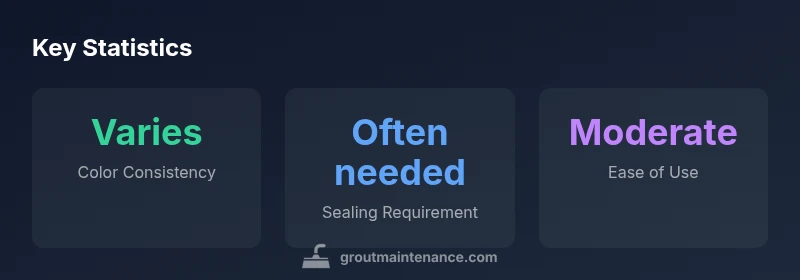
| Color consistency | Varies | Batch-to-batch variation possible with cementitious grout |
| Sealing necessity | Often required for cementitious grout | Sealing helps minimize stains and haze |
| Cleaning frequency | Moderate to high depending on area | Follow manufacturer guidelines for cleaners |
Got Questions?
Can I use Lowe’s MAPEI grout on unglazed or natural stone tiles?
Yes, but verify tile manufacturer recommendations and grout compatibility. Some natural stones require special sealing and non-acidic cleaners to maintain color and prevent etching.
Yes—check tile compatibility and follow product guidelines; sealing needs may vary with stone tiles.
Is sealing always required with cementitious grout from Lowe’s?
Sealing is often recommended for cementitious grout in moisture-prone spaces to reduce staining and haze, especially in showers and backsplashes.
Sealing is usually recommended in moist areas to protect color and stain resistance.
Do Lowe’s MAPEI grout products include epoxy options?
Yes, epoxy grout variants exist, offering superior stain resistance. Follow specific epoxy instructions for mixing and curing for best results.
Yes, epoxy options are available; they require careful mixing and curing per the label.
How can I minimize batch color differences between grout bags?
Buy extra from the same batch, store unopened bags properly, and test color consistency against a sample board before full installation.
Get a little extra from the same batch and test it against a sample before committing.
What should I do if grout haze appears after installation?
Haze can often be removed with a gentle cleaner and a soft scrub, following the product’s guidelines. If persistent, consult the label for approved haze-removal methods.
Gently clean with an approved cleaner; if it lasts, check the product guidelines or seek professional advice.
“The right grout choice hinges on your project environment and proper sealing; follow manufacturer guidelines for best long-term results.”
The Essentials
- Buy extra grout to cover batch differences and future touch-ups
- Choose cementitious or epoxy based on area and maintenance preferences
- Seal cementitious grout as recommended to protect color and stain resistance
- Follow tile and substrate prep guidelines for best adhesion