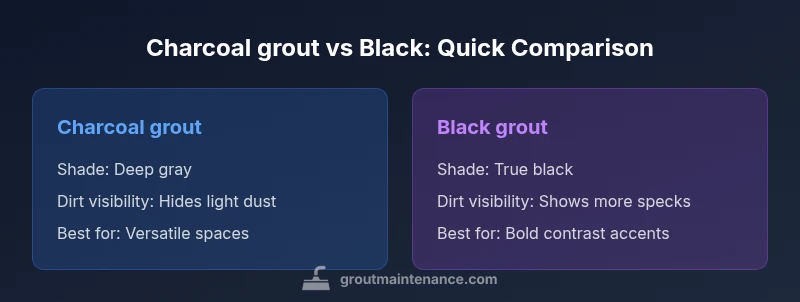
Charcoal Grout vs Black: A Practical Color Comparison
Comprehensive comparison of charcoal grout vs black grout, focusing on dirt visibility, sealing effects, tile pairing, maintenance, and ideal uses in kitchens and baths.


Charcoal grout vs black offer a bold, dramatic look, but they differ in shade, maintenance, and tile pairing. Charcoal grout is a deep gray that hides minor dirt and haze well, while true black shows every speck unless well sealed. For most kitchens and baths, charcoal provides versatility; black makes a stronger contrast but demands diligent cleaning.
Shade and Finish: How Charcoal Reads in Light
According to Grout Maintenance, the decision between charcoal grout vs black often hinges on how light interacts with the shade and what that means for room mood. Charcoal grout reads as a deep gray under most indoor lighting, balancing warmth and form. In contrast, black grout tends to read as an absolute dark line, which can intensify the perceived depth of a tiled surface. The choice matters not only for aesthetics but also for perceived tile size and brightness. When you look at swatches in different lighting—sun, LED, or tungsten—the charcoal option usually maintains a softer edge, while black can appear bluer or purer depending on the tiles around it. The goal is to select a shade that complements your tile color, grout texture, and room purpose, without creating optical drama that overwhelms the space.
Maintenance and Cleaning Visibility: Dirt, Hazing, and How They Show
Visibility of dirt and grout haze is a central practical difference between charcoal grout vs black. Charcoal tends to hide light dust, fingerprint smudges, and minor haze due to its mid-to-deep gray tone. It also benefits from standard sealing that reduces water spots visible on the surface. Black grout, by contrast, highlights every speck of dust, soap film, or mineral deposit. This effect is most noticeable in bathrooms with hard water or humid kitchens. The upshot is: if your household prioritizes a forgiving look with less polishing, charcoal is usually the safer bet. If you are committed to a pristine, high-contrast appearance and you routinely wipe down tiles after use, black can deliver a striking, modern aesthetic. Regular cleaning and a good sealing schedule are essential for both colors to preserve hue and prevent color migration.
Tile Pairing: What Works Best with Charcoal vs Black
Tile color and finish have a strong influence on how charcoal grout vs black behaves. Charcoal grout pairs naturally with white, pale gray, and cool-toned tiles, producing a cohesive, contemporary feel that still hides minor imperfections. It also serves well in projects with warm woods or cream accents, because the midtone ties elements together. Black grout excels with bright white subway tiles, bold glossy looks, and high-contrast kitchens or showers where you want the grout to disappear into the tile line. However, because true black can emphasize color differences between adjacent tiles, it is often best used where tile sizes are uniform and the surface is kept spotless. In some cases, blended or hybrid grouts that lean charcoal but are labeled black can offer a middle ground.
Sealing, Porosity, and Shade Stability
Sealing significantly influences how charcoal grout vs black grout performs over time. A good, penetrating sealer reduces water penetration and minimizes haze on both colors. For charcoal grout, sealing can help maintain a uniform gray tone and prevent the emergence of warm patches in damp rooms. For black grout, sealing is even more critical to prevent shade variation as moisture and mineral deposits accumulate at the grout lines. Note that some sealers slightly darken the grout color; the effect is usually milder on charcoal but can be more noticeable on black. Always test in a small area before committing to a full application, and re-seal according to product recommendations to sustain color integrity.
Practical Scenarios: Kitchens, Bathrooms, Showers, and Floors
In high-traffic kitchens, charcoal grout tends to perform well because daily sweeping and occasional mopping keep its tone consistent while concealing minor crumb residues. In busy family bathrooms, charcoal remains forgiving when water splashes occur, and haze is less apparent than with black. Showers with hard water benefit from charcoal's subdued tint, which masks mineral spots more effectively than black. On floors, where sunlight can bleach lighter grout, charcoal maintains a balanced tone across the room, while black provides dramatic lines that can either visually lengthen or shorten the space depending on tile layout. The bottom line is to map color behavior to expected cleaning routines and sunlight exposure.
Common Mistakes and How to Avoid Them
One common pitfall is assuming all charcoal or black grouts are identical; shade, porosity, and sealing differences can drastically alter appearance. Do not mix sealers or cleaners that brighten or darken grout beyond recommended guidelines. Another mistake is under-sealing: unsealed grout will absorb moisture and reveal uneven shading, particularly with black grout. Finally, be mindful of grout width: wider joints can appear lighter or darker depending on color, so plan joint width to suit the chosen shade and tile style. A practical approach is to test samples on the actual tile with the chosen sealer before committing to the full install.
Cost, Longevity, and Real-World Durability
Charcoal and black grout are broadly similar in initial material costs, but long-term maintenance costs can diverge. In busy spaces, charcoal may incur slightly lower upkeep because its hue hides minor staining and haze better, reducing the perceived need for frequent cleaning. Black grout, when maintained, can retain a striking appearance for a longer period, but neglect can lead to a chalky haze that is difficult to remove. The durability of either color also depends on the tile substrate, tile color contrast, and the quality of the grout mix (sanded vs unsanded) and sealer. For most homeowners, investing in a high-quality sealer and a consistent cleaning routine yields the best long-term value.
A Step-by-Step Guide to Choosing Between Charcoal and Black
- Define your space mood: Do you want a subtle, versatile backdrop or a bold, high-contrast feature? 2) Inspect lighting: Rooms with strong natural light might benefit from charcoal's softer look; darker spaces can handle black for a punchy effect. 3) Consider maintenance: If you prefer a forgiving color, start with charcoal. 4) Test with samples: Apply both shades to a tile area and seal to observe real color behavior over time. 5) Decide on sealing: Choose a sealer that aligns with your tile and usage; re-check the shade after curing. 6) Plan cleaning: Set expectations for routine maintenance and product selection. This method helps you avoid regrettable color choices.
5 1 6
Comparison
| Feature | Charcoal grout | Black grout |
|---|---|---|
| Shade | Deep gray reads as near-black; softer edge | Pure black with minimal gray tones |
| Dirt visibility | Hides light dust and haze well | Shows dust and water spots more readily |
| Maintenance frequency | Lower maintenance; forgiving in busy spaces | Higher maintenance for pristine contrast |
| Tile pairing flexibility | Versatile with whites, grays, warm tones | Bold contrast with bright whites or glossy tiles |
| Sealant impact | Sealers darken slightly; color remains even | Sealants are critical to maintain deep black; color shift possible |
| Best use scenarios | Kitchens, showers, and floors needing concealment | Accent spaces needing high-contrast lines |
Pros
- Hides dirt and haze more effectively in daily use
- Versatile with a wide range of tile colors
- Charcoal maintains a balanced look as lighting changes
What's Bad
- Black grout provides bold contrast but shows more staining when not maintained
- Sealing and cleaning must be consistent to prevent shade drift
- Color perception can vary with lighting and tile shade
Charcoal grout is the safer all-around choice for most homes; black grout is ideal for bold accents where maintenance is planned.
Charcoal offers versatility and forgiving maintenance, making it a reliable default. Black creates a striking, modern look but requires more cleaning discipline and sealing to stay true.
Got Questions?
What is the main difference between charcoal grout and black grout?
Charcoal grout is a deep gray that hides minor dirt and haze, while black grout is a true dark line that emphasizes contrast. Both require sealing and regular cleaning to maintain appearance, but charcoal generally forgives minor staining better. Your tile choice and lighting should guide the final decision.
Charcoal hides dirt better, while black shows more. Both need sealing and regular cleaning to keep looking their best.
Is sealing more important for black grout than charcoal?
Sealing is important for both colors to resist moisture and staining, but black grout often shows shade drift more noticeably without a good sealer. A penetrating sealer helps maintain consistent color over time.
Yes, sealing is crucial for black grout to prevent color changes and spotting.
Can lighting change how charcoal grout looks?
Yes. Charcoal grout can appear lighter under bright morning sun and darker under cool LED lighting. Checking color swatches under different lighting helps prevent surprises during installation.
Lighting can shift how charcoal appears; test swatches in your space.
Which grout color hides stains better in kitchens?
Charcoal grout generally hides minor stains and smudges in kitchens better than black, especially when sealed. For heavy culinary usage, regular cleaning is still required to preserve the tone.
Charcoal hides stains better; regular cleaning matters for both.
Are there tile colors that pair better with charcoal or black grout?
Charcoal pairs well with whites, cool grays, and warm-toned tiles, creating a cohesive look. Black grout works best with stark white or bright tiles to maximize contrast and create a modern edge.
Charcoal fits many tiles; black shines with bold, high-contrast tiles.
How often should I reseal grout colors?
Resealing frequency depends on the product and room conditions, typically every 1-3 years. Reassess if you notice color drift, increased haze, or increased moisture perceived through the joints.
Most spaces benefit from resealing every 1-3 years, depending on use.
The Essentials
- Choose charcoal for versatility and forgiving maintenance
- Choose black for bold contrast with a commitment to cleaning
- Seal and clean regularly to preserve shade
- Test color with actual tiles before committing
- Factor lighting when deciding between charcoal and black