Does Grout Dry Lighter or Darker? A Practical Guide
Explore does grout dry lighter or darker, with factors like humidity, sealing, and grout type affecting final shade. Learn how to predict, test, and control grout color after drying for reliable tile results.


Typically, grout dries lighter than its wet appearance, as moisture evaporates and color settles toward the grout's true shade. The final color depends on the grout type (cementitious vs epoxy), porosity, temperature, humidity, and any sealers or cleaners used after installation. If the grout is sealed or tinted, the shade may appear darker or more even, and cleaning residues can temporarily alter color.
Does color shift when grout dries? The quick reality
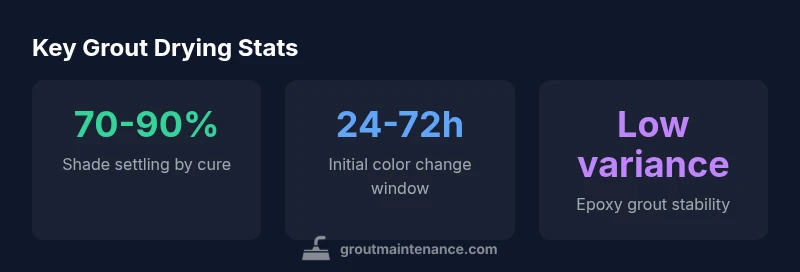
When grout is first applied between tiles, it often looks darker because of surface moisture and the cement's hydration. A frequent question is does grout dry lighter or darker, and the practical answer is that it usually dries lighter than the wet look. As moisture evaporates over the first 24 to 72 hours, the color begins to settle toward its true shade. The exact final tone, however, varies with the grout formula (cementitious vs epoxy), the porosity of the tile and substrate, ambient temperature, and humidity. Seals, cleaners, and even mineral deposits can further influence the end appearance during the curing window. For homeowners and DIYers, this is why Grout Maintenance recommends testing a sample patch on a similar substrate before committing to a color choice. By understanding basic drying behavior, you can set realistic expectations and plan a shade that will look right once the grout fully cures.
Why color changes occur: moisture, chemistry, and curing
Color changes in grout happen because water moves in and out of the cement matrix as it hydrates and then dries. Porous cementitious grout can trap residual water, causing a temporarily darker look, while mineral deposits from moisture can leave efflorescence that appears lighter or white. Temperature and humidity influence drying time, which in turn affects how the shade settles. Different tile substrates and grout gaps also affect light absorption. In many cases, the question of does grout dry lighter or darker hinges on how quickly moisture leaves the grout and whether you have introduced cleaners or sealers into the curing process. Grout color is not just about the chemical composition; it is also about environment and post-install care.
How different grout types respond to drying
Epoxy grout generally experiences less color change from moisture because it contains less absorbed water than cementitious grout. Cementitious grout (sanded or unsanded) tends to show more variation as it cures, especially in high-porosity substrates. Pre-mixed grout sits in between and can still shift slightly with moisture. Sealing a grout line can darken the shade initially, even if the base color is stable. If you expect a lighter final shade, choose a lighter base color and plan for a bit of shade adjustment after curing.
Practical steps to predict and control final shade
- Plan for shade margin: if you want a mid-range final color, pick a base color a shade lighter or darker depending on expected drying. 2. Do a pigment test: apply grout slurry on a scrap tile or inconspicuous area to observe drying behavior. 3. Allow full cure: give grout at least 24–72 hours to set, and longer in humid spaces; check for any color shifts during this window. 4. Watch for efflorescence: mineral deposits can blanch or whiten the grout; address it promptly with approved cleaners. 5. Decide on sealing: if you plan to seal, consider a penetrating sealer that minimizes color shift, and test again after sealing to confirm the final shade.
Sealing, cleaning, and color stability: what to expect
Sealers often darken grout slightly upon application, though many penetrants will lighten back as the surface cures. Cleaning agents, especially strong alkalies or chlorine, can strip surface residues and temporarily alter shade. For color stability, use pH-neutral cleaners and rinse thoroughly. Allow the grout to fully cure before evaluating final shade, and avoid aggressive scrubbing that can remove surface cement. Regular maintenance with gentle products preserves the intended color and reduces abrupt changes.
Quick-start checklist for predicting final grout shade
- Choose a base shade that accommodates possible darkening after sealing.
- Run a test patch on a similar substrate and tile type.
- Allow full cure under typical room conditions (temperature and humidity).
- Check for efflorescence and clean with appropriate products.
- Seal with a penetrating sealer if color matching is critical, and re-check after cure.
Comparison of grout types and their typical color changes during drying
| Grout Type | Drying Time (hrs) | Final Color Behavior |
|---|---|---|
| Unsanded cementitious | 12-48 | Lightens toward true shade after cure |
| Sanded cementitious | 12-72 | Lightens; color variability common |
| Epoxy grout | 6-24 | Relatively stable color after cure |
| Pre-mixed grout | 12-60 | Moderate color shift toward final shade |
Got Questions?
What causes grout to appear darker after installation?
Darker appearance is usually due to surface moisture and early hydration. Grout also appears darker when cleaners or sealers are present. Allow it to cure and check for any mineral deposits that can affect shade.
Moisture and residues tend to darken grout right after install; give it time to cure and check for residues.
Can I speed up grout drying?
You can improve airflow and manage humidity to help drying, but you cannot safely rush curing without risking cracks or uneven color. Avoid heat sources that create rapid moisture loss during curing.
Increase airflow and moderate humidity, but don’t rush curing with heat.
Does epoxy grout change color when it dries?
Epoxy grout is less prone to moisture-driven color changes and tends to lock in its shade after a shorter cure. It still benefits from a controlled environment during curing.
Epoxy grout stays more color-stable, but keep curing conditions steady.
Will sealing grout permanently darken the color?
Penetrating sealers can darken grout slightly during application, but many formulations darken temporarily before stabilizing. Always test after sealing to confirm the final shade.
Sealers can temporarily darken, then stabilize—test after application.
How long should I wait before judging the final grout color?
Wait until the grout has fully cured under typical room conditions, usually several days to a week depending on humidity. Look for any lasting color shifts or efflorescence before deciding.
Give it several days to a week, then reassess the color.
Does grout color change indicate mold or mildew?
Color shifts are usually related to drying and sealing, not mold. If you suspect mold or mildew, inspect for growth and treat with appropriate cleaners after confirming moisture sources.
Often not mold—check for moisture and cleaning residues first.
“Grout color after drying follows predictable patterns: most cementitious grout lightens as it cures, but sealers and cleaners can shift the shade. Proper testing is key.”
The Essentials
- Test color on a sample area before wide installation
- Expect dry grout to lighten; seals can darken shade
- Humidity and curing affect final color settling
- Epoxy grout changes differently than cementitious grout
- Choose shade with a margin for final color