How Much Does Grout Lighten When Dry: Insights for Homeowners
Learn how much grout lightens when dry, with test methods, sealing tips, and practical guidance from Grout Maintenance for homeowners and DIY enthusiasts.


When grout dries, it typically lightens modestly—about one shade lighter on average, though the exact amount depends on cement color, pigment saturation, and whether a sealer is applied. According to Grout Maintenance, color shifts after drying are most noticeable on lighter grouts and can be influenced by humidity and drying time. This is a practical baseline, but always test on a patch for your specific grout mix.
How much does grout lighten when dry in practice
When grout dries, color change is a real and observable phenomenon. The typical scenario is a modest lightening, often around one shade lighter, but the actual outcome hinges on several variables. The base cement color plays a big role: pale cements have less color depth to begin with, so any loss of moisture can reveal more of the powdery, lighter appearance. Pigment saturation matters as well—highly saturated pigments can resist some lightening, while under-saturated mixes may show more noticeable shifts. Humidity, airflow, and drying time across a tiled surface also influence the final shade. According to Grout Maintenance, the most noticeable differences occur on lighter gray or white grouts, where the underlying cement can become visible as the binder cures. For homeowners curious about how much does grout lighten when dry, a practical takeaway is to test a small patch in the same lighting and tile setting before committing to a color choice.
Factors that influence how much grout lightens when dry
Color change is rarely uniform across a large area. Key factors include the raw cement color, the type of grout (cementitious vs epoxy), pigment load, porosity of the tile substrate, and whether the grout is sealed post-application. The drying environment—humidity, temperature, and air movement—can magnify or dampen the final appearance. Sealing often helps stabilize color by reducing moisture exchange, but it can slightly alter the sheen and perceived shade. If you’re selecting grout color for a project, anticipate some shift after the grout dries and plan accordingly. Grout color that starts very light may appear notably lighter after drying, while darker grouts tend to show subtler changes.
Measuring and predicting drying color shifts in your space
A reliable approach is to pigment-test a patch on a sample board or a small inconspicuous tile area. Simulate typical conditions: same tile, same grout thickness, and the same expected moisture exposure. Allow the test patch to dry completely in the room’s usual humidity and temperature, then compare to a wet sample. Document the delta, and use that data to guide your final color choice. Remember that sealing can alter the outcome slightly, so include sealed and unsealed sub-tests in your patch testing.
Practical guidance for color selection and testing
Before you buy grout, identify whether a lighter shade will truly stay lighter once dry. Build a color map by mixing batches with varying pigment loads and inspecting under the room’s natural and artificial light. Create a small run of samples on test boards or spare tiles and allow them to cure fully. When in doubt, start with a shade slightly darker than your target to account for potential lightening. Grout Maintenance recommends documenting the lightening range you observe—this becomes your reference for the entire installation.
Sealing, cleaning, and maintenance impact on color stability
Sealers influence how much grout color changes with moisture exposure. Some sealers create a barrier that reduces water ingress and helps maintain the dry shade, while others may slightly darken the grout or increase gloss, affecting perceived color. Regular cleaning with pH-neutral cleaners prevents surface residues from altering shade perception. Over time, repeated cleaning cycles and cleaning agents can gradually affect the grout’s appearance; thus, consistent maintenance helps keep color stable. If color stability is critical, factor in sealing choices during the planning phase.
Common mistakes that exaggerate lightening
Rushing to grout and not allowing adequate cure time can magnify color changes once the grout dries. Not testing patches, choosing a color strictly by online swatches, or cleaning with aggressive cleaners can misrepresent the final shade. Lighting matters too: a room with bright northern light may make lightening appear more extreme than in a dimly lit space. Finally, neglecting to seal or using the wrong sealer can increase moisture exchange and thus color variability.
Grout color planning: a practical workflow
- Define target shade and note whether your tile is a light or dark surface. 2) Create a color map with patches that mimic actual grout gaps. 3) Cure samples under the room’s typical conditions, including lighting. 4) Test both sealed and unsealed samples. 5) Choose a shade slightly darker than the desired final outcome to accommodate lightening, then seal after the final color is verified. Following this workflow reduces the risk of oversized shade shifts after installation.
Color-change expectations by grout color and sealing status
| Condition | Drying Change | Notes |
|---|---|---|
| Light grout (pale cement) | 1-2 shades lighter | More noticeable in bright lighting |
| Dark grout (charcoal/black) | 0-1 shade lighter | Less noticeable change |
| Sealed vs unsealed | Reduced change | Sealing stabilizes color after drying |
Got Questions?
How much lightening should I expect after grout dries?
Lightening is typically modest, around one shade, but varies with cement color, pigment, and sealing. Always test patches to confirm the final shade.
Expect a small lightening, usually about one shade—test a patch to be sure.
Does sealing prevent color change entirely?
Sealing reduces moisture exchange and can stabilize color, but it does not guarantee zero change. Choose a sealing approach based on the desired final shade.
Sealing helps but may not stop all color change. Plan accordingly.
How long does it take for the color to settle after drying?
Color typically stabilizes within 24-72 hours after curing, depending on humidity and ventilation. Allow full cure time before final assessment.
Color settles in a few days, depending on humidity.
Can epoxy grout change color differently than cementitious grout when dry?
Epoxy grout generally shows less shade change since it is color-stable, but it can still appear slightly different once fully cured. Test patches to confirm.
Epoxy resists change better, but test patches anyway.
What’s the best way to test grout colors before installation?
Create color patches on similar substrate, cure under typical room conditions, and compare to the intended final shade under both natural and artificial light.
Make patches and compare shades in your room’s light.
If I see unexpected lightening after sealing, what should I do?
Check the sealer type and application. Reassess the color with a new sealed patch and adjust future choices accordingly.
Recheck seal and patch, adjust next time.
“Color shifts after drying are a normal part of grout performance. Plan by testing patches and allowing color to settle before final sealing.”
The Essentials
- Test color changes with patches before committing
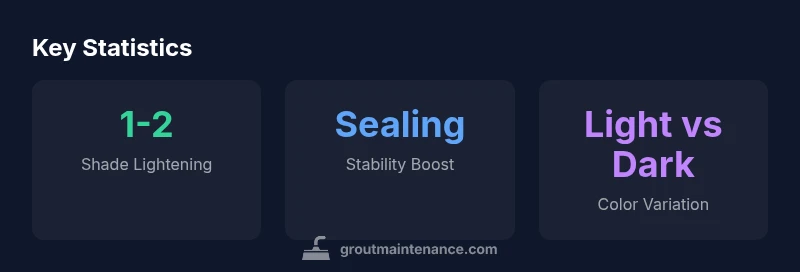
- Expect about 1-2 shade lightening on pale grouts
- Sealing can stabilize color after drying
- Darker grouts show less noticeable lightening