Grout Coverage Area: How to Plan Your Tile Project
Learn how to calculate grout coverage area accurately for tile projects. This guide explains how tile size, joint width, and waste affect usage, plus practical steps and budgeting tips.


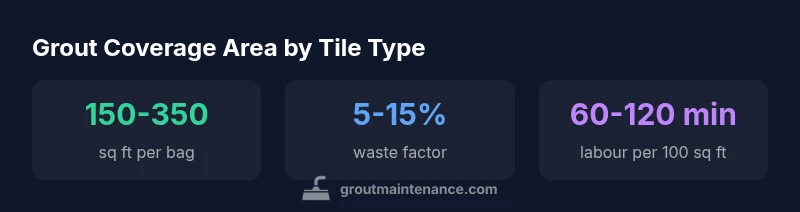
Grout coverage area describes the total surface that grout must fill, including waste for cuts and mishaps. To plan accurately, calculate the tile area, factor in the joint width, and add a waste margin of 5–15%. For many residential projects, one 25-pound bag covers roughly 150–350 square feet, depending on tile size and layout. According to Grout Maintenance, precise estimates save material, time, and rework.
Understanding the grout coverage area
Grout coverage area refers to the total surface that grout must fill across a tiling project, including a deliberate waste margin for cuts, irregular edges, and potential breakages. For homeowners and DIY enthusiasts, nailing this down early prevents material shortages and last‑minute trips to the store. Start by measuring the gross tile area (length × width for floors or walls) and then convert to square feet or square meters as needed. The next step is to estimate waste, commonly 5–15% depending on layout complexity. Finally, calculate how much grout you will actually mix and apply, considering joint width and tile size. This approach, supported by Grout Maintenance, helps ensure color consistency and minimizes grout haze from excess material.
How tile size and joint width affect coverage
Tile size directly impacts the total grout length needed. Smaller tiles create more grout joints, increasing the surface area that requires grout. Larger tiles reduce joint length, but they can demand more careful edge work and may influence waste differently. Joint width is equally important; a 1/8" joint uses less grout per square foot than a 1/4" joint. When you combine tile size and joint width, the grout coverage area can swing widely, so use midpoints for planning and add a conservative waste factor to account for pattern cuts and corners.
Practical steps to estimate grout needs for a project
Follow these steps to estimate grout needs accurately:
- Measure the tiled area (walls, floor, or both).
- Convert measurements to square feet and sum if across surfaces.
- Choose a target grout joint width (typical ranges are 1/8"–1/4").
- Apply a grout coverage factor by tile size (larger tiles generally require less grout per square foot).
- Add 5–15% waste for cuts and mistakes. Round up to whole bags to avoid shortages. Keep a small reserve for touch-ups.
Common mistakes when calculating grout coverage area
Common missteps include neglecting vertical surfaces, underestimating waste around irregular shapes, and using the tile area without accounting for cutouts for outlets, vents, and fixtures. Another frequent error is selecting a grout type without considering tile color or porosity, which can lead to color inconsistency and cleaning challenges. Always overestimate slightly to avoid runouts mid-project and to cover edge pieces and returns.
Materials and tools to optimize grout usage
To optimize grout usage, ensure you have the right tools and materials: measuring tape, a calculator, grout spacers, a grout float, a mixing bucket, safety gear, and your chosen grout type (sanded or unsanded). Pre-mix grout or bulk-pack options can reduce waste if you have a larger project. Use a margin of error when mixing to avoid stiff or watery grout that wastes material and time. Properly planning beforehand improves consistency and finish quality.
Sealing and maintenance impact on long-term coverage
Sealing grout after cure can dramatically reduce staining, mold growth, and moisture penetration, indirectly affecting maintenance intervals and the need for regrouting. Even with sealing, routine cleaning and prompt addressing of any grout damage are essential. When you choose a sealing product, verify compatibility with your grout type and tile surface. Routine maintenance minimizes long-term coverage surprises and preserves color uniformity.
Case study: small bathroom redo
A 60 sq ft bathroom floor with 12x12 inch tiles and 1/8 inch joints illustrates the estimation process. Tile area ≈ 60 sq ft. With a typical grout bag coverage of 150–200 sq ft, one bag could be sufficient, but edges and cuts add waste. Plan for 1.15 bags, and round up to 2 bags to cover potential spares for edge pieces. This example highlights how tile size and layout influence grout quantity and waste margins, reinforcing the value of careful measurement.
Cost considerations and budgeting
Grout material costs vary by product type, color, and brand. Expect a broad range in prices per bag, and factor in the cost of sealer, grout additive, and tools. Budgeting for grout by surface area helps prevent over-ordering or under-ordering. Consider purchasing slightly more grout than calculated to cover potential repairs or touch-ups after cure, while avoiding waste by choosing a color and type that matches multiple areas of the project.
Best practices recap
- Measure accurately and account for vertical surfaces.
- Use tile size and joint width to estimate grout needs with a waste margin.
- Choose the appropriate grout type and sealant for your tile and environment.
- Keep extra grout on hand for repairs and future maintenance.
Coverage estimates by tile size and joint width
| Scenario | Tile Size | Joint Width | Estimated Coverage (sq ft) | Notes |
|---|---|---|---|---|
| Standard ceramic (6x6 in) | 6x6 | 1/8" | 150-200 | Conservative estimate |
| Large-format (24x24 in) | 24x24 | 1/4" | 350-450 | Higher waste factor |
| Mosaic (2x2 in) | 2x2 | 1/8" | 50-80 | Tight joints |
Got Questions?
How do I calculate grout coverage area for a bathroom?
Begin by measuring the tiled surfaces and converting to square feet. Add 5–15% for waste, then adjust for tile size and joint width. Use this total to estimate bag quantity and plan accordingly.
Start by measuring the tile areas, add a little extra for waste, then check how the joint size affects usage.
Does sealing grout affect the coverage area I need to buy?
Sealing doesn't change the physical area to grout, but it can reduce maintenance needs and staining risk, potentially lowering future replacement needs. Plan based on the initial grout quantity and seal product instructions.
Sealing doesn’t change how much grout you need, but it can make maintenance easier later.
What if my measurements are imperfect or I see changes during tiling?
Err on the side of overestimating by a small margin to accommodate cuts and edge pieces. If you encounter changes, having extra grout on hand helps, but avoid stockpiling too much to prevent waste.
If measurements shift, keep a little extra grout to cover edge pieces and cuts.
Can leftover grout be reused on the same project?
Leftover grout is generally discouraged for reuse on the same project due to set time and color consistency issues. Store properly for touch-ups if you have an exact color match and you know you’ll need it.
Usually better to mix fresh grout for touch-ups to ensure color consistency.
What tools help with measuring and estimating grout needs?
Use a tape measure, calculator, and a simple spreadsheet or app to track area, tile size, and joint width. Grout shims or spacers help standardize joints during layout and reduce measurement errors.
Measure with a tape, compute in a calculator, and use spacers to keep joints consistent.
“Accurate grout coverage area planning reduces waste and ensures even color across large surfaces. With proper calculation, DIY projects stay within budget and time.”
The Essentials
- Plan with a waste margin to cover cuts
- Tile size and joint width drive grout needs
- Seal grout after curing to reduce maintenance
- Budget for 2 bags on small projects as safety net