Grout Quantity: How to Estimate Grout Needs for Tilings
Learn how to estimate grout quantity using a simple area × consumption method. This educational guide covers key factors, practical steps, and a calculator to plan costs and reduce waste for tiling projects in 2026.


Understanding grout quantity
Grout quantity is the planning figure tile installers rely on to estimate how much grout is required to fill joints across a tiled surface. For homeowners, this number translates into orders, bags, and budgeting, so getting it right reduces waste and keeps projects on schedule. According to Grout Maintenance, grout quantity is not a fixed attribute of a surface; it is a function of several practical variables you can measure and rationally account for before you buy materials.
The core idea is straightforward: you measure the tiled area, choose a grout specification (type and joint width), and apply a simple consumption assumption to approximate weight or bags. While the final contractor mix may adjust a little, starting from a conservative, well-documented estimate provides a reliable baseline. The goal is to match your materials to the project size, avoid shortages, and minimize leftovers that end up as waste.
How grout quantity affects project planning
Grout quantity affects more than just the price of materials. A solid estimate helps you order the right number of bags, plan mixing and curing schedules, and coordinate delivery with tile installation. When your grout estimate is too low, you risk delays while you source extra material or settle for a substitute that may not match; too high and you tie up cash in unused product and risk spoilage from unopened bags.
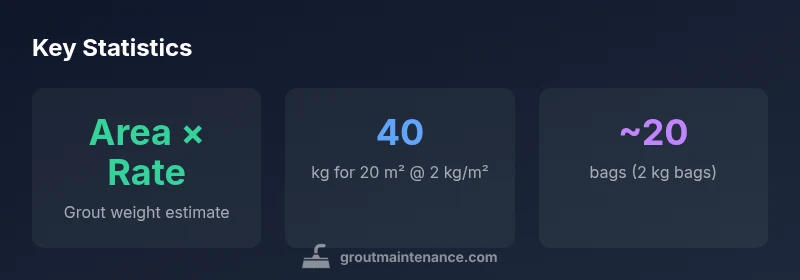
Grout Maintenance analysis suggests that starting with a simple, transparent calculation improves communication with contractors and DIY teams alike. By using a consistent method—multiplying the tiled area by a conservative consumption rate—you create a repeatable baseline you can adjust after you complete a few sections of tile. This repeatability reduces surprises at the checkout and helps ensure you have enough grout to complete the joints in one go, which minimizes color variation and patchiness in the final look.
Key factors influencing grout quantity
- Area: The total surface area to be tiled is the primary driver. Larger surfaces scale linearly, but irregular shapes can introduce additional waste if not measured carefully.
- Joint width and tile size: Wider joints and larger tiles increase the volume of grout required per square meter. For example, a 3 mm joint on a 600×600 mm tile will consume more grout per tile space than a 1.5 mm joint on the same tile.
- Tile thickness and pattern: Thicker tiles and complex layouts with diagonals or herringbone patterns can alter grout depth and coverage, increasing or decreasing the material you need.
- Waste and repair allowances: Always reserve a portion for cleaning mistakes, patch repairs, and unexpected gaps. A small buffer helps you avoid extra trips to the store after starting the job.
- Grout type and color: Some grout formulas are denser or shrink differently as they cure. While this does not change the bulk area, it can influence the actual handling, mixing, and waste you encounter on site.