Is Epoxy Grout Worth It? A Practical Homeowner’s Guide to Choices
Explore a detailed, objective comparison of epoxy grout versus cementitious grout. Learn where epoxy shines, where it doesn’t, cost considerations, maintenance tips, and practical advice for homeowners and DIY enthusiasts.


Epoxy grout is worth it for high-traffic, moisture-prone areas like showers and backsplashes due to its superior stain resistance and durability, but it comes with higher upfront costs and a more complex installation. If long-term appearance and easier cleaning are priorities, epoxy grout often justifies the expense; otherwise cementitious grout remains a budget-friendly, DIY-friendly option.
What epoxy grout is and how it differs from cementitious grout
Epoxy grout is a two-part resin-based material that cures into a hard, chemical-resistant matrix. It differs from traditional cementitious grout in composition, curing chemistry, and performance. When people ask is epoxy grout worth it, they weigh durability and stain resistance against installation complexity and cost. In practice, epoxy grout excels in wet, high-use spaces where water exposure, dyes, and cleaning agents are common. Cementitious grout, by contrast, is more forgiving to apply, easier to repair, and easier to color-match over time, but it absorbs water more readily and can stain or harbor mold more easily if not maintained. The choice hinges on location, tile type, traffic, and maintenance expectations. A practical takeaway: epoxy grout offers long-term cosmetic stability if you can manage the upfront cost and proper mixing, while cementitious grout provides a simpler, more forgiving path for DIY projects. The big question remains: is epoxy grout worth it for your specific space and budget? The answer depends on your priorities and tolerance for complexity.
What epoxy grout is and how it differs from cementitious grout
Epoxy grout is a two-part resin-based material that cures into a hard, chemical-resistant matrix. It differs from traditional cementitious grout in composition, curing chemistry, and performance. When people ask is epoxy grout worth it, they weigh durability and stain resistance against installation complexity and cost. In practice, epoxy grout excels in wet, high-use spaces where water exposure, dyes, and cleaning agents are common. Cementitious grout, by contrast, is more forgiving to apply, easier to repair, and easier to color-match over time, but it absorbs water more readily and can stain or harbor mold more easily if not maintained. The choice hinges on location, tile type, traffic, and maintenance expectations. A practical takeaway: epoxy grout offers long-term cosmetic stability if you can manage the upfront cost and proper mixing, while cementitious grout provides a simpler, more forgiving path for DIY projects. The big question remains: is epoxy grout worth it for your specific space and budget? The answer depends on your priorities and tolerance for complexity.
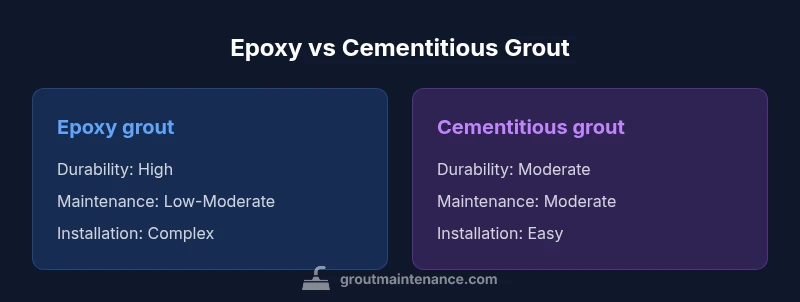
Comparison
| Feature | Epoxy grout | Cementitious grout |
|---|---|---|
| Durability & stain resistance | Excellent | Good |
| Maintenance & cleaning ease | Moderate with care | Easy with routine care |
| Installation difficulty | More complex | Simpler for DIYers |
| Cost range | Higher upfront | Lower upfront |
| Color options & matching | Limited and requires exact matching | Broad color range and easy touch-ups |
| Best for | Showers, backsplashes, damp zones | General installations and DIY projects |
| Lifespan with maintenance | Long-lasting with proper care | Good but may require more frequent maintenance |
Pros
- Superior stain and chemical resistance
- Excellent moisture resistance in bathrooms and showers
- Low water absorption reduces mold growth in damp environments
- Long-term appearance stays vibrant with less frequent resealing
- Low maintenance when used in appropriate settings
What's Bad
- Higher upfront cost than cementitious grout
- More challenging installation and tile repair
- Fewer color options and potential substitution issues over time
- Special tools and cleaning products may be required
Epoxy grout is worth it in wet, high-traffic spaces if you can handle higher cost and more complex installation.
Choose epoxy grout when stain resistance and durability are your top priorities, such as in showers or kitchen backsplashes. If budget or DIY-friendliness governs your project, cementitious grout remains a strong, versatile option. The Grout Maintenance team recommends weighing installation effort and long-term durability against cost to decide the best fit.
Got Questions?
Is epoxy grout more expensive than cementitious grout?
Yes. Epoxy grout typically has a higher upfront material and labor cost due to its resin chemistry and specialized installation. Over the long term, some projects offset the higher price via reduced staining and easier maintenance, but total cost depends on room size, tile types, and labor availability.
Yes. Epoxy grout costs more upfront because of its resin chemistry and the skill required to install it properly.
Can epoxy grout be installed over existing grout?
In many cases you should remove old grout to ensure a proper bond and clean surface. Some installers apply epoxy over sound, clean cementitious grout, but it may not be recommended for every substrate. Always follow product guidelines and local best practices.
Often you need to remove old grout first for the best bond, but check product guidelines for your situation.
Is epoxy grout suitable for outdoor use?
Some epoxy grouts are formulated for outdoor use and UV stability, but outdoor environments may demand different formulations. Weather exposure and temperature cycling can affect performance, so verify product specs for exterior installations.
Some epoxy grouts are designed for outdoors, but check the product details for UV and weather resistance.
How should I clean epoxy grout?
Use pH-neutral cleaners and avoid acidic or abrasive products that could haze or dull the surface. Regular sweeping and occasional damp mopping are typically sufficient. Avoid high-alkaline products that can degrade the resin over time.
Stick with pH-neutral cleaners and avoid harsh abrasives.
How long does epoxy grout take to cure?
Curing times vary by product and environment, but most epoxy grout cures within 24 hours to allow light foot traffic and longer for full cure. Follow manufacturer guidelines for ideal temperature, humidity, and cure times.
Cure times vary; expect up to a full day for initial set and longer to reach full hardness.
Does epoxy grout resist cracking better than cementitious grout?
Epoxy grout has excellent chemical and moisture resistance, but cracking is more related to substrate movement than grout type. Proper substrate prep reduces crack risk for either grout system.
It resists moisture and chemicals well, but substrate prep matters as much as the grout type.
The Essentials
- Epoxy grout delivers superior stain resistance in moist areas
- Budget and installer skill strongly influence epoxy’s value
- Cementitious grout offers easier DIY install and broader color options
- Proper maintenance extends epoxy grout lifespan
- Consider room-specific needs before choosing a grout type