Can Cracked Grout Cause a Leak? A Practical Troubleshooting Guide
Discover whether cracked grout can cause a leak, how moisture travels, and proven steps to fix, seal, and prevent leaks in showers, kitchens, and floors.


Yes—cracked grout can cause a leak in many situations. Water can travel through cracks and reach the substrate, leading to staining, mold, or structural moisture issues. The quickest fix is to dry the area, remove the damaged grout, and regrout with a water-resistant sealant. If moisture is behind the wall, stop using the area and inspect further.
Can cracked grout cause a leak? How water travels through grout
According to Grout Maintenance, cracked grout can contribute to leaks by allowing water to seep behind tiles and into the substrate. Grout is a cementitious or epoxy seal between tiles that blocks moisture, but when it develops cracks, capillary action can draw water right into the joint. Even small fissures can become channels for moisture, especially in high-humidity rooms like bathrooms or damp basements. In many cases, the issue starts small—staining or a musty odor—then escalates into visible leaks. Understanding the mechanism helps homeowners prioritize repair before water damage spreads. The Grout Maintenance team found that timely resealing and proper regrouting dramatically reduces ongoing moisture intrusion and long-term repair costs.
This is why can cracked grout cause a leak is a question many DIYers ask after spotting a few lines of hairline cracks or missing grout. The takeaway is simple: treat any active crack as a potential leak pathway and address it promptly with the right materials and curing times. We’ll cover what to inspect, how to diagnose moisture behind grout, and a step-by-step plan to restore a watertight grout line.
Signs that cracked grout may be causing a leak
Cracked grout often accompanies other moisture indicators. Look for: darkened grout, efflorescence (white mineral deposits), softened or crumbly joints, musty odors, peeling or bubbling wall paint, or stained cabinetry. In showers, you may notice slower drainage or standing water near the grout lines after a short rinse. If the area feels damp even after a thorough wipe-down, moisture behind the grout is a likely culprit. Early signs like color changes or a chalky feel in the grout should prompt a closer inspection and potential resealing.
This is where a quick visual inspection becomes essential. If you see cracked joints with water pooling behind, it’s a sign to check further, as timely resealing helps prevent mold growth and wood rot behind the wall. Grout is not a waterproof barrier; it’s a moisture limiter. When damaged, the wall substrate can become compromised, and repair costs rise accordingly.
format_compatibility_setter_1_2_3_accent_cue_check_1_2_3_4_5_6_7_8_9_10_11_12_13_14_15_16_17_18_19_20_21_22_23_24_25_26_27_28_29_30_31_32_33_34_35_36_37_38_39_40_41_42_43_44_45_46_47_48_49_50_51_52_53_54_55_56_57_58_59_60_61_62_63_64_65_66_67_68_69_70_71_72_73_74_75_76_77_78_79_80_81_82_83_84_85_86_87_88_89_90_91_92_93_94_95_96_97_98_99_100_101_102_103_104_105_106_107_108_109_110_111_112_113_114_115_116_117_118_119_120_121_122_123_124_125_126_127_128_129_130_131_132_133_134_135_136_137_138_139_140_141_142_143_144_145_146_147_148_149_150_151_152_153_154_155_156_157_158_159_160_161_162_163_164_165_166_167_168_169_170_171_172_173_174_175_176_177_178_179_180_
Steps
Estimated time: 2-3 hours
- 1
Assess the area and gather tools
Begin with a visual check of all grout lines in the affected area. Gather grout removal tools, a grout float, new grout (sanded or unsanded as appropriate), a sealant, a sponge, bucket, and safety gear.
Tip: Work in a well-lit area and wear eye protection to prevent dust exposure. - 2
Dry and clean the joints
Use a fan or dehumidifier to dry the area for at least 24 hours if feasible. Wipe away surface moisture and clean any residue to ensure proper adhesion for new grout.
Tip: Avoid sealing a damp area; moisture trapped in pores can cause future failures. - 3
Remove damaged grout
Carefully excavate loose and cracked grout with a grout removal tool, taking care not to damage adjacent tiles. Remove all compromised material until you reach solid, healthy material.
Tip: Vacuum the tile joints to remove dust before regrouting. - 4
Rinse and dry joints again
Rinse the joints to remove dust and allow them to dry completely before applying new grout. A dry joint bed ensures better bonding and sealing.
Tip: Check that the surrounding tiles are clean and dry to prevent trapping moisture. - 5
Apply new grout
Mix or prepare the grout according to manufacturer instructions, then press into joints with a grout float. Ensure joints are full and smooth, removing excess material from tile faces.
Tip: Hold the grout at a slight angle to avoid air pockets. - 6
Cure and seal
Allow grout to cure fully per product guidelines, then apply a grout sealer to protect against moisture. Follow curing times precisely and never seal a grout joint that’s still tacky.
Tip: Apply sealant evenly and wipe off excess to prevent hazy tile surfaces. - 7
Test for leaks
Run water over the area and inspect for leakage or dampness behind the grout. If staining or moisture reappears, recheck joints for gaps or cracks.
Tip: If any moisture persists, consider professional moisture testing. - 8
Prevent future cracks
Use proper substrate preparation, avoid excessive movement, and maintain consistent humidity levels to reduce future cracking. Periodically recheck grout lines in high-traffic areas.
Tip: Schedule seasonal inspections to catch cracks early.
Diagnosis: Water stains or dampness around grout joints suggesting a leak
Possible Causes
- highCracked or missing grout allowing water intrusion
- mediumImproper sealing or lack of sealant on porous grout
- lowHidden plumbing leak behind wall
Fixes
- mediumChisel out damaged grout and replace with new grout
- easyApply a penetrating grout sealer after curing
- easyDry the area thoroughly and monitor for new moisture
- mediumInspect plumbing and walls if moisture persists
Got Questions?
Can cracked grout cause a leak in a shower or bathroom floor?
Yes. Cracks in grout allow water to pass through joints and reach the substrate, which can lead to leaks, mold, and damage if left unattended.
Yes. Cracked grout can let moisture reach behind tiles, causing leaks if not repaired.
How can I tell if water is behind the grout and not just on the surface?
Look for persistent dampness, musty smell, or staining around grout lines. A moisture meter or professional inspection can confirm hidden moisture.
Check for damp spots or odors; if unsure, test with a moisture meter or have a professional check behind the wall.
Is sealing grout enough to stop leaks from cracked grout?
Sealing helps slow water ingress but is not a fix for existing cracks. Cracked grout needs removal and regrouting before sealing for lasting protection.
Sealing helps, but you still need to fix cracks for lasting protection.
How long should grout cure before sealing?
Curing times vary by product; most grouts require 24 to 72 hours before applying sealant. Always follow the manufacturer’s instructions.
Usually 24 to 72 hours to cure before sealing.
What tools do I need to reseal grout effectively?
You’ll need a grout removal tool, new grout, a grout float, a sponge, and a grout sealer. Proper cleaning and drying are essential.
A grout removal tool, fresh grout, and sealer are the essentials.
When should I call a professional about grout leaks?
If you see persistent moisture, bulging walls, or water intrusion behind cabinets, or if you’re unsure about the wall structure, call a pro.
Call a pro if moisture persists or you’re unsure about hidden leaks.
Watch Video
The Essentials
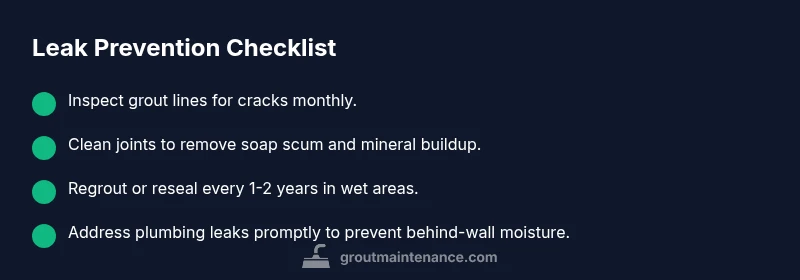
- Inspect grout regularly for cracks and wear
- Repair promptly to prevent water intrusion
- Use proper curing times before sealing
- Seal grout after proper curing to extend life
- If water damage is behind walls, call a professional