Why Does Grout Crack? A Practical Troubleshooting Guide
Discover why does grout crack and how to diagnose, repair, and prevent cracks in tile grout. This practical, homeowner-friendly guide provides steps to fix issues fast and protect future damage.


The most common cause of grout cracking is substrate movement and improper installation. Look for movement in the base, hairline cracks, or gaps around tiles. A quick fix involves stabilizing the area, cleaning loose grout, and regrouting or replacing affected sections. After repairs, seal the joints to reduce future cracking and monitor for new movement.
Understanding Why It Happens
Why does grout crack? The short answer is that grout is a relatively soft, flexible binding that sits between rigid tiles and a moving substrate. When the surface underneath shifts, tiles can misalign slightly, creating stress that travels to the grout joints. Over time, this stress leads to cracks, especially if joints were thin or tiles installed without proper movement joints. Moisture is another culprit: water intrusion weakens the binding and expands the substrate as it cycles with temperature changes. Finally, poor installation—such as using the wrong grout type for a given joint size, incorrect mixing ratios, or skipping a primer or sealant—can leave your grout less resistant to movement and moisture. In many homes, cracks develop gradually, starting as hairline fractures that widen with use. By identifying these root causes—movement, moisture, and installation errors—you can tailor repairs to the actual problem rather than performing generic fixes that fail quickly. Grout is a durable material when properly installed, sealed, and allowed to accommodate substrate fluctuations. In the next sections, you’ll learn how to diagnose, fix, and prevent cracks with practical steps you can execute safely as a homeowner.
Common Causes of Grout Cracking
Cracks don’t appear out of nowhere; they show up due to a few well-known mechanisms. The most frequent is substrate movement, especially on floors that experience bouncing or on walls where framing shifts. Next, improper installation, including using the wrong grout type (sanded vs unsanded for tiny joints) or mixing grout too thick, creates brittle joints that crack under stress. Moisture problems—leaks, high humidity, or a damp substrate—soften grout and cause cracks or spalling as the substrate swells and contracts. Another factor is insufficient expansion joints: in wide walkways or large tiled areas, gaps must absorb movement; without them, cracks form where the grout is forced to bend. Finally, thermal expansion and contraction from temperature swings can stress grout over time, particularly around exterior doors or near heating ducts. Each of these causes can be addressed with targeted fixes: strengthening the substrate, selecting the right grout, adding expansion joints, and improving moisture management.
Visual Diagnosis: What to Look For
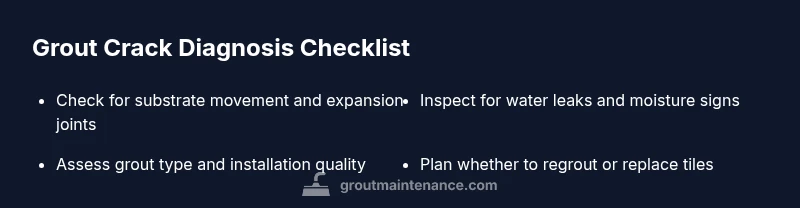
Not all cracks are the same, and recognizing their pattern helps you diagnose the underlying issue. Hairline cracks that stay narrow and do not widen with pressure often indicate superficial grout shrinkage or slight settling. Wider cracks that cross multiple joints, tiles feeling loose underfoot, or cracks that follow door frames or window reveals suggest substrate movement or tile loosening. Look for cracked or hollow tiles, loose grout, or missing chunks around the joints. Check for moisture signs: damp spots, efflorescence (a white mineral deposit), or musty odors point to water intrusion behind the grout. Color changes can also signal mold growth or mineral deposits from moisture. If you see movement underfoot when stepping on the floor, or if cracks appear after seasonal changes, treat this as a wake-up call to examine the substrate, joints, and sealant. The goal of diagnosis is to separate superficial grout damage from structural problems that require more extensive repair. With a clear diagnosis, you can plan the right approach—regrouting, tile replacement, or substrate stabilization.
Quick Fixes You Can Try Safely
If cracks are minor and your tiles are well bonded, you can start with safe, non-invasive steps. First, clean the joints thoroughly to remove dust and grease; use a small stiff brush and vacuum away debris. For hairline cracks, you can regrout by removing the damaged grout with a grout saw or rotary tool, then mix new grout to the manufacturer’s specs and press it firmly into the joints with a grout float at a 45-degree angle. Wipe away excess grout with a damp sponge before it sets; wait the recommended cure time before sealing. If you detect movement or hollow spots in the substrate, avoid applying more grout and consult a professional. For moisture problems, fix leaks and dry the area completely before continuing. Safety reminder: wear eye protection and a mask when removing old grout; avoid using bleach on porous substrates without proper ventilation, and never mix cleaner with ammonia. These quick fixes buy you time, but they are not a substitute for addressing root causes like substrate movement or damaged tiles.
When to Replace vs Regrout
In many cases, cracked grout can be repaired with regrouting; however, some scenarios demand tile or substrate replacement. Regrouting restores the grout surface while keeping the existing tiles in place, and is usually sufficient for hairline and shallow cracking in intact tiles. If cracks are extensive, joints are wide, or the tiles feel loose, regrouting alone may not hold. Large cracks that reveal substrate movement, or tiles that are cracked, spalled, or detached, require more thorough action: you may need to remove and replace affected tiles, repair the substrate, and then regrout. In showers and wet areas, persistent cracking often indicates ongoing moisture intrusion that must be stopped before repair. Assess tile stability, grout depth, and joint width before deciding. A professional assessment can determine whether you should regrout, replace tiles, or perform full surface reconstruction for a durable, long-lasting result.
Prevention: How to Keep Grout Crack-Free
Prevention is the best cure for grout cracking. Start with proper substrate preparation: ensure flat, clean, and sound backing; repair cracks in substrate before tile and grout go in. Use the right grout type (sand vs unsanded) for the joint width, and avoid overworking the mix. Installation should include expansion joints in large or high-traffic areas to absorb movement; sealants are essential after curing to prevent water infiltration. Maintain humidity levels and address leaks promptly to reduce substrate swelling. Regular cleaning using non-acidic cleaners and dry spills quickly prevents chemical attack on grout. Finally, develop a maintenance routine: reseal every 1-2 years (or per product guidelines) and monitor for hairline cracks that might indicate early movement. With consistent care, you can drastically reduce the chance of future cracks and enjoy long-lasting tile installations.
Steps
Estimated time: 2-3 hours
- 1
Assess the area and safety
Before touching any grout, turn off nearby power, remove loose debris, and inspect for signs of moisture or leaks that could undermine a repair.
Tip: Wear eye protection and a mask when removing old grout. - 2
Remove loose grout
Use a grout removal tool to carefully clear loose or cracked grout to a depth of at least 2–3 mm. Do not chip surrounding tiles.
Tip: Keep the gap even for a uniform reapplication. - 3
Check substrate and tiles
Look for tile movement, hollow spots, or cracked tiles. If movement or loose tiles are evident, address substrate and tile backing first.
Tip: Select a soft mallet and level when test-tapping tiles. - 4
Clean and prime
Vacuum and wipe joints to remove dust. If you’re using cement-based grout, ensure the joints are dry and primed according to product instructions.
Tip: Avoid moisture buildup that could compromise adhesion. - 5
Mix and apply grout
Mix grout to the recommended consistency, then press into joints with a grout float at a 45-degree angle for full contact.
Tip: Work in small sections to prevent skinning. - 6
Wipe and cure
Wipe off excess grout with a damp sponge while the grout is firm but not fully set. Allow proper curing time before sealing.
Tip: Seal only after full cure per manufacturer guidance. - 7
Seal and monitor
Apply a penetrating grout sealer after curing. Monitor for a few weeks for any new cracking and avoid heavy foot traffic during cure.
Tip: Maintain humidity control to ensure proper cure. - 8
Evaluate after repair
Observe repaired areas for stress points or movement; consider structural assessment if cracks persist.
Tip: Document cracking patterns to guide future repairs.
Diagnosis: Visible cracks in grout on tiled surfaces
Possible Causes
- highSubstrate movement or settling
- mediumImproper grout mix or curing
- lowInadequate expansion joints or poor layout
Fixes
- hardAddress movement with substrate stabilization and proper joints; re-grout affected areas after confirming the substrate is stable
- mediumRemove damaged grout, re-mix per manufacturer instructions, and reapply grout with proper curing time
- easyAdd or restore expansion joints and ensure consistent tile spacing
Got Questions?
Can I fix cracked grout myself, or do I need a pro?
Small cracks can often be repaired by homeowners with the right tools. Large or persistent cracks may indicate substrate movement and warrant a professional evaluation.
Small cracks can be fixed at home; bigger issues should be evaluated by a pro.
Does sealing grout prevent cracking?
Sealing helps minimize water penetration and staining, but it does not stop movement-related cracks. Use sealing as part of a broader prevention plan.
Sealing protects grout, but won’t stop movement-caused cracks.
What tools do I need to fix cracked grout?
You'll need a grout removal tool, grout float, mixing tub, sponge, and a suitable grout. Add a sealer and safety gear for best results.
Basic tools include a grout remover, float, sponge, and grout.
Can cracked grout cause mold?
Yes. Cracks can allow moisture to reach behind the grout, fostering mold growth if not addressed and dried properly.
Cracks can lead to mold if moisture is present.
How long does grout take to cure before sealing?
Curing times vary by product; follow the manufacturer’s guidance. In many cases, you wait 24–72 hours before sealing once the grout has cured sufficiently.
Follow the product’s cure time; sealing comes after it's cured.
Should I replace tiles or just regrout?
If tiles are loose or damaged beyond repair, replacement is necessary. For minor cracking, regrouting with proper joint prep is usually sufficient.
Replace damaged tiles or regrout as needed.
Watch Video
The Essentials
- Fix cracks by addressing movement and moisture first
- Choose the right grout and expansion joints
- Regrout or replace damaged tiles when needed
- Seal and maintain to prevent future cracks