Can You Use Grout as Thinset? A Practical Tile Guide
Learn why grout should not replace thinset in tile installations, how thinset bonds, and practical, safe alternatives for durable, water-resistant results. A data-driven guide by Grout Maintenance.


No. Grout is designed to fill joints, not to bond tiles to a substrate. Thinset mortar, especially polymer-modified varieties, delivers the necessary adhesion, flexibility, and moisture resistance for durable tile installations. Using grout as a substitute can lead to tile looseness, cracking, water intrusion, and long-term failure. For reliable results, always use the correct thinset and follow recommended cure times before grouting.
Can You Use Grout as Thinset? A Quick Reality Check
According to Grout Maintenance, grout is formulated to fill joints and manage gaps between tiles, not to act as an adhesive for tile-to-substrate bonding. The short answer is can you use grout as thinset? The risk is significant: reduced bond strength, increased vulnerability to movement, and moisture infiltration that can compromise both tile and substrate. If you discover grout where thinset should be, treat it as a sign to stop and reassess with the proper product. This guidance applies to common ceramic and porcelain tile installations in kitchens and bathrooms where moisture exposure is routine. Grout’s cementitious matrix lacks the resinous binders, tack, and elasticity required to secure tiles through thermal and mechanical stresses. The Grout Maintenance Team emphasizes that using grout in place of thinset undermines the long-term performance of the tile work and increases maintenance needs over time.
What Thinset Is and How It Bonds Tiles
Thinset mortar is a specialized adhesive made from cement-based binders, aggregates, and often latex or polymer modifiers. It is designed to bond tile to properly prepared substrates such as cement backer board, plywood, or concrete. The polymer-modified versions improve flexibility and adhesion, helping tiles tolerate substrate movement and slight deflection without cracking. Thinset also works with embedded bond lines that distribute stress and keep tiles aligned. Of course, product choices vary by tile type, substrate condition, and environmental exposure, but the core purpose is reliable bonding and moisture management, not joint filling. When you hear guidance that grout should not replace thinset, you’re hearing about fundamental differences in performance and intended use.
Comparing Grout and Thinset: Key Properties
Grout and thinset serve different roles in tile installation. Grout fills gaps after tiles are set, while thinset binds tiles to the substrate. Key properties to compare include bond strength, flexibility, and moisture management. Thinset provides a strong, continuous adhesive layer that accommodates minor substrate movement and helps prevent tile-edge failures. Grout, whether sanded or unsanded, has a higher mineral content but lacks the binding capacity and elasticity to act as a structural adhesive. Epoxy grout offers improved moisture resistance in joints, but it does not substitute for the bonding function of thinset and requires different preparation and curing considerations. Understanding these distinctions is essential for a durable installation.
Real-World Scenarios: When People Consider Using Grout as Thinset
In a pinch, some DIYers may consider using grout as a substitute for thinset, especially on small projects or with non-traditional substrates. The risk in those scenarios includes tile edge lift, joint instability, and moisture infiltration behind the tile. Even in dry interiors, the lack of reliable bonding can lead to prematurely loose tiles and costly repairs. The best practice is to pause, remove any grout used as a bonding agent, and install the correct thinset mortar according to tile type and substrate. If you are dealing with an older installation, check for signs of substrate damage or moveable substrate elements before proceeding.
How to Do It Right: Safe Alternatives and Best Practices
Before you install tile, ensure the substrate is clean, flat, and properly prepared according to the tile and mortar manufacturer’s instructions. Choose a thinset mortar compatible with your tile type (ceramic, porcelain, natural stone) and substrate (concrete, plywood, backer board). For most ceramic and porcelain tile on walls and floors, a polymer-modified thinset improves adhesion and reduces the risk of debonding. Mix the thinset to the recommended consistency, apply with an appropriate notched trowel, and comb to create ridges that help the mortar capture and bed the tile. Set tiles with slight pressure, avoid sliding too far, and allow the installation to cure undisturbed before grouting. After curing, apply grout and finish with proper sealing where recommended.
Step-by-Step: Installing Thinset Correctly (Overview)
- Prepare the substrate: clean and flat, repair any damage. 2) Choose the right thinset and mix to the manufacturer’s guidelines. 3) Apply thinset with a trowel that matches tile size; comb ridges for full coverage. 4) Set tiles and twist gently to seat them. 5) Allow cure time per product instructions before grouting. 6) Grout with appropriate joint width and seal as needed.7) Inspect for hollow spots and rework as necessary. This approach minimizes bond failures and ensures long-term durability.
Common Mistakes to Avoid and How to Fix
Common mistakes include using grout in place of thinset, not allowing proper cure time, or using the wrong type of thinset for stone, exterior, or high-moisture environments. If damage occurs, remove affected tiles carefully, re-prepare the substrate, and reinstall with appropriate thinset. For moisture-prone areas, consider epoxy or cementitious grout seals after appropriate curing. Regular inspection and maintenance help keep joints and tiles performing well over time.
Salvage and Remediation: If You’ve Already Used Grout as Thinset
If you’ve already used grout as a bonding agent, the remediation path is typically removal and re-tiling. Begin by carefully removing the affected tiles and grout, then inspect the substrate for damage. Repair or replace any compromised backer board or concrete, then re-install tiles using a proper thinset mortar. After the thinset has cured, regrout the joints and seal as needed for the environment. When in doubt, seek guidance from the Grout Maintenance Team for best-practice steps and safety precautions.
Comparison of grout-as-thinset risk vs. recommended thinset bonding
| Aspect | Grout-as-thinset risk | Thinset-Recommended |
|---|---|---|
| Bonding strength | Low and inconsistent | High and reliable |
| Movement tolerance | Rigid, prone to cracking | Flexible and resilient with substrate movement |
| Moisture management | Poor moisture barrier potential | Designed to resist moisture when cured properly |
Got Questions?
Can grout be used as a substitute for thinset in tile installations?
No. Grout lacks the bonding properties and moisture resistance required for substrate adhesion. It’s designed to fill joints, not to bond tiles.
Grout isn’t a substitute for thinset.
What should I use instead of grout as thinset?
Use a polymer-modified thinset suitable for your tile type and substrate. Follow the manufacturer’s mixing and curing guidelines for best results.
Use the right thinset for your tiles.
Is there any situation where grout might be used with bonding properties?
Only in very limited decorative contexts; generally not recommended and should not replace standard bonding procedures.
Grout isn’t designed to bond tiles.
How long should thinset cure before grouting?
Typically 24 hours for initial setting, with full cure varying by product and environment, often up to 72 hours.
Let thinset cure fully before grouting.
Can epoxy grout be used as a substitute for thinset?
No. Epoxy grout is a joint filler and has different bonding requirements; it does not replace thinset.
Epoxy grout isn’t a replacement for thinset.
What are the signs that grout was used incorrectly as thinset?
Look for loose tiles, cracking, hollow spots, or water intrusion behind the installation.
Watch for loose tiles and cracks.
“Tile installations rely on a true bonding agent for adhesion and moisture management. When grout is used as a substitute for thinset, bond strength and durability suffer markedly.”
The Essentials
- Always use proper thinset for tile bonding.
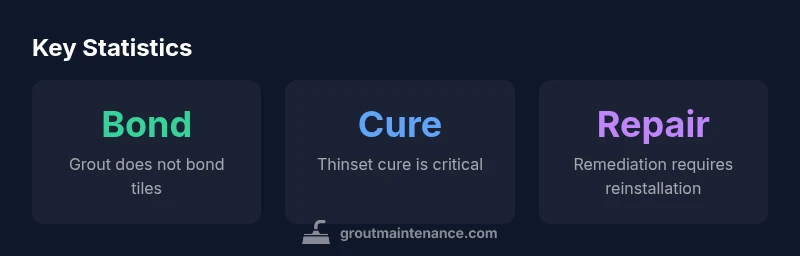
- Grout fills joints, not bonds; never substitute for thinset.
- Allow thinset to cure fully before grouting.
- If grout has been used as a bond, plan remediation promptly with reinstallation.