Difference Between Grout and Thinset: A Practical Guide
Explore the difference between grout and thinset, including roles, composition, cure times, and maintenance. Learn when to use each material for durable tile installations and how to avoid common mistakes.


Grout and thinset serve different purposes in tile installations: thinset binds tiles to the substrate, while grout fills the joints between tiles. This quick comparison helps homeowners understand which material to use where, and why choosing the wrong product can lead to cracking, moisture intrusion, or uneven tile surfaces. We’ll cover setting, durability, water resistance, color options, maintenance, and typical cost ranges. This guide reflects practical guidance from Grout Maintenance.
What are grout and thinset? A basic primer
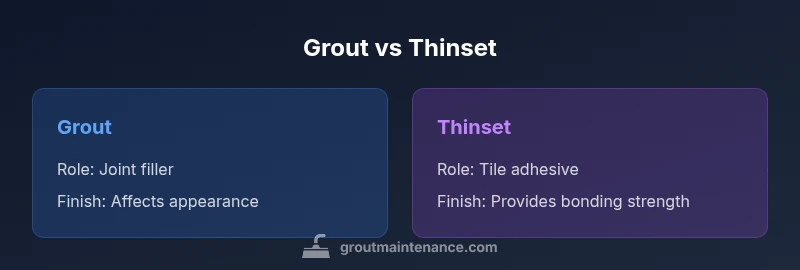
According to Grout Maintenance, understanding the difference between grout and thinset is essential for durable tile installations. In practical terms, grout is the filler that sits between tiles, helping to stabilize the layout and define the overall look. Thinset, by contrast, is the adhesive mortar that bonds tiles to the substrate. The difference between grout and thinset is foundational: improper use can lead to joint cracking, tile loosening, or water intrusion. In modern homes, the choice between these two materials guides not just the initial installation, but long-term maintenance, repairs, and even the ability to clean and reseal surfaces. For homeowners, recognizing these roles helps when planning a bathroom, kitchen backsplash, or shower surround, and it sets expectations for cost, time, and effort involved.
- Density and texture influence how each product performs in real-world conditions
- The right pair supports a durable, attractive tile surface
- Grout maintenance becomes easier when the roles are understood and followed
The Grout Maintenance team found that many common tile problems originate from using grout where thinset should be, or vice versa, underscoring the importance of this distinction.
Comparison
| Feature | Grout | Thinset |
|---|---|---|
| Primary role | Fills joints between tiles | Bonds tiles to substrate |
| Base composition | Cementitious mixture (cement + sand), sometimes epoxy | Cementitious mortar with polymers; often polymer-modified |
| Workability | Varies by type (sand, unsanded, epoxy) and color | Varies by base mix and additives; designed for bonding tiles |
| Cure/setting behavior | Cures in joints, allows movement within joints | Sets the tile to substrate and tolerates some substrate movement |
| Water resistance | Grout types vary; epoxy grout is highly water-resistant | Thinset is not a cosmetic barrier; grout protects joints |
| Color/finish impact | Altered visual appearance through joint color | Does not affect tile color; affects overall finish through adhesion |
| Best for | Joint filling, aesthetic joints, some moisture areas (epoxy variants) | Tile bonding, substrate adhesion, critical for load-bearing installs |
| Typical use case | Interior floors, walls, showers depending on grout choice | Underlayment to tile face in slabs and walls |
| Maintenance/repairs | Requires sealing for some grout types; repairs involve replacing grout | Repairs typically involve recementing or replacing thinset area if failure occurs |
| Cost/availability | Generally affordable with variations by type | Generally mid-range to higher, depending on polymer modifiers and additives |
Pros
- Grout provides joint definition and color options for aesthetics
- Thinset offers strong adhesion and tile stability, reducing loose tiles
- Epoxy grout variants provide superior water resistance and stiffness
- Appropriate use reduces long-term maintenance and repair needs
- Sealing grout can extend life in wet areas
What's Bad
- Incorrect use leads to bonding failures or cracking
- Grout sealing adds maintenance steps and moisture considerations
- Thinset installation requires careful substrate prep and cure time
- Epoxy variants, while durable, can be harder to work with for DIYers
Use thinset to secure tiles and grout to finish joints; this separation of roles yields lasting tiles.
A correct separation of duties—thinset for adhesion and grout for joints—provides the best balance of strength, water resistance, and aesthetic finish. Following this distinction minimizes failures and makes maintenance easier over the life of the installation.
Got Questions?
What is grout used for in tile installations?
Grout fills the joints between tiles, providing stability, a finished look, and a barrier against moisture where appropriate. It also helps distribute load and helps keep tiles aligned during and after curing.
Grout fills tile gaps and gives a clean finish while protecting against moisture in suitable applications.
What is thinset and why is it essential?
Thinset is an adhesive mortar that bonds tiles to the substrate. It provides the bond strength needed to keep tiles in place over time and accommodates minor substrate movement.
Thinset is the glue that sticks tiles to the surface and helps prevent tile movement.
Can grout be used as an adhesive?
No. Grout is meant for joints; using grout as an adhesive can lead to tile loosening and failures. Always use thinset or an appropriate adhesive beneath tiles.
Grout is for joints, not for sticking tiles down.
Is thinset waterproof?
Thinset itself is not a waterproof barrier; its primary role is adhesion. Waterproofing usually comes from membranes or sealers applied separately, especially in showers and wet areas.
Thinset sticks tiles; waterproofing comes from membranes, not the thinset.
How long does grout take to cure?
Cure time depends on the product and conditions, but grout generally requires a full cure period before grouting surfaces are used heavily. Always follow manufacturer guidelines.
Grout needs time to cure fully before heavy use.
Can grout and thinset be mixed together?
No. Mixing grout with thinset can compromise both adhesion and joint integrity. Use each material for its intended purpose to avoid failures.
Don’t mix grout and thinset; use them separately for their jobs.
The Essentials
- Know the two materials’ roles before starting a project
- Choose polymer-modified thinset for most tile substrates
- Use grout to finish joints; epoxy variants offer higher water resistance
- Seal grout where recommended to extend life
- Avoid substituting grout for adhesive or vice versa
- Plan cure times and substrate prep carefully to prevent failures