Grout and Thinset: A Thorough Tile Installation Comparison
Comprehensive, analytical compare between grout and thinset for tile projects. Learn about roles, types, installation, maintenance, and best practices to choose the right pairing for durability and long-term value.


Introduction to grout and thinset
Grout and thinset are fundamental materials in tile installations. Grout is used to fill the joints between tiles, while thinset is the adhesive mortar that bonds tiles to the substrate. This article presents an analytical comparison to help homeowners understand how these products affect durability, moisture resistance, and maintenance. According to Grout Maintenance, the success of a tiling project hinges on selecting the right thinset type for the tile and substrate, and pairing it with an appropriate grout formulation. The Grout Maintenance Team emphasizes considering substrate movement, tile material, and environmental exposure when making choices. By walking through material properties, installation steps, and care routines, we provide a decision framework you can apply to kitchens, bathrooms, and outdoor spaces. Throughout, the focus is on practical guidance supported by industry best practices, not marketing claims. We will unpack cementitious versus epoxy grout, cementitious versus modified thinset, and how sealing strategies influence long term results.
The Core Roles: What grout does vs what thinset does
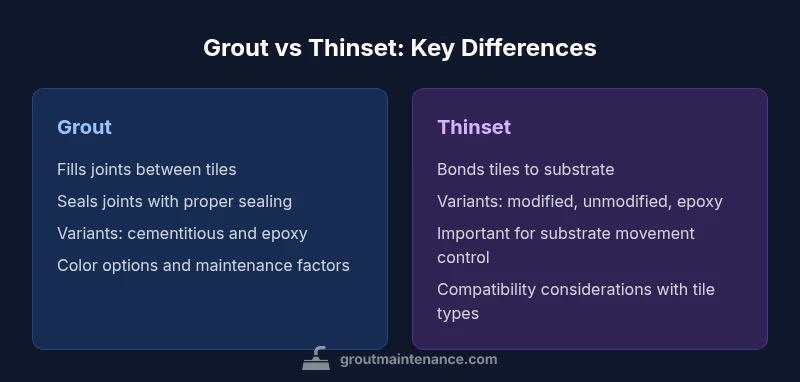
Thinset bonds tiles to the substrate and fills important bonding gaps. Grout fills the spaces between tiles to create a stable, water resistant surface and a finished appearance. In this section we examine how each product contributes to durability, maintenance, and aesthetics. Epoxy grout offers high chemical resistance and stain resistance, while cementitious grout is easier to work with and accepts color changes. The interaction between grout and thinset determines the success of the installation, and choosing the right combination depends on tile type, environment, and expected wear.
Types and Variants: Cementitious grout, epoxy grout, sanded vs unsanded; Thinset types
Most residential tiling uses cementitious grout either sanded or unsanded. Sanded grout is preferred for wider joints because it resists shrinking, while unsanded works well with small joints or delicate tiles. Epoxy grout offers superior stain resistance and durability, but cost and workability are considerations. Thinset comes in modified, unmodified, and epoxy varieties. Modified thinsets include latex or acrylic polymers to improve bonding and flexibility, while unmodified thinsets are traditional cements that rely on water to cure. In addition, epoxy thinset exists for very demanding projects. This section explains how to match grout and thinset types to tile material, substrate, and moisture exposure.
Substrate Compatibility and Movement Considerations
Tile installations must account for substrate movement and moisture. Substrates need to be clean, flat, and properly prepared before applying thinset. Movement joints in large areas prevent cracking by absorbing expansion and contraction. Grout lines must be compatible with the tile and adhesive used. The choice between epoxy and cementitious products can influence movement performance, especially in areas with temperature changes or heavy traffic. This section guides how to plan substrate prep and joints to maximize long term stability.
Installation Process: Step by Step for Thinset and Grout
Plan your sequence and prepare tools. Start with substrate cleaning and priming if required. Mix thinset according to manufacturer instructions, apply an even coat with a notched trowel, and tile with consistent pressure. Allow appropriate cure time before grouting. When grouting, select grout type and color, mix with water or additive as directed, and apply firmly into joints with a rubber float. Remove excess grout promptly and cure per product guidelines. Seal cementitious grout after it cures if required. This section provides a practical checklist to reduce common mistakes and ensure a durable tile surface.
Maintenance, Sealing, and Longevity
Maintenance plans differ by grout type. Cementitious grout benefits from sealing to resist stains in high moisture areas. Epoxy grout generally does not require sealing but can be harder to repair. Regular cleaning with non-abrasive cleaners keeps grout joints looking clean. Eventually joints may wear or crack, requiring regrouting or resealing. The choice of sealant and cleaning agents also affects color retention and grout integrity.
Common Mistakes and How to Fix
Common mistakes include mixing thinset incorrectly, using the wrong grout width for tile size, and failing to allow proper cure time. Grout haze, efflorescence, and premature cracking can occur with improper sealing or movement. To fix, follow manufacturer guidelines, select the correct joint width, regrout damaged areas, and ensure proper substrate preparation.
Cost Considerations and Value
Cost considerations for grout and thinset depend on tile type, area size, and environmental exposure. Cementitious grout and standard thinset are typically affordable, while epoxy products cost more and require more effort to install. Budget planning should include sealants, additives, and labor. For DIY projects, expect a balance of cost, time, and risk; for professional installations, the choice may lean toward epoxy grout in wet areas or modified thinset for challenging substrates.
Practical Decision Framework: Choosing the Right Combo
To decide between grout and thinset options, start with tile type, substrate, and environment. Step by step: 1) assess movement, moisture exposure, and cleaning expectations; 2) choose a thinset based on tile and substrate: modified for ceramic and porcelain, unmodified for some natural stones; 3) pick a grout type based on joint width, color stability, and maintenance willingness; 4) decide if epoxy grout is warranted for showers or wet rooms; 5) plan for movement joints and accurate curing. This framework helps homeowners align material choices with project goals and long term durability.