Difference Between Tile Grout and Adhesive
Explore the difference between tile grout and adhesive with an analytical, expert-backed comparison. Learn roles, formulations, installation steps, maintenance tips, and when to use each for durable tile projects.


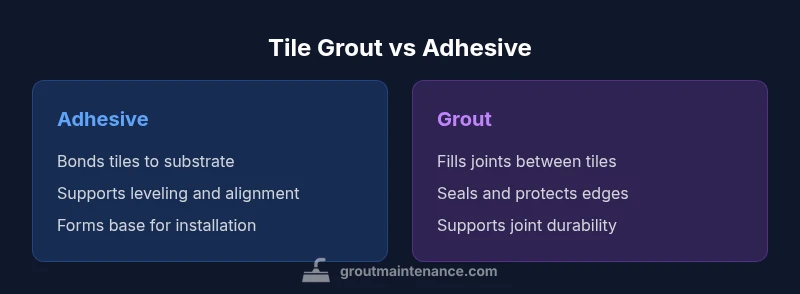
The difference between tile grout and adhesive is fundamental: adhesive bonds tiles to the substrate, while grout fills the gaps between tiles to seal joints and provide structural continuity. Using the wrong material for the wrong stage can lead to loosened tiles, cracked joints, or moisture issues. Grout Maintenance emphasizes applying each material to its intended role, especially in wet areas where performance matters most.
Core Roles in Tile Installation
Understanding the difference between tile grout and adhesive starts with their core roles. The adhesive is the mortar that bonds each tile to the substrate and helps achieve a level, stable surface. The tile grout, by contrast, fills the gaps between tiles, seals the joints against moisture, and contributes to overall tile stability as a system. Grout and adhesive work together, but misusing one for the other's job is a common source of failures. According to Grout Maintenance, clarifying these roles at the planning stage reduces rework and extends the life of a tile installation. By recognizing this difference between tile grout and adhesive, homeowners can make smarter material choices, estimate costs, and plan proper curing and maintenance schedules. In wet environments such as kitchens and bathrooms, the separation of duties becomes even more important; moisture management depends on the right choice of materials and proper installation techniques. This section sets up the framework for the rest of the article, emphasizing that the adhesive's job is to anchor and level tiles, while grout's job is to fill joints and protect the edge surfaces of tiles.
Materials and Formulations: Adhesives vs Grouts
Tile adhesives and grout are built for different purposes and come in several formulations. Adhesives range from traditional cementitious thinsets to polymer-modified mortars and epoxy systems. They are chosen based on substrate type, tile size, location (indoor vs. outdoor), and expected movement. Grout is primarily formulated to bridge tile joints and resist moisture. Cementitious grout is available in sanded and unsanded varieties, and epoxy grout offers superior stain resistance and water performance. Understanding the composition helps DIYers match the product to the environment—especially in kitchens, bathrooms, and showers. Once cured, adhesives provide bonding strength, while grout provides joint integrity and a finished edge that helps keep tiles aligned over time. This section lays out the distinction in terms of material science and practical outcomes, using the language of common tile projects. Grout Maintenance notes that material choices should align with expected moisture, wear, and cleaning regimes.
When to Use Adhesive vs When to Use Grout: Practical Guidelines
Choosing the right material depends on location, tile size, and environmental exposure. Use adhesive to attach tiles to the substrate; it creates the base surface and controls tile alignment. For wet areas or heavy traffic zones, select adhesives designed for moisture resistance and load-bearing performance. Grout is used after tiles are set to fill the gaps, seal edges, and transfer shear around joints. For interior walls or backsplashes with small-format tiles, unsanded grout may be appropriate; for larger joints or exterior applications, sanded grout can help resist cracking under pressure. Epoxy versions of both adhesive and grout exist for high-performance installations, but they require careful mixing and curing. Grout keeps moisture out of the tile bed, while adhesive ensures tiles stay put. Grout Maintenance reiterates that proper sequencing and product selection prevent common failure modes, such as tile lift and joint cracking.
Installation Flow: From Substrate to Finish
A successful tile project follows a clear sequence: substrate preparation, application of the adhesive, laying and leveling tiles, and then grouting after the adhesive cures. Begin with a clean, flat substrate and apply the appropriate adhesive following manufacturer guidelines. Use spacers to maintain uniform joints and check for levelness frequently. Allow the adhesive to cure as recommended before grouting. When ready, mix and apply grout to fill joints to the specified width, then scrape off excess material and wipe the surface clean. For cementitious grout, sealing is often recommended in dry areas but essential in many wet zones; epoxy grout typically does not require sealing. This section emphasizes the timing and job-specific decisions that drive long-term durability, with a focus on maintaining joint integrity and tile stability.
Common Mistakes and How to Avoid Them
Common missteps include using grout as a substitute for adhesive, applying adhesive where grout should be used, and neglecting substrate prep. Another frequent error is mixing or applying products outside their intended environmental conditions, which can compromise bonding strength or joint integrity. Inadequate joint spacing, failure to use movement joints, and rushing cure times are also typical errors. To avoid these issues, plan the tile layout with expansion joints, follow product data sheets, and perform a small test area when using new formulations. Grout Maintenance advises readers to verify compatibility between adhesive and grout types, especially for epoxy systems, to reduce rework and ensure defect-free finishes.
Performance, Maintenance, and Longevity
The long-term performance of a tile installation depends on a correct pairing of adhesive and grout. Adhesives must tolerate substrate movement and temperature changes without losing bond strength, while grout must withstand moisture, cleaning chemicals, and abrasion. Epoxy grouts and certain epoxy adhesives offer superior chemical and moisture resistance, at the cost of more complex mixing and installation. Cementitious options are more economical but require sealing and regular maintenance in damp areas. Proper joint widths, clean joints, and a well-sealed surface contribute to longevity, reducing the need for early repairs or rework. Grout Maintenance highlights the importance of periodic inspection to detect early signs of movement or moisture intrusion.
Troubleshooting: Poor Adhesion and Grout Failure
If tiles loosen or grout cracks, assess whether the adhesive failed to bond properly or if the grout cracked due to movement or improper mixing. Check for substrate flatness, moisture exposure, and cure times. Remedies may include removing affected tiles, reapplying the correct adhesive, and regrouting with appropriate joint width and grout type. In some cases, a full reinstallation is required if movement or substrate issues are extensive. The goal is to restore a stable bond and durable joints, preventing future failures. Grout Maintenance emphasizes diagnosing root causes—bond failure vs joint failure—before choosing a remediation path.
DIY Tips: Quick Wins for Homeowners
Before starting, inventory your tiles, substrate, and environment. Choose adhesive and grout based on location, tile size, and expected movement. Prepare the surface properly, dry-fit the layout, and keep the workspace clean during installation. Use the correct joints and sealants where appropriate, and plan for maintenance tasks such as periodic cleaning and resealing in humid spaces. Small upfront steps save time and cost later, and reduce the risk of rework.
Expert Insights: Grout Maintenance Perspective
From the Grout Maintenance perspective, the learner should prioritize material compatibility and a rigorous installation sequence. The team emphasizes aligning adhesive and grout choices with environmental conditions, tile format, and anticipated wear. This section provides context on how professional installers think about material roles, including the impact of movement joints and grout choice on long-term performance. By applying these insights, homeowners can achieve durable tile work with fewer callbacks or remediation.
Authority References and Practical Resources
For readers seeking more technical guidance, consult reputable sources that discuss tile installation standards and product performance. This section points to resources from government agencies and academic publications that address safety, environmental considerations, and installation best practices. The aim is to provide a foundation for informed decisions and to support readers with credible, non-brand-specific information. Grout Maintenance suggests cross-referencing product data sheets and industry guidelines when planning a project.
Authority References and Practical Resources (Continued)
- Government/Publications: https://www.osha.gov
- Government/Publications: https://www.epa.gov
- Education/Standards: https://www.usgbc.org
These references offer safety protocols, environmental considerations, and general building standards that support best practices in tile installations. They complement the practical guidance provided throughout this article and help homeowners verify that their methods align with recognized guidelines.
Comparison
| Feature | Tile adhesive (thinset/epoxy) | Tile grout (cementitious/epoxy) |
|---|---|---|
| Primary function | Bonds tiles to the substrate and controls alignment | Fills joints, seals edges, and helps transfer load across tiles |
| Common formulations | Cementitious thinsets, polymer-modified mortars, or epoxy adhesives | Cementitious grout (sandless or sanded) or epoxy grout |
| Best-use scenarios | Floor/wall installations requiring strong bonding and levelness | Joints and moisture-prone areas requiring edge protection and sealing |
| Water exposure performance | Depends on product; some adhesives tolerate moisture when cured properly | Epoxy grout offers high moisture resistance; cementitious grout requires sealing in wet areas |
| Maintenance and durability | Bond integrity driven by substrate prep and cure; rework if tiles loosen | Grout integrity driven by joint maintenance; epoxy grout is easier to clean but more complex to install |
| Cost considerations | Generally reflects material cost and labor for bonding tasks | Cost varies with grout type; epoxy tends to be pricier but longer-lasting |
Pros
- Clarifies material roles, reducing installation errors
- Helps DIYers select appropriate products for each task
- Supports long-lasting tile installations when used correctly
- Simplifies shopping by defining product categories
What's Bad
- Can be technical for beginners
- Mismatched expectations persist if sources are unclear
- Some products blur lines between adhesive and grout (e.g., epoxy systems)
Adhesive bonds; grout fills; use each for its intended role to ensure durability.
Correct material usage is essential for tile performance. In practice, selecting the right adhesive for bonding and the right grout for joints minimizes failures and maintenance.
Got Questions?
What is the difference between tile grout and adhesive?
Adhesive bonds tiles to the substrate and provides the base surface. Grout fills the gaps between tiles, seals joints, and helps transfer loads across the tiled area. Understanding these roles prevents common installation failures.
Adhesive sticks the tiles to the surface, grout fills the gaps. Getting this straight helps your tiling last longer.
Can you substitute grout for adhesive?
No. Grout cannot bond tiles to a substrate. Using grout instead of adhesive will lead to tile movement, cracking, and failure. Always match each material to its proper function in the installation sequence.
No—grout won’t bond tiles to the wall or floor. Use adhesive for bonding and grout for joints.
What types of adhesives exist for tile installation?
Tile adhesives include thinsets (cementitious and polymer-modified) and epoxy systems. Your choice depends on substrate, tile size, location, and moisture exposure. Epoxy adhesives offer high performance in demanding environments but require careful handling.
There are several adhesives—thinsets, polymer-modified mortars, and epoxy—chosen by location and tile type.
What types of grout are there?
Most projects use cementitious grout (sanded or unsanded) or epoxy grout. Epoxy grout provides excellent stain and moisture resistance, while cementitious grout is more economical and common for many surfaces.
There are cementitious and epoxy grout options, each with pros and cons.
Does epoxy grout require sealing?
Epoxy grout generally does not require sealing because it resists stains and moisture well. However, follow manufacturer guidance and clean up any residues promptly after installation.
Epoxy grout usually doesn't need sealing, but check the product instructions.
How can I prevent mistakes when choosing grout and adhesive?
Plan the project with substrate prep, movement joints, and product compatibility in mind. Test areas when trying new products, and always follow guidelines for curing times and environmental conditions to avoid failures.
Plan ahead, test products, and follow cure times to avoid mistakes.
The Essentials
- Define each material's role before starting
- Choose adhesive for bonding; grout for joints
- Epoxy variants offer higher water resistance but are more complex
- Follow manufacturer instructions and cure times for best results