Difference Between Grout and Flowable Fill: A Practical Guide
Understand the essential differences between grout and flowable fill, including uses, composition, and best practices for tile installations and backfill projects to help homeowners decide the right material.


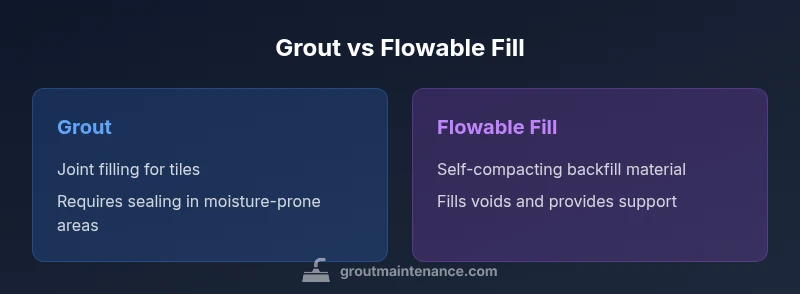
Grout and flowable fill serve different purposes in tile work and backfilling. The difference between grout and flowable fill lies in composition, setting behavior, and intended use. Grout is a cementitious joint material for tiles, while flowable fill is a self-compacting backfill mix used for voids. Understanding these distinctions helps homeowners avoid mistakes and choose the right material for each project.
Understanding the difference between grout and flowable fill for DIY projects
The difference between grout and flowable fill is more than a semantic distinction; it determines how you approach every step of a project. Grout is a cementitious material designed to fill the joints between tiles and create a stable, water-resistant seam. Flowable fill, by contrast, is a backfill product used to occupy voids, level surfaces, and support underlying structures. For homeowners, understanding this distinction helps prevent common mistakes such as using the wrong material in a wet bathroom joint or attempting to backfill behind installed tiles. According to Grout Maintenance, grout is not a substitute for backfill materials, and flowable fill should not be used where tile joints require durability and precise shaping. In practice, you’ll choose grout for tile work and flowable fill for voids behind walls, slabs, or foundations. The immediate goal of grout is to seal joints and provide a decorative finish; the goal of flowable fill is to create a stable, compacted mass that distributes weight evenly. Effective material selection starts with clarity on purpose and environment.
readabilityScore":null},
Comparison
| Feature | Grout | Flowable Fill |
|---|---|---|
| Primary use | Tile joints in finished surfaces | Backfill and void filling in construction spaces |
| Typical consistency | Thick, paste-like for joints | Pourable, self-consolidating mix |
| Setting/curing | Cures to a rigid, decorative seam | Gains strength as it cures, fills spaces without forcing compaction |
| Moisture resistance | Seals joints when sealed and maintained | Performance depends on project; not designed for decorative joints |
| Application context | Floor/wall tiling, showers, backsplashes | Foundation walls, trenches, under slabs |
| Repairability | Relatively easy to regrout or reseal | Difficult to remove or repair once set; breaks require careful removal |
| Cost context | Lower area cost for joints (per tile) | Used where large voids need backfill; cost varies by project |
Pros
- Grout provides durable, decorative joints when properly sealed
- Flowable fill simplifies backfill work with self-compacting flow
- Both materials can be suitable when chosen for appropriate applications
- Widely available and familiar to DIYers
What's Bad
- Grout requires sealing and maintenance in moisture-prone areas
- Flowable fill is not suitable for creating tile joints or decorative surfaces
- Incorrect use can lead to failures or costly remediation
- Flowable fill may require curing conditions that limit early traffic on a surface
Grout is the right choice for tile joints; flowable fill is for backfill and void filling.
For tile installations, grout delivers durable joints and moisture resistance when sealed properly. Flowable fill excels in filling voids behind walls or slabs, providing support without the need for compaction. The Grout Maintenance Team emphasizes using each material for its intended purpose to avoid common errors and ensure long-term performance.
Got Questions?
What is the main difference between grout and flowable fill?
Grout is a stiff, cementitious paste designed to fill tile joints and create a decorative, water-resistant seam. Flowable fill is a pourable backfill material that fills voids and supports structures without forming decorative joints. The difference lies in purpose, consistency, and curing behavior.
Grout goes into tile joints and seals them, while flowable fill fills voids behind structures. They’re not interchangeable.
When should I use grout instead of flowable fill?
Use grout for tile installations where joints matter for aesthetics and moisture control. Use flowable fill for backfilling voids, leveling, and lightweight foundations where a self-compacting material is advantageous.
Grout for tiles, flowable fill for voids—pick based on the project’s goal.
Can flowable fill be used in place of grout for tile joints?
No. Flowable fill is not designed to form stable, long-lasting tile joints. It lacks the stiffness and surface durability needed for joints and decorative patterns.
Flowable fill isn’t suitable for tile joints; grout is the correct choice for that purpose.
Are there safety considerations when mixing these materials?
Both materials require basic PPE and good ventilation. Follow manufacturer instructions for mixing ratios, curing times, and handling to minimize exposure to dust and silica.
Wear a mask and gloves, follow guidelines, and keep kids away during mixing.
What maintenance is required for grout joints over time?
Regular cleaning and periodic sealing (especially in moisture-prone areas) help protect grout. Over time, joints may wear or crack and require regrouting or resealing.
Keep joints clean and re-seal as needed to maintain moisture resistance.
What affects the setting time of grout?
Ambient temperature, humidity, and the mix ratio affect curing. Warmer, drier conditions can speed cure; cooler, wetter conditions slow it down.
Hot days speed up setting; cooler days slow it down—plan accordingly.
The Essentials
- Choose grout for joints and water resistance in tiled areas
- Use flowable fill only for backfill and void filling, not for joints
- Sealing grout properly extends its life in moisture-prone zones
- Plan project steps to apply each material in its appropriate context