Epoxy Grout Guide for DIY: From Bunnings to Your Tiles
A practical, data-driven guide to epoxy grout: pros, cons, when to use it, installation tips, cleaning, cost considerations, and where to buy at Bunnings. Includes a comparison with cementitious grout and maintenance best practices.


Epoxy grout bunnings is a durable, stain-resistant option for tile installations in kitchens and bathrooms. It outperforms cementitious grout in moisture-prone areas, delivering long-lasting color and easier cleaning. It costs more and can be trickier to install, so prep and ventilation matter. When shopping at Bunnings, choose a reputable epoxy system, read the mixing instructions carefully, and allow full cure time to prevent cracking.
Why epoxy grout bunnings matters for tile projects
Epoxy grout bunnings offers a durable, stain-resistant option for tile installations in kitchens and bathrooms. It outperforms cementitious grout in moisture-prone areas, delivering long-lasting color and easier cleaning. It costs more and can be trickier to install, so prep and ventilation matter. When shopping at Bunnings, choose a reputable epoxy system, read the mixing instructions carefully, and allow full cure time to prevent cracking.
In contrast to cementitious grout, epoxy formulations are resin-based and cured through a chemical reaction rather than simply drying. This chemistry yields superior resistance to water, domestic cleaners, and most chemicals commonly found in kitchens. For DIYers, understanding resin systems, pot-life, and recommended grout thickness helps prevent common failures. The Grout Maintenance team notes that epoxy grout thrives in wet rooms but requires meticulous surface prep and a clean substrate to achieve a flawless finish.
Key differences between epoxy and cementitious grout
Understanding how epoxy grout differs from traditional cementitious grout helps you pick the right product for each space. Here are the core contrasts:
- Stain resistance: Epoxy grout delivers higher stain resistance and color retention than cementitious grout.
- Water and chemical exposure: Epoxy resists water immersion and household cleaners better, reducing the risk of discoloration.
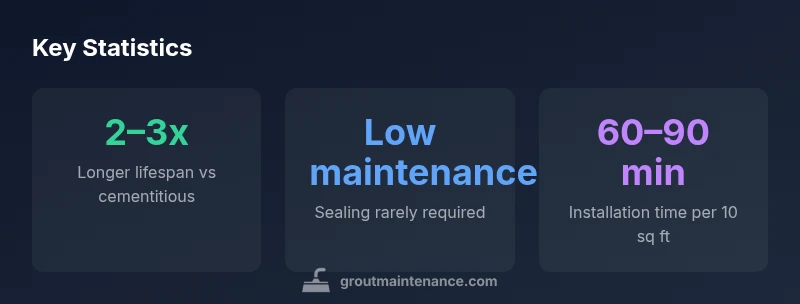
- Maintenance: Cementitious grout often requires sealing and periodic resealing; epoxy grout generally does not.
- Installation difficulty: Epoxy grout requires precise mixing, careful timing, and protective equipment; cementitious grout is more forgiving for beginners.
- Cost and curing: Epoxy is typically more expensive and has a stricter curing window than cementitious grout.
The Grout Maintenance team emphasizes planning for pot-life, temperature, and ventilation to avoid common installation faults.
Comparison of epoxy vs cementitious grout
| Aspect | Epoxy Grout | Cementitious Grout |
|---|---|---|
| Stain resistance | High | Moderate |
| Water absorption | Very low | Moderate |
| Installation time (per 10 sq ft) | 60–90 minutes | 45–75 minutes |
| Maintenance needs | Low (no sealing required) | Medium (requires sealing and resealing) |
Got Questions?
Is epoxy grout harder to install than cementitious grout?
Yes. Epoxy grout requires precise mixing, working time management, and careful cleanup to avoid haze. It’s best suited for controlled conditions and smaller work areas.
Epoxy grout can be trickier to mix and install, especially for beginners. Plan in small sections and ventilate well.
Do I need to seal epoxy grout?
No sealing is typically required with epoxy grout because it is non-porous and resistant to staining. Regular cleaning suffices for long-term appearance.
No sealant is usually needed with epoxy grout; just clean it with a gentle, pH-neutral cleaner.
Can epoxy grout be used outdoors?
Epoxy grout is generally not recommended for exterior use in extreme climates because some formulations may crack with temperature fluctuations and UV exposure. Always verify product guidance.
Outdoor use can be tricky—check the product spec and climate suitability before installing.
How long does epoxy grout take to cure?
Surface cure typically occurs within 24–72 hours, with full cure up to 7 days depending on product and humidity. Don’t expose the grout to heavy use during this period.
Expect a day or two before you can use the area completely, longer for full cure.
Where can I buy epoxy grout like the Bunnings selection?
Epoxy grout is widely available at major retailers including Bunnings. Look for two-part epoxy systems or pre-mixed formulas and compare brands for color and cure time.
You can find epoxy grout at big-box stores like Bunnings; compare brands for cure times.
What cleaners are safe for epoxy grout?
Use pH-neutral cleaners or those recommended by the manufacturer. Avoid acidic or abrasive cleaners that can dull color or damage the surface.
Stick to gentle, pH-neutral cleaners for epoxy grout. Avoid harsh acids.
“Epoxy grout is a game-changer for bathrooms and wet areas when installed correctly, offering outstanding stain resistance and durability.”
The Essentials
- Choose epoxy grout for moisture-heavy areas
- Prepare surfaces thoroughly; ensure proper ventilation
- Expect higher material costs and longer install time
- Follow manufacturer curing guidelines for best results
- Use pH-neutral cleaners for maintenance