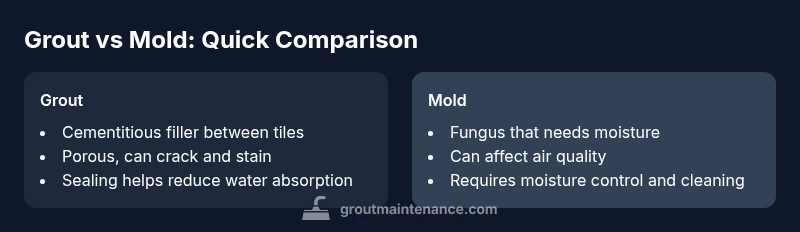
Grout vs Mold: Distinguishing Causes, Risks, and Solutions
Explore the differences between grout and mold, why moisture drives growth, and practical steps for cleaning, sealing, and regrouting to protect tile, indoor air quality, and your wallet.


Grout and mold aren’t the same problem. Grout is the cementitious filler in tile joints, while mold is a moisture-loving fungus that can grow on grout and other damp surfaces. The key to managing grout vs mold is moisture control, regular cleaning, and timely sealing or regrouting when grout has deteriorated.
Understanding grout vs mold: what they are and why it matters
Grout is the cementitious filler that sits between tiles, giving a finished look and preventing water intrusion. Mold, by contrast, is a living fungus that thrives on moisture and organic material, especially in damp environments like bathrooms or laundry areas. The phrase grout vs mold captures a common homeowner dilemma: is it a grout problem or a mold problem, or both? In many cases, mold grows on the surface of grout or within the tiny pores of old, cracked grout. Recognizing the difference matters because the remediation path differs: grout issues are typically addressed with cleaning and sealing; mold requires moisture control, cleaning, and sometimes professional remediation. According to Grout Maintenance, understanding the distinct roles of grout and mold helps homeowners target the right intervention at the right time. The Grout Maintenance team found that moisture remains the primary driver of both problems, so moisture management is the most cost-effective strategy in the long run.
In the context of a tile installation, grouting durability depends on proper mixing, curing, and sealing. When grout ages, it can crack or crumble, creating micro-crevices that trap dirt and moisture. Mold, on the other hand, colonizes those damp micro-niches, feeding on dust, skin cells, and other organics. The two issues often intersect, but the remedial steps diverge: cleaning and sealing for grout maintenance versus mold remediation and moisture control for mold management. A clear grasp of grout vs mold helps homeowners prioritize actions that protect tile integrity and indoor air quality.
Visual cues: telling grout from mold in your home
Mold growth on grout often appears as black, green, or gray specks, sometimes with a fuzzy texture, especially in poorly ventilated showers or around sinks. Grout staining can mimic mold but usually lacks the fuzzy or spotty growth and may simply be mineral deposits or soap scum. A simple test helps distinguish them: wipe a small area with a strong cleaner or alcohol. If the discoloration lifts, it’s likely grime or mineral staining on grout; if it returns after cleaning, it’s likely mold or mildew that’s rooted in the grout pores. Visual cues are not always definitive, and extended dampness or musty odors increase the likelihood that you’re facing mold. In the grout vs mold debate, a misdiagnosis can delay proper interventions, so consider a moisture assessment or a professional inspection if you are unsure. The Grout Maintenance team emphasizes that professional testing can pinpoint mold species and moisture sources, ensuring you address the root cause, not just the symptoms.
Key indicators include persistent staining after cleaning, a musty smell, and moisture intrusion around tile edges. Mold can also appear on adjacent caulk and behind grout lines if moisture is penetrating from behind the tiles. Because grout is porous, mold can become embedded, requiring more than surface cleaning. Keeping tiles dry, improving ventilation, and repairing leaks are crucial to prevent recurrence. Regular inspection of grout lines, especially in showers and kitchens, helps catch early signs of moisture damage and mold before it spreads.
Health and structural implications of mold in grout lines
Mold in grout is more than an unsightly issue; it can affect indoor air quality and occupant health. Many mold species release spores that can irritate eyes, skin, and the respiratory tract, particularly for people with allergies or asthma. While not all mold is dangerous, prolonged exposure to damp environments supports larger mold colonies and stronger odors. From a structural perspective, persistent moisture behind grout can cause tile debonding and grout deterioration, compromising the seal that protects the substrate. If moisture infiltrates wall cavities or behind bathroom tiles, wood framing and drywall may be at risk for rot or fungal growth beyond the visible grout lines. The Grout Maintenance team notes that addressing mold growth quickly is essential for preserving tile integrity and reducing health risks. In summary, mold in grout signals a moisture problem that requires both surface cleaning and moisture control to prevent recurrence and protect the home’s structure and occupants.
How moisture drives mold growth and grout deterioration
Moisture is the common denominator in grout problems and mold alike. High humidity, leaks, and poor ventilation create an environment where grout can absorb water and hold moisture in capillary spaces. Over time, repeated wetting and drying cycles cause cement-based grout to crack, crumble, or lose its color, creating micro-pores where mold spores settle and multiply. The porous nature of cementitious grout means it can trap moisture for extended periods, especially in showers, backsplashes, and exterior tile installations. Mold, once established, forms colonies that are difficult to remove with routine cleaning. The fix is multi-faceted: stop the moisture source, improve airflow, and then clean thoroughly. Sealing grout helps reduce water absorption, but it does not eliminate deep-seated mold or fix structural damage. Grout Maintenance’s guidance stresses that moisture control, not only cleaning, is the first line of defense against both grout deterioration and mold growth and should be part of every tile maintenance routine.
A practical moisture management plan includes monitoring humidity levels, ensuring adequate ventilation during and after showers, promptly repairing leaks, and using dehumidification where necessary. For bathrooms, kitchens with tile backsplashes, and laundry areas, vent fans and, if possible, windows are essential. The combination of moisture control and routine maintenance breaks the cycle that allows grout to degrade and mold to flourish. With a proactive approach, homeowners can keep grout looking clean and prevent mold from taking hold in the grout lines.
Cleaning strategies that respect grout without feeding mold
Effective grout cleaning begins with a non-acidic, tile-safe approach that removes soap scum and mineral deposits without eroding the grout. Start with a dry dusting to remove loose dirt, then use a gentle cleaning solution—preferably a pH-neutral formula designed for grout—to scrub with a soft-bristle brush. Rinse thoroughly to prevent leaving residue that can attract new grime. For mold or mildew spots, consider a hydrogen peroxide-based cleaner or a non-chlorine bleach solution, applied carefully and left to dwell briefly before scrubbing and rinsing. Avoid mixing cleaners, especially harsh acids with ammonia or bleach, which can create harmful vapors. Dry the area completely after cleaning to inhibit regrowth. If staining persists, it may indicate deeply embedded grime or early mold growth that requires more aggressive treatment, including regrouting in severe cases. The key is consistency: regular, gentle cleaning and immediate attention to moisture leaks will reduce the chances of grout damage and mold resurgence. Grout Maintenance recommends documenting each cleaning cycle to track improvements and identify recurring issues in moisture-prone areas.
Sealing grout: does it prevent mold or just delay it?
Sealing grout can reduce water absorption and slow the rate at which stains and mold spores infiltrate the grout pores. However, sealers are not a cure for existing mold or a replacement for cleaning and moisture control. A good sealant acts as a barrier that makes routine cleaning easier and extends the life of grout by limiting moisture penetration. If mold has already colonized grout or is entrenched behind the tiles, sealing alone will not eradicate the problem; you must address the moisture source and remove the mold. For best results, apply a breathable, grout-specific sealer after thorough cleaning and drying, and re-seal on a scheduled basis to maintain protection. The Grout Maintenance team notes that sealing is a preventive measure rather than a fix for active mold, and it should be part of a broader maintenance plan including ventilation improvements and leak repairs. If the grout is severely cracked or crumbled, sealing won’t restore structural integrity, and regrouting may be necessary.
Regrouting vs cleaning: choosing the right repair path
When grout is cracked, stained beyond easy cleaning, or has developed mold that can’t be removed with surface treatments, regrouting becomes a more practical solution. Regrouting involves removing old grout and applying fresh cementitious material, creating a renewed barrier against moisture and microbes. Cleaning plus sealing can extend grout life and reduce maintenance needs, but if the grout lacks structural integrity or has frequent moisture intrusion, regrouting offers a longer-term fix. The decision often hinges on the extent of damage, the age of the grout, and the underlying moisture conditions. In many cases, a combined approach works best: clean and seal existing grout to buy time, then regrout when evidence of degradation or recurrent mold appears. The Grout Maintenance team advises homeowners to evaluate the grout lines for hairline cracks, crumbling texture, and persistent staining before deciding on a repair pathway.
For tiled areas with high moisture and repeated use, schedule a professional assessment to determine if regrouting is warranted and to ensure the substrate is sound enough to support fresh grout. A proper assessment also helps identify any hidden water leaks that may be driving the problem and ensures the remedy addresses root causes, not just symptoms.
DIY workflow: safe, effective steps for grout mold cleanup
A safe DIY workflow starts with preparation and protection. Gather gloves, safety glasses, a stiff brush, non-acidic grout cleaner, hydrogen peroxide or oxygen bleach, a bucket, towels, and a compatible grout sealer. Ventilate the area well, and protect adjacent surfaces to avoid overspray. Begin with dry cleaning to remove surface mold and dirt, then apply a grout-safe cleaner and scrub with a nylon brush. Rinse thoroughly with clean water and dry completely. If mold remains, apply a hydrogen peroxide-based cleaner, let sit briefly, then scrub again and rinse. After the area is completely dry, apply a grout sealer according to the manufacturer’s instructions. Finally, monitor the area weekly for signs of moisture, ensuring that fans are running during and after showers. The Grout Maintenance team emphasizes following safety guidelines and consulting a professional for extensive mold growth, hidden leaks, or if you have health concerns. This process minimizes risk while restoring grout appearance and function.
Tools, cleaners, and products that work (and what to avoid)
Useful tools include a stiff grout brush, microfiber cloths, a spray bottle, and a non-abrasive scrub pad. Choose cleaners labeled safe for grout and mildew removal, preferably non-acidic and non-chlorine bleach unless specified by the product. For deeper mold, consider hydrogen peroxide or oxygen bleach solutions, applied carefully and rinsed well. Avoid acidic cleaners like vinegar on cementitious grout for extended use, as they can degrade grout over time. Do not mix cleaners; use separate products in sequence if needed. Drying tools like a small fan or hair dryer can speed up moisture removal between steps. The key is using products that are effective on mold but gentle on grout to extend the life of the joints and prevent future mold growth.
Common mistakes that worsen grout mold problems
Common mistakes include using harsh acids or bleach too aggressively, which can erode grout and create more porous joints for mold. Neglecting to dry surfaces after cleaning invites quick mold return. Inadequate ventilation and persistent leaks continue to feed moisture, undermining any cleaning effort. Another frequent error is sealing grout without cleaning first, which traps mold spores and moisture beneath the seal. Finally, failing to address the underlying moisture source, such as a leaking bathroom vanity or roof leak, leads to recurrent problems. The Grout Maintenance team stresses that a comprehensive approach—cleaning, drying, sealing, and moisture control—is essential for durable results rather than quick, short-term fixes.
Maintenance plan for showers and kitchens to prevent mold
A proactive maintenance plan reduces the frequency and severity of grout mold issues. Schedule quarterly inspections of grout lines, keeping an eye for hairline cracks and discoloration. Maintain good ventilation in bathrooms and kitchens, using exhaust fans during and after activities that generate moisture. Re-seal grout every 1–3 years, depending on usage and manufacturer recommendations. Address leaks promptly, repair caulk where needed, and consider a moisture meter in challenging installations to monitor humidity levels. Regular cleaning with a mild, grout-safe cleaner will keep grout looking fresh and functioning as intended. By integrating moisture control, cleaning, sealing, and occasional regrouting into a routine maintenance schedule, homeowners can safeguard tile installations against mold and deterioration.
Quick-start decision checklist for grout mold issues
- Is there a persistent musty odor or visible staining after cleaning? If yes, investigate moisture sources.
- Is grout cracked or crumbling? Regrouting may be needed.
- Is there visible mold behind tiles or in hidden spaces? Seek professional assessment.
- Is ventilation adequate in the area? Improve airflow to reduce moisture.
- Have you performed a thorough cleaning and allowed complete drying before sealing? If not, reset cleaning steps.
Authoritative sources and further reading
For more information on mold and moisture management in homes, consult authoritative resources. This section provides guidance from government and educational sources on mold risks, moisture control, and safe remediation practices. See the sources listed in the article for detailed, evidence-based recommendations.
Authoritative sources and further reading
- https://www.epa.gov/mold
- https://www.cdc.gov/mold/default.htm
- https://extension.illinois.edu
Comparison
| Feature | Grout-focused remediation | Mold-focused remediation |
|---|---|---|
| Primary remediation focus | Grout sealing and cleaning to maintain grout integrity | Mold removal and moisture reduction |
| Moisture management emphasis | Sealing and grout care to limit moisture ingress | Ventilation, leaks repair, and moisture monitoring |
| Common failure mode | Cracked/deteriorated grout enabling grime and mold growth | Active mold growth due to persistent moisture |
| Time to results | Faster cosmetic improvements with cleaning/sealing | Faster path to health risks reduction with mold removal |
| Best for | Showers/backsplashes with intact grout | Areas with visible mold but workable substrate |
Pros
- Clear strategies to prevent moisture-related issues
- Improved indoor air quality with proper mold management
- Long-term cost savings from proactive maintenance
- Protected tile integrity by sealing grout
- Improved aesthetic and stain resistance
What's Bad
- Requires regular maintenance and potential investment
- Sealing grout doesn't eliminate moisture risk
- Misidentifying mold as grime can delay treatment
Moisture control and proactive grout maintenance mitigate both concerns
Prioritize moisture management to prevent mold growth and grout deterioration. Use cleaning and sealing for maintenance, and regrout when grout is cracked or heavily stained.
Got Questions?
What is the difference between grout and mold?
Grout is the cementitious filler between tiles; mold is a fungus that grows in damp conditions. Grout problems focus on cracks and sealing, while mold requires cleaning and moisture control to prevent regrowth.
Grout is the material between tiles; mold is fungus that grows in moisture. Clean and seal grout, but address moisture to prevent mold from returning.
Can mold grow on grout?
Yes. Mold can colonize grout lines when moisture is present and the grout texture is porous. Visible growth often requires cleaning and moisture remediation to prevent recurrence.
Yes, mold can grow on grout if the area stays damp. Clean it and fix moisture to stop it from coming back.
How do I remove mold from grout safely?
Use a grout-safe cleaner, scrub with a nylon brush, and consider hydrogen peroxide-based cleaners for tougher mold. Rinse thoroughly and dry completely before re-sealing if needed.
Scrub with a grout-safe cleaner, use hydrogen peroxide for tough spots, rinse and dry completely before sealing.
Does sealing grout prevent mold?
Sealing reduces water absorption and makes cleaning easier, but it does not eliminate existing mold or fix underlying moisture problems. Combine sealing with moisture control for best results.
Sealing helps keep grout clean, but you still need to fix moisture and remove current mold.
When should I regrout instead of cleaning?
Regrouting is advisable when grout is cracked, crumbling, or heavily stained, or when mold persists after cleaning and sealing. It provides a fresh, moisture-resistant joint.
If grout is crumbling or mold keeps coming back after cleaning, regrout is the right move.
Are there health concerns with mold in bathrooms?
Mold can irritate eyes, nose, throat, and lungs, especially for sensitive individuals. Reducing moisture and improving ventilation lowers exposure risk.
Mold in bathrooms can irritate you and should be managed by reducing moisture and improving airflow.
The Essentials
- Control moisture first to prevent grout mold problems
- Regular, gentle grout cleaning extends tile life
- Sealing grout reduces water absorption but isn’t a mold fix
- Regrout when grout is severely damaged or mold persists
- Maintain ventilation to keep bathrooms and kitchens mold-free