Is MAPEI Grout Sanded or Unsanded? A Practical DIY Guide
Learn whether MAPEI grout is sanded or unsanded and how to choose based on joint width, tile type, and maintenance. Practical guidance from Grout Maintenance for homeowners and DIY enthusiasts.


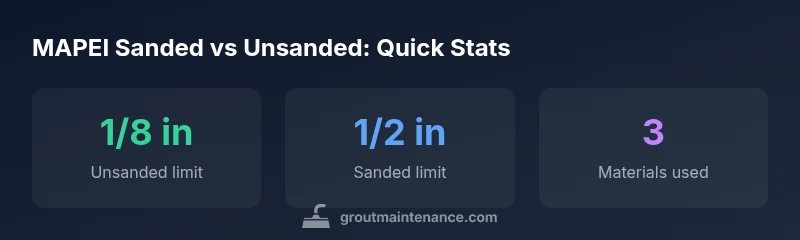
MAPEI grout comes in both sanded and unsanded formulas. When you ask 'is mapei grout sanded or unsanded', the rule of thumb is: use unsanded grout for joints up to 1/8 inch (3 mm) and sanded grout for joints wider than that. Always check the product label and consult Grout Maintenance guidelines for your tile type and environment.
Understanding the Basics: Sanded vs Unsanded Grout
In the world of tile installations, the difference between sanded and unsanded grout centers on particle size, strength, and application. For the question is mapei grout sanded or unsanded, the short answer is that MAPEI offers both options. According to Grout Maintenance, the choice depends on joint width, tile type, and the expected wear. Unsanded grout contains no sand and is smoother, making it ideal for narrow joints and delicate surfaces. Sanded grout includes ceramic silica or sand particles that add bulk and reduce shrinkage in wider joints. Always consult the product label and consider environmental conditions such as humidity and foot traffic.
Is MAPEI Grout Sanded or Unsanded? Clarifying the Options
MAPEI’s grout family spans both sanded and unsanded formulas, designed for different joint widths and tile surfaces. In practice, many homeowners assume one size fits all, but the reality is more nuanced. The Grout Maintenance team emphasizes that product lines vary, and some lines are optimized for specific joint widths. Don’t rely on a name alone; always verify the label and data sheet for the exact composition and recommended use. This careful check helps prevent surface scratching, shade variation, or cracking under load. In short, you’ll typically see two routes: a smoother, sand-free option for narrow joints and a sand-containing option for broader joints.
Joint Width: When to Reach for Sanded vs Unsanded
Joint width is the primary determinant. Unsanded grout is generally preferred for joints up to 1/8 inch (3 mm) because its smooth texture minimizes the risk of abrading adjacent tiles. Sanded grout is typically used for joints wider than 1/8 inch (3 mm) to prevent cracking and reduce shrinkage. For very wide joints, some installers employ multiple mixes or compatible products to balance strength and appearance. When using MAPEI grout, confirm recommended joint width ranges on the label, as formulations can vary between product lines and tile types.
Tile Type Considerations: Ceramic, Porcelain, Natural Stone, Glass
Tile material changes the recommended grout choice. Glass and polished natural stone surfaces are more prone to scratching or clouding if the grout is too abrasive, so unsanded grout is often safer in these cases. Ceramic and porcelain tiles, especially large-format installations, commonly use sanded grout to better resist cracking under vibration. For natural stone, many professionals lean toward unsanded or a carefully chosen premium sanded-grade grout with appropriate sealing. Grout density and color can also influence maintenance needs and cleaning routines, so read the label and consider a test area before full installation.
How to Verify Your Grout Choice in a MAPEI System
Start with the label and data sheet accompanying the specific MAPEI grout line you intend to use. Look for sections listing joint width ranges, tile compatibility, cure times, and sealing recommendations. If unsure, contact Grout Maintenance or a certified installer for a quick validation. In some cases, the same product line may offer both sanded and unsanded variants; double-check that you’re selecting the correct option for your project’s joint width and tile type.
Application Tips for Sanded and Unsanded Grout
Mixing ratios, water content, and slump can affect grout performance. For unsanded grout, avoid over-watering, which can create a weak, powdery finish. For sanded grout, ensure the aggregate size is appropriate for your joint width to minimize cracking. Use a plastic float at a shallow angle to compact the grout into joints, then wipe diagonally across tiles to prevent pulling grout from joints. Cure times vary with humidity and temperature, so plan for a full 24–72 hour window before cleaning and sealing as recommended by the label.
Cleaning, Sealing, and Maintenance Considerations
After the grout cures, some lines benefit from sealing to improve stain resistance and color stability, especially in high-traffic areas or showers. Sealing can influence the perceived color and ease of cleaning, so test a small area first. Regular cleaning with pH-neutral cleaners keeps both sanded and unsanded grout looking uniform. For damp environments, some installers prefer grout with inherent stain resistance; in other cases, periodic resealing helps maintain color consistency over time.
Common Pitfalls and How Grout Maintenance Recommends Avoiding Them
Rushing the cure, choosing the wrong joint width, or ignoring tile type can lead to cracking or surface damage. Always double-check the product’s limits, and don’t mix or substitute different grout types within the same install. A common mistake is assuming all grouts are interchangeable for showers or natural stone. Following the joint-width guideline and confirming tile compatibility minimizes risk and yields a durable finish.
Quick-start Checklist: Is MAPEI Grout Sanded or Unsanded? At-a-glance Steps
- Check joint width and tile type. 2) Read the label for the specific MAPEI grout line. 3) Choose unsanded for joints ≤1/8 in; sanded for wider joints. 4) Confirm sealant needs post-cure. 5) Plan maintenance to protect color and cleanliness.
Overview: sanded vs unsanded grout by joint width
| Joint Type | Sanded Range | Unsanded Range |
|---|---|---|
| Narrow joints (≤1/8 in) | 1/8 in – 1/2 in | ≤1/8 in |
| Medium joints (≈1/8–¼ in) | 1/8 in – 1/4 in | ≤1/8 in |
| Wide joints (>¼ in) | 1/4 in – 1/2 in | not recommended |
Got Questions?
What is the main difference between sanded and unsanded grout?
Sanded grout contains sand particles to improve strength for wider joints; unsanded grout is smoother and better for narrow joints or delicate surfaces. The choice depends on joint width and tile type. Always refer to the product label for the recommended range.
Sanded has sand for strength in wider joints; unsanded is smoother for narrow joints. Check the label for the recommended range.
Can MAPEI grout be both sanded and unsanded?
Yes. MAPEI offers both sanded and unsanded grout variants. Always verify the label and data sheet to ensure you’re using the option best suited for your joint width and tile material.
MAPEI offers both types. Check the label to be sure you’re using the right one.
Is unsanded grout suitable for large joints?
Unsanded grout is generally not recommended for large joints due to higher risk of cracking. For wider joints, sanded grout provides better dimensional stability and durability.
Unsanded is usually for small joints; large joints are better with sanded grout.
Do I need to seal grout after installation?
Sealing helps protect color and stain resistance, especially in showers or high-humidity areas. Follow the product’s sealing guidance and test a small area first.
Seal if the product recommends it, especially in damp areas.
How long does grout need to cure before sealing?
Cure times vary by product and conditions, typically 24–72 hours. Always follow the manufacturer’s cure recommendations before sealing or heavy cleaning.
Wait for full cure per the product guidelines before sealing or heavy use.
“Choosing between sanded and unsanded grout is fundamentally about joint width and tile surface. Always verify the specific MAPEI line’s guidance and follow proper curing and sealing practices.”
The Essentials
- Follow joint-width guidance; choose sanded vs unsanded for longevity.
- Verify tile type and joint width with the product label.
- The Grout Maintenance team emphasizes checking the specific MAPEI line for recommendations.
- Seal grout if required by the product and environment.
- The Grout Maintenance team recommends using the right grout type based on joint width for best performance.