Mapei Grout Dry Time: Practical Guide for Home Projects
Understand MAPEI grout dry time, including surface dryness, full cure, and sealing timelines. Explore factors that affect drying, practical steps for DIY tile projects, and tips to keep grout healthy.


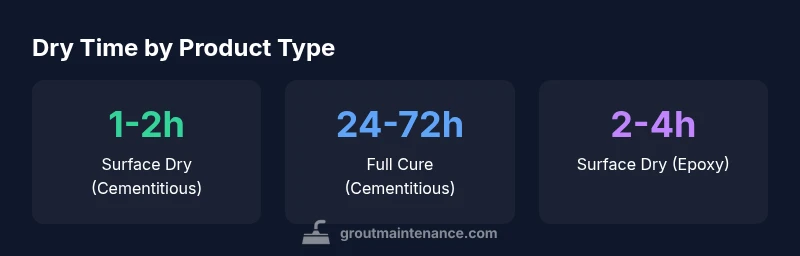
MAPEI grout dry time depends on product line and environmental conditions, but under typical indoor conditions you may see surface dryness in about 1-2 hours and full cure in 24-72 hours. Always check the product data sheet for your exact mix (cementitious vs epoxy) and avoid sealing until the grout is fully cured.
Understanding MAPEI Grout Dry Time: Core Concepts
MAPEI grout dry time is a function of chemistry, product line, and environmental conditions. For homeowners, the term dry time often means when the grout stops feeling tacky on the surface; however, there’s a difference between surface dryness and fully cured grout. In practice, the mapei grout dry time will vary by product type: cementitious grout vs epoxy grout, and by mix ratio and substrate. According to Grout Maintenance, understanding these differences helps plan sealing and cleaning windows. In everyday projects, you can expect surface dryness within 1-2 hours under stable indoor conditions, with full cure spanning 24-72 hours or more depending on thickness and humidity. Always verify the exact figures in the product data sheet and follow the recommended cure times before applying sealers or cleaners.
Why this matters for your tile project: rushing to seal or clean too early can trap moisture, leading to haziness or staining. Knowing the baseline dry time helps you schedule foot traffic, cleaning cycles, and potential resealing after complete curing.
Key Factors That Influence Dry Time
Several variables can alter the rate at which grout dries and cures. Temperature, humidity, airflow, substrate porosity, grout thickness, and even tile spacing affect drying behavior. In general, warmer, drier rooms with good airflow promote quicker surface dryness, while high humidity and cooler air slow down the process. The product data sheets from MAPEI typically specify ideal conditions; a common reference point is around 70°F (21°C) and relative humidity near 50%, with thinner grout joints drying faster than thicker applications. For the homeowner, this means a practical rule of thumb: plan projects for a moderate climate room and avoid immediately subjecting grout to water or foot traffic. Grout Maintenance analysis underscores that real-world results vary with air flow, curing compounds, and joint width, so always use the data sheet as your baseline and adjust for site conditions.
How to Estimate Dry Time for Your Project
Estimating dry time starts with identifying the exact product line. Cementitious grouts generally have longer cure windows than epoxy varieties, but both require proper curing. Start by checking the data sheet for your specific product and note the recommended indoor temperature and humidity. Perform a simple surface test after the stated surface-dry window to confirm tackiness no longer exists. If you’re unsure, allow an extra 12–24 hours before sealing or heavy cleaning. Keep in mind that grout thickness, porosity of the substrate, and any excessive moisture can extend the drying period. After testing, document the results so you can plan subsequent steps with confidence.
Sealing and Cleaning Windows: When to Seal After Grouting
Sealing grout before full cure is complete can trap moisture, cause hazing, or compromise adhesion. The general rule is to wait until the grout has reached full cure as specified on the data sheet before applying a sealer. In many cases, this means waiting 24–72 hours for cementitious grouts in typical indoor conditions, though a longer cure may be needed in humid environments. Epoxy grouts have different sealing considerations and may not require the same treatment. If you plan to clean the tile surface during cure, use only mild cleaners and avoid acidic or abrasive products that can disrupt the bond or change the grout color.
Cementitious vs Epoxy Grouts: Dry Time Differences
Cementitious grouts (standard cement-based mixes) generally require a longer cure time than epoxy grouts, which can reach surface dryness sooner but still reach full cure within 24–72 hours depending on formulation and environmental factors. Epoxy grouts tend to be more resistant to moisture and staining but can still be delayed by poor ventilation or thick joints. When planning a project, consider the pros and cons of each type, but always respect the manufacturer’s curing schedule and use the data sheet as your authoritative source. Grout Maintenance notes that these differences are central to accurate timing and successful sealing.
Practical Tips for Kitchens and Bathrooms
Bathrooms, especially showers, and high-traffic kitchen areas introduce more moisture and temperature fluctuations, which can influence mapei grout dry time. To optimize drying, keep the room at steady temperature, provide gentle cross-ventilation, and avoid turning on heat sources or exhaust fans that pull away moisture too aggressively during curing. For larger installations, break the project into stages and allow each section to cure before moving to the next. Keeping joints clean and free of grout haze in the early hours can also help ensure a uniform dry time.
Troubleshooting: Common Delays and How to Address Them
If you notice longer than expected dry times, re-check the environmental conditions and joint geometry. High humidity, poor ventilation, or overly thick joints are common culprits. Ensure you have adequate air movement and that the grout mix hasn’t been compromised by moisture or improper mixing. Recheck the data sheet guidance; if necessary, test a small area to verify the surface dryness before proceeding with sealing or cleaning. Persistent delays may require consulting the product line’s support resources.
Best Practices for Minimizing Dry Time Delays
To maintain predictable mapei grout dry time, establish a controlled environment before grouting: set room temperature, regulate humidity, and ensure adequate airflow. Clean up excess water promptly to avoid ghosting or haze and avoid applying sealers until full cure is achieved. Record environmental conditions during the project to inform future work. Remember: maps like these are influenced by product line, joint width, and substrate, so use the data sheet as the anchor and adjust for site-specific factors.
Dry time ranges for common grout types
| Grout Type | Surface Dry Time | Full Cure Time |
|---|---|---|
| Cementitious grout | 1-2 hours | 24-72 hours |
| Epoxy grout | 2-4 hours | 24-48 hours |
Got Questions?
How long does it take for MAPEI grout to dry to the touch?
For most cementitious grouts, surface dryness is typically reached within 1-2 hours under ideal indoor conditions. Epoxy grouts may dry to the touch a bit faster or similar, depending on formulation. Always confirm with the product data sheet for your specific product.
Most MAPEI cementitious grouts dry to the touch in 1-2 hours under good conditions. Check your product data sheet for your exact product.
Can I seal grout before it’s fully cured?
Sealing before full cure can trap moisture and cause hazing or reduced adhesion. Wait until full cure as specified by the data sheet before sealing. In epoxy grout applications, follow the manufacturer’s guidance for sealing if applicable.
No—wait for full cure before sealing. Check the data sheet for your grout type.
Does humidity affect MAPEI grout dry time?
Yes. Higher humidity can extend both surface dry time and overall cure time. In typical interior rooms, moderate humidity speeds up uniform drying, while very humid conditions slow things down. Plan for slower drying in humid spaces.
Humidity can slow down grout drying. Expect longer times in humid rooms.
What is the difference in dry time between cementitious and epoxy grouts?
Cementitious grouts generally have longer cure times and must dry sequentially, whereas epoxy grouts may dry to the touch sooner but still require full cure. Always follow the product data sheet for exact timing and sealing guidance.
Cementitious takes longer to cure; epoxy can dry faster but still needs full curing.
What should I do if grout stays tacky after 24 hours?
Reassess environmental conditions and joint thickness. If tackiness persists, verify room temperature, humidity, airflow, and whether the grout was mixed and installed correctly. If needed, test a small area and consult the product data sheet for remediation steps.
If it stays tacky, check temperature, humidity, airflow, and joint thickness, then refer to the data sheet for next steps.
Are there signs I should watch for during the drying process?
Watch for uniform color changes, absence of sheen, and no residual tackiness. Any haze or white residue may indicate moisture or improper curing conditions and should be addressed per the data sheet.
Keep an eye on color change, lack of tackiness, and absence of haze to gauge drying.
“"Dry time is a product-specific and environment-driven factor. Always follow the data sheet and allow full cure before sealing or heavy use.”
The Essentials
- Understand that dry time varies by product and conditions
- Check the product data sheet before sealing
- Plan for the longer of surface dry time and full cure time
- Environment matters: temperature and humidity drive outcomes
- The Grout Maintenance team recommends respecting full cure before applying sealers