Sanded Grout Scratch Porcelain Tile: Troubleshooting & Fixes
This guide from Grout Maintenance explains how to diagnose, repair, and prevent scratches on porcelain tile caused by sanded grout, with practical DIY steps.


The most likely cause is abrasive sanded grout particles grinding into the porcelain glaze during finishing or heavy cleaning. Quick fix: switch to a non-abrasive pad, buff with a porcelain-safe cleaner, remove all grout dust, and reseal the grout line after testing a hidden area. If scratches persist, consult a professional polishing option.
Understanding the Issue: Sanded Grout and Porcelain Tile
According to Grout Maintenance, scratches on porcelain tile caused by sanded grout often happen when abrasive particles are rubbed across the glaze during finishing or cleaning. Porcelain tiles are dense and tough, but their glaze top layer remains vulnerable to scratching if grit is introduced and scrubbed at tile edges. Sanded grout contains harder particles designed for durability, which can become abrasive when the grout line is mixed or applied improperly or when heavy cleaning forces particles across the surface. In many kitchens and bathrooms, a rushed cleaning routine or using a stiff brush can push grout dust into the tile glaze, leaving faint to noticeable scratch marks. These scratches compromise the glossy appearance and can collect dirt, so quick, careful action is essential.
Recognize the difference between glaze scratches and grout haze: glaze scratches appear as fine lines across the surface, often in path-like patterns near grout joins, while grout haze is a film of dried cement stuck on the tile surface. Understanding what you’re dealing with helps you choose the right repair approach and avoid making the damage worse.
Quick Checks You Should Do Before Any Repair
- Safety first: Wear safety glasses and gloves; ensure the area is well ventilated. Keep pets and kids away during cleaning and testing.
- Identify the affected area: Is the scratch limited to the glaze, or is grout damaged along the edge?
- Check the depth: Gently run a fingernail along the scratch; if you feel a groove, it's likely glaze damage; if not, it could be surface haze or pencil marks.
- Test cleaners on a hidden spot: Use a non-abrasive porcelain cleaner to see if the area brightens or remains dull. If it improves, you may be dealing with surface residue rather than a glaze scratch.
- Document the pattern: Note whether scratches run in a straight line along grout lines or appear random. This helps diagnose whether grout particles or abrasive tools caused the score.
Diagnosing the Cause: Where Scratches Come From
Most scratches on porcelain tile surface from sanded grout stem from abrasive particles being rubbed across the glaze during installation or routine cleaning. In many homes, quick cleanup with a stiff brush or rough sponge introduces grit that scratches the glaze, especially near joint lines where grout dust accumulates. Grout maintenance routines that emphasize aggressive scrubbing can inadvertently dull the tile finish. According to Grout Maintenance Analysis, 2026, the majority of visible scratches are linked to improper finishing and cleaning practices rather than tile faults. It’s essential to isolate whether the issue is glaze damage, grout haze, or embedded grit so you can tailor the fix. Inspect the surrounding grout lines for loose cement, crumbling joints, or gaps that could be harboring abrasive dust. If the glaze is deeply scored, you should expect a professional refinishing or tile replacement to be necessary.
Step-by-Step Repair Options for Light Scratches
Before you begin, gather supplies: non-abrasive sponge, porcelain-safe cleaner, microfiber cloth, a mild porcelain-safe polish or color-matched filler, and a grout sealer. Start in a small, inconspicuous area to test any product. For light scratches, you can often restore the surface without removing the tile.
-
Stop using abrasive tools around the scratched area. Switch to a non-scratch pad and a mild cleaner. This reduces further damage and stops abrasive particles from digging deeper.
-
Clean thoroughly to remove grout dust and residue. Residue can intensify the appearance of scratches and may amplify haze, making the issue seem worse than it is.
-
Test a porcelain-safe polish or filler on a hidden corner. Lightly buff the area with a microfiber cloth, using very gentle circular motions. If the scratch remains visible, you may need a professional polish or a color-matched filler that fills the scratch without changing the tile color.
-
If the scratch is shallow, a color-matched epoxy or acrylic filler that’s labeled for porcelain can help restore a seamless look. Apply per manufacturer directions and wipe away excess before curing. Do not overfill; excess filler can create a raised patch that draws attention.
-
Reseal the grout lines after cleaning and repair. A quality grout sealer helps reduce dust collection and eases future maintenance. Let the sealant cure fully before exposing the area to traffic.
-
Reassess the area under good lighting. If the scratch remains clearly visible, you may need to replace the tile or consult a pro for refinishing options. Persistent damage to the glaze rarely responds to DIY polishing.
When Deep Scratches Require Professional Help
If the glaze is deeply scored or the scratch penetrates the tile surface, DIY methods will likely fail. Deep scratches compromise protective glaze and can worsen under cleaning. In these cases, a professional refinisher can apply controlled polish to restore luster without removing the tile, or they may recommend regrouting and resealing a broader area to restore uniform appearance. If you must replace, consider matching the porcelain tile shade and using a professional installer to avoid visible seams. Quick callouts: do not attempt to sand or grind the tile with heavy machinery, which can permanently erode the surface and void warranties.
The key is to act promptly rather than waiting for deeper wear to accumulate. Protect surrounding tiles by preventing future grit buildup around joints, using only porcelain-safe cleaners, and applying a high-quality grout sealer after any repair. While professional refinishing adds cost, it often provides a longer-lasting, aesthetically consistent result than patching or DIY remedies.
Prevention: How to Avoid Scratching Porcelain Tile in the Future
Prevention is simpler and cheaper than repair. Use non-abrasive tools for everyday cleaning and avoid stiff bristle brushes. Switch to mild, porcelain-safe cleaners that break down grime without scratching the glaze. Clean grout lines regularly to prevent grout dust from building up and grinding into the glaze. When grouting is new, seal promptly after cure and re-seal every 1-2 years, depending on use. Finally, choose sanded grout only where recommended by the tile manufacturer, and avoid over-polishing areas near the grout joints to minimize the chance of abrasive grit migrating into the glaze.
Final Considerations and Quick Recap
Porcelain tile surfaces are resilient, but the glaze remains vulnerable to abrasive contact from sanded grout. A careful, staged approach minimizes risk: prevent grit accumulation, use non-abrasive tools, test repairs in hidden spots, and escalate to pro help when needed. With proper care and timely maintenance, a scratch-free porcelain tile surface is achievable.
How to Maintain a Scratch-Resistant Tile Surface Long-Term
Establish a regular cleaning routine with gentle, pH-neutral cleaners. Wipe spills promptly to avoid residue buildup that can act like sandpaper over time. Inspect grout lines during cleaning and repair any cracks or gaps immediately to prevent further grit intrusion. A good sealant on grout plus periodic professional polishing of high-traffic areas will help preserve the tile’s appearance for years.
Steps
Estimated time: 60-90 minutes
- 1
Prepare and protect the area
Clear the area, lay down a drop cloth, and wear safety glasses. Gather non-abrasive pads, porcelain-safe cleaner, microfiber cloths, and any polish or filler you plan to test.
Tip: Test any product on a hidden corner first. - 2
Assess scratch depth and pattern
Use good lighting and a clean cloth to inspect whether the glaze is scratched or if residue remains. If you feel a groove, the glaze may be compromised.
Tip: Document the area with a photo for reference. - 3
Choose a repair method
Decide between polishing for light scratches or filling for shallow grooves. Avoid aggressive sanding which can worsen glaze damage.
Tip: Begin with the least invasive method. - 4
Apply non-abrasive cleaning and polish
Clean the area with a porcelain-safe cleaner and buff gently with a microfiber pad. If using a polish, apply sparingly in circular motions until the area brightens.
Tip: Stop if you notice dulling or color change. - 5
Consider filler or epoxy touch-up
For visible grooves, apply a color-matched filler or epoxy designed for porcelain. Wipe away excess and allow proper curing time.
Tip: Follow manufacturer curing times; ventilate well. - 6
Re-seal grout and recheck results
Once the surface is clean and dry, apply a grout sealer to protect the area and prevent future grit intrusion. Reassess under bright light to confirm improvement.
Tip: Don’t rush curing of sealers.
Diagnosis: Porcelain tile shows scratches after or during cleaning with sanded grout
Possible Causes
- highAbrasive grout particles rubbed into glaze during installation or maintenance
- mediumResidual grout haze acting as an abrasive film
- lowImproper cleaning tools used on tile edges
Fixes
- easySwitch to non-abrasive cleaning tools and thoroughly rinse to remove grout dust
- easyGently buff scratched area with a porcelain-safe polish or optional color-matched filler for light scratches
- mediumSeal or reseal grout lines after surface cleanup; consider professional touch-up for deeper scratches
- hardFor deep glaze damage, plan tile replacement or professional refinishing
Got Questions?
Can sanding grout scratch porcelain tile?
Yes. Abrasive grout particles can scratch the porcelain glaze if rubbed across the surface. Avoid harsh cleaning tools and test repairs on inconspicuous areas first.
Yes, sanded grout can scratch porcelain tile. Avoid harsh tools and test repairs in a hidden spot first.
Will sealing grout prevent future scratches?
Sealing grout helps protect it from moisture and dust, reducing future abrasion near joints. It does not repair glaze damage, but it can prevent new grit from causing more wear.
Sealing helps protect grout and reduce future abrasion near joints, but it won’t fix glaze scratches.
Is it possible to fix deep scratches without tile replacement?
Deep glaze scratches often require professional refinishing or tile replacement. Lightweight scratches may respond to polishing or filler, but extensive damage usually needs a pro.
Deep scratches usually need a professional refinishing or tile replacement.
What should I avoid when cleaning scratched porcelain tile?
Avoid abrasive pads, stiff brushes, and acidic cleaners on porcelain glaze. Use gentle, porcelain-safe cleaners and soft cloths to minimize further scratching.
Avoid abrasive cleaners and stiff brushes; use gentle porcelain-safe cleaners.
When should I call a professional?
Call a professional if the glaze is deeply scored, a large area is affected, or you’re unsure of the repair approach. A pro can assess whether refinishing or tile replacement is needed.
If the glaze is deeply damaged, or if you’re unsure, it’s best to call a professional.
Can I prevent scratches after repairs?
Yes. Use non-abrasive tools, clean regularly, and reseal grout lines as recommended. Regular maintenance reduces grit buildup and protects the glaze.
Yes—use non-abrasive tools, clean regularly, and reseal grout to prevent future scratches.
Do repairs affect tile warranty?
Repairs can affect warranties depending on the manufacturer’s terms. Check tile and grout product warranties and follow their approved repair methods.
Repairs may affect warranties; check terms and follow approved methods.
Watch Video
The Essentials
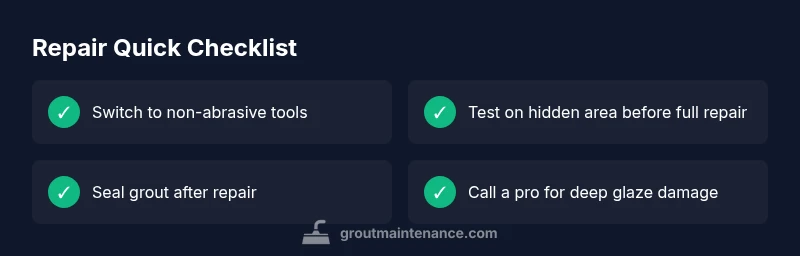
- Inspect damage before acting
- Avoid abrasive tools and cleaners
- Test repairs on hidden spots
- Seal grout after repairs
- Seek pro help for deep glaze damage