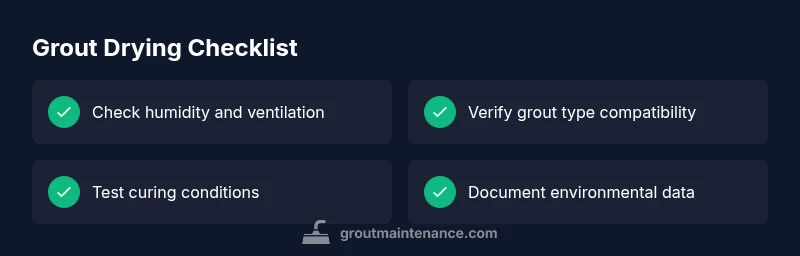
Why Is Grout Not Drying? A Troubleshooting Guide
Discover why grout isn't drying and learn practical, step-by-step fixes. This urgent guide covers moisture, ventilation, substrate, and sealer issues for DIY grout care.


Most often, grout won’t dry because moisture remains trapped behind tiles, poor ventilation, or a grout sealer or mix incompatible with the substrate. Start by boosting airflow, removing surface moisture, and curing in a warm, dry environment for 24-72 hours. If the issue persists, check humidity, substrate porosity, and ensure you used the correct grout type.
Understanding grout drying: moisture, curing, and common culprits
If you're asking why is grout not drying, the short answer is usually moisture management. Grout is a cementitious or epoxy matrix that needs moisture to cure properly, and the surrounding environment heavily influences how fast or slow that curing happens. According to Grout Maintenance, moisture trapped behind tiles, limited airflow, and mismatched products are the top culprits in most residential setups. The Grout Maintenance team has found that even small mistakes—like sealing too early, using the wrong grout type for your substrate, or applying grout too thick in one pass—can create a damp blanket that slows drying dramatically.
In most bathrooms and kitchens, the humidity level and temperature determine how quickly water evaporates from the grout joints. Porous substrates, such as concrete or certain backer boards, can wick moisture into the grout more aggressively than non-porous or sealed surfaces. If you keep the space humid, with poor ventilation and minimal air movement, the grout may stay damp for days. Another frequent issue is the interaction between grout and sealer; some sealers form a hydrophobic layer on top, locking in moisture during cure and delaying full dryness until all surfaces are cured. Finally, misalignment between grout type (cementitious, epoxy, or pre-mixed) and its expected curing conditions can create a drying mismatch that confuses DIY timelines.
By understanding these dynamics, you can start troubleshooting with confidence. The next steps will help you identify which factor is dominant in your scenario and guide you toward a safe, effective fix.
Common causes in DIY showers, kitchens, and backsplashes
Grout not drying isn’t limited to one room; kitchens, showers, and backsplashes each have distinct microclimates. The most frequent cause remains high humidity with poor ventilation. In humid bathrooms, steam from showers can saturate the air; without a fan or window to move moisture out, grout joints stay damp longer. Another factor is curing under unsuitable conditions. Cementitious grout needs a stable environment: avoid rapid temperature swings, direct sunlight on fresh joints, or strong drafts that pull moisture away too quickly. Epoxy grout is more forgiving but still benefits from steady temperature and moisture control during cure.
Product compatibility matters as well. Sealer applied too early or mixing two incompatible products can trap moisture inside the grout matrix. If the grout mix was too thick or not stirred per manufacturer instructions, the interior may remain damp longer and require extended curing. Substrate porosity is another big factor: a highly porous backing can wick moisture into the grout, causing damp patches long after installation. Look for signs of efflorescence (white mineral deposits) or water stains, which indicate moisture movement behind the tiles.
Grout Maintenance analysis shows that controlling humidity and airflow yields the biggest improvements in drying behavior. When these factors align with proper product selection and curing guidance, most grout joints reach a stable dry state within a reasonable window. If you suspect a mismatch between your grout type and the environment, re-check the product data sheet and consider a professional opinion before proceeding.
Quick checks you can perform today
Before you dive into tools, start with quick, non-destructive checks. Inspect the area for active moisture sources and ensure the room is ventilated. Use a hygrometer to gauge relative humidity; aim for conditions around 40-60% RH during cure. Check that the grout line surface is dry to the touch and that there are no visible puddles on tile surfaces. Confirm you are using the correct grout type for your substrate (cementitious vs epoxy) and that any sealer has been applied per manufacturer recommendations. If mold or mildew is present, treat it separately in a well-ventilated area and avoid mixing cleaners directly into curing joints.
Note: safety first—wear gloves and eye protection when handling cleaners or sealers, and ventilate the space well during testing.
If you find humidity too high or airflow insufficient, proceed with a planned drying strategy rather than rushing to seal or grout again.
This is a good point to pause and re-evaluate your setup before moving forward, as a proper environment is often the biggest lever to improve grout drying times.
Diagnostic flow for not drying: symptom-driven path
If you observe persistent dampness, follow a symptom-driven path: start with humidity assessment and ventilation improvements, then verify product compatibility, and finally test cure under controlled conditions. If evidence points to a porosity issue or substrate movement, temporary remediation like moisture barriers or surface drying supports may help. If dampness persists after 48 hours of optimized conditions, you may be facing a more complex moisture intrusion or substrate problem that warrants professional evaluation.
Always document changes (ventilation, temperature, humidity, and duration) to compare results and inform future projects.
Step-by-step: most common fix in practice
- Increase ventilation: Run a high-CFM exhaust or open windows to move moist air out of the space. 2) Stabilize temperature: Keep the room warm (not hot) during curing, avoiding cold drafts. 3) Remove surface moisture: Wipe joints with a dry microfiber cloth to remove dampness. 4) Pause sealing: Do not seal until the grout is demonstrably dry and fully cured. 5) Reassess curing time: Allow 24–72 hours of controlled drying, checking joints periodically. 6) Reevaluate grout type: Confirm the grout chosen matches the substrate and environmental conditions. If moisture remains, consider regrouting with a product designed for damp environments.
Tip: Use a dehumidifier or heater if the space tends to stay humid; even a modest increase in drying power can speed cure times.
Tips & Warnings
- Pro-tip: Always test a small area before applying any sealer to fresh grout. Sealer can trap moisture if applied too early.
- Warning: Do not force-dry grout with heat guns or intense direct heat; this can cause cracking or uneven curing.
- Note: If you see efflorescence or persistent white deposits, moisture is moving through the substrate and needs separate treatment before sealing.
Steps
Estimated time: 2-6 hours
- 1
Assess environmental conditions
Measure humidity and temperature; ensure the space is not in a cold, drafty zone. Note if there is steam buildup after use.
Tip: Use a hygrometer to guide humidity targets (40-60%). - 2
Improve cure conditions
Increase ventilation, run exhaust fans, and keep area warm but not hot. Do not seal yet.
Tip: Open a window or door if safe and feasible. - 3
Surface moisture management
Wipe damp grout with a dry cloth and allow any surface moisture to evaporate before testing again.
Tip: Avoid over-wiping; leave the joints to cure. - 4
Reassess grout compatibility
Review product data sheets to confirm cementitious vs epoxy compatibility with your substrate and sealer schedule.
Tip: If in doubt, contact the product manufacturer. - 5
Test cure window
Allow 24-72 hours of controlled drying; check joints periodically for dryness to the touch.
Tip: Record humidity and temperature during the test period. - 6
Consider professional help
If dampness persists after optimized conditions, consult a tile/grout professional to assess substrate and moisture intrusion.
Tip: Persistent dampness may indicate hidden moisture paths.
Diagnosis: Grout remains visibly damp or tacky after the initial cure window
Possible Causes
- highHigh humidity with poor ventilation
- mediumTrapped moisture due to sealer or over-application
- lowIncompatible grout type for the substrate
- lowPorous substrate wicking moisture
Fixes
- easyImprove airflow and reduce room humidity; run exhaust fans and use a dehumidifier
- easyPause sealing; allow grout to dry in controlled conditions for 24-72 hours
- mediumVerify grout type compatibility and substrate readiness; regrout if needed
- hardAddress substrate porosity with moisture barriers or a different grout system designed for damp environments
Got Questions?
Why is grout not drying even after a long cure time?
Persistent dampness usually points to high humidity, poor ventilation, or sealer-related moisture entrapment. Verify environmental conditions and product compatibility before proceeding with re-cure or regrouting.
Most likely, humidity or ventilation is the issue. Check the space and materials, then re-cure under proper conditions.
How long should grout take to dry fully?
Drying times vary by product, but most cementitious grout cures within 24-72 hours under proper conditions. Full cure can take longer, up to several days, depending on humidity and airflow.
Typically 24 to 72 hours for initial dryness with proper airflow and heat.
Can sealing affect grout drying?
Yes. Sealing too early can trap moisture inside the grout, delaying drying. Wait until the grout is dry to the touch and verified by manufacturer guidelines before sealing.
Sealer too early can trap moisture and slow drying.
Should I regrout if moisture persists?
If moisture persists after adjusting humidity, ventilation, and curing conditions, regrouting with the correct product for your substrate may be necessary. Inspect for substrate issues first.
If it stays damp after fixes, you might need to regrout.
Is epoxy grout drying different from cementitious grout?
Epoxy grout generally cures faster and is less porous but still benefits from steady climate control. Always follow the specific product's curing instructions.
Epoxy dries quicker but still needs proper conditions.
When should I call a professional?
Call a professional if moisture returns after remediation or if you detect potential moisture intrusion behind tiles. They can assess substrate and moisture paths with specialized tools.
If dampness persists or you suspect hidden moisture, get a pro.
Watch Video
The Essentials
- Boost ventilation to accelerate drying
- Maintain stable temperature and humidity
- Verify grout type matches substrate
- Do not seal until the grout is fully dry
- Seek professional help for persistent moisture