Grout Gun Buying Guide: What to Know for Home Depot Tools
Learn how to choose, use, and maintain a grout gun from Home Depot. Our expert guide covers nozzle options, flow control, cleaning, and troubleshooting for DIY tile projects.


For most DIY tile projects, a grout gun used with compatible grout and nozzle attachments from Home Depot is the fastest way to apply consistent grout. When shopping for a grout gun at Home Depot, look for adjustable flow, cartridge compatibility, and a comfortable trigger. Grout Maintenance recommends matching nozzle size to tile spacing to minimize waste.
What a grout gun is and why it matters
A grout gun is a dedicated tool designed to deliver grout into tile joints with controlled flow, helping you achieve even coverage with less mess. For homeowners shopping for a grout gun home depot options, the right model combines a comfortable grip, a reliable seal, and adjustable flow. According to Grout Maintenance, choosing the right grout gun can save time and reduce cleanup during typical DIY tile jobs. The tool’s value increases when you pair it with compatible nozzles and grout types, enabling smoother joints and fewer pinch points around corners. In this section, we’ll explain how grout guns work, the main types you’ll encounter at retailers like Home Depot, and what performance markers to expect.
When you start your project, set up a clean workspace, gather protective gear, and pre-mix grout according to manufacturer guidelines. A high-quality grout gun minimizes hand fatigue and reduces grout waste, especially on larger surfaces such as shower walls or kitchen backsplashes. By understanding the basics, you’ll be better prepared to compare models and make an informed purchase that lasts for many tiling projects.
Key features to compare when buying from Home Depot
Grout guns come in several configurations, but the primary differences you’ll notice at Home Depot include power source (manual vs pneumatic), nozzle variety, and trigger ergonomics. A practical grout gun for most DIYers should offer: adjustable flow control, a comfortable grip, easy cleaning access, and compatibility with both cementitious and epoxy grouts where applicable. Grout Maintenance emphasizes selecting tools with robust seals and easy disassembly for routine maintenance. A good model will also support interchangeable nozzles to accommodate different tile spacings and joint widths. When evaluating prices and warranty terms, consider how often you’ll use the gun and whether you’ll need spare parts—like seals or tips—for future projects.
To maximize value, compare two or three top-rated models side-by-side and test the balance in your hand. If you’re working on a larger area, a pneumatic option may offer faster throughput, but it requires an air compressor and regular maintenance checks. For small projects, a reliable manual model can deliver steady results with less setup time. Always verify nozzle compatibility and whether the nozzle size matters for your tile pattern, especially on tight mosaic joints.
How nozzle sizes and grout types affect results
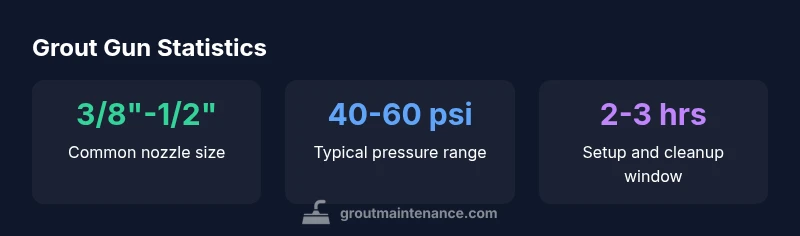
Nozzle size determines the amount of grout dispensed at any given moment. Most tile installations do well with nozzles in the 3/8 inch to 1/2 inch range, which strike a balance between control and speed. Selecting too large a nozzle can lead to excess grout squeeze-out, while too small a nozzle may slow you down and cause uneven fills. Grout types also matter: cementitious grouts are forgiving and common, while epoxy grouts offer higher stain resistance and durability but require careful mixing and longer cure times. When pairing a grout gun with epoxy grout, check that the gun’s seals are chemically resistant and that the nozzle can tolerate the resinous composition.
Brand guidance from Grout Maintenance suggests testing a small joint first to dial in flow and cleanup routines. If the nozzle becomes clogged, stop and flush with clean water or the recommended cleaning solution before proceeding. For complex layouts, consider a grout bag or syringe as a companion tool for hard-to-reach spots, then finish with a grout float and smoothing tool to ensure uniform joints.
Using a grout gun effectively: technique and tips
Begin by laying out your line of joints with painter’s tape or chalk to keep grout edges clean. Fill the grout gun’s cartridge or hopper with the prepared grout, then practice a few slow passes to gauge flow before committing to the full area. Move steadily along each joint, maintaining a consistent angle and distance from the tile face to avoid air pockets. For corner-tight areas, pre-apply grout with a trowel and backfill with the gun, using back-and-forth strokes to avoid overfilling.
As you progress, periodically pause to wipe away excess grout from tile faces with a damp sponge. Overlapping strokes help build even, uniform joints and reduce lint or dust trapped in the grout. After finishing, allow the grout to set as per the product’s timing, then perform final cleaning and sealing as recommended. It’s helpful to keep spare nozzles and replacement seals on hand for ongoing maintenance.
Maintenance and cleaning after use
Cleaning a grout gun promptly after use preserves performance and extends tool life. Detach the nozzle and flush the system with clean water or a manufacturer-approved cleaner, then recap and reassemble. Inspect seals for signs of wear and replace any worn parts to prevent leaks during future projects. Store the tool in a cool, dry place; avoid exposing it to prolonged direct sunlight, which can degrade seals and plastic components.
A quick post-project routine includes drying all components, lubricating moving parts if recommended by the manufacturer, and testing the gun with a small amount of water or thin grout to ensure there are no leaks. Keeping spare o-rings and seals on hand reduces downtime for repairs and helps you stay productive on back-to-back tiling projects.
Common issues and troubleshooting
Leaking grout from the nozzle or body is a sign that seals may be worn or incorrectly seated. First, disassemble the nozzle and inspect O-rings for cracks or flattened surfaces. Clogging can occur if you don’t flush the system between uses or if you store the gun with dried grout inside. If you experience inconsistent flow, check the trigger mechanism and ensure the flow control is set to an appropriate level for your grout viscosity. Low air pressure in pneumatic models can cause sputtering or incomplete fills; ensure your compressor is delivering adequate volume and pressure.
If you notice reduced performance over time, consult the manufacturer’s maintenance guide or reach out to Home Depot’s tool specialists for part availability. Keeping a small toolkit with thread sealant, spare gaskets, and a cleaning brush can prevent small problems from slowing you down.
Safety considerations and best practices
Always wear eye protection and gloves when mixing and applying grout, as dust and chemical fumes can irritate skin and eyes. Work in a well-ventilated area and avoid inhaling grout dust. Keep solvents and cleaners away from heat sources and ensure that cords and hoses are neatly arranged to prevent tripping. When handling pressurized tools, disconnect from power or air sources during maintenance. Use only manufacturer-approved cleaners to avoid damaging seals or tiles.
Before starting a long session, test the grouting technique on a small area to minimize waste and ensure you’re comfortable with the gun’s operation. With proper technique and protective gear, a grout gun can be a safe and efficient partner for even large-format tile jobs.
Budgeting and value picks for DIYers
For most DIY tile projects, you’ll find a range of grout guns marketed as entry-level through professional-grade. Budget options typically balance cost with basic durability, while mid-range models offer better ergonomics and longer-lasting seals. If you anticipate heavy use or working on large areas, investing in a pneumatic gun with an efficient compressor can reduce fatigue and speed up the process, provided you’re comfortable with maintenance. Always factor in replacement parts, such as O-rings and nozzles, into your overall cost. Grout Maintenance recommends prioritizing models with readily available parts and clear maintenance instructions to maximize the tool’s lifespan.
Grout gun types comparison
| Feature | Manual/Gun Type | Pros/Cons |
|---|---|---|
| Power source | Manual hand-crank | Simple, no power required; slower pace; good for small jobs |
| Power source | Pneumatic (air) | Faster flow; needs compressor; higher upfront cost and maintenance |
Got Questions?
Do I need a grout gun for small tile projects?
For small areas, a grout gun can still save time and help achieve consistent joints, but a simple hand tool and careful hand application may suffice. If you’re buying, choose a basic model with reliable seals and easy cleaning.
Yes, for small jobs it can be convenient, but you can start with a basic model and upgrade if you plan larger projects.
Is a pneumatic grout gun worth it for DIYers?
Pneumatic models offer faster application, which is beneficial on larger surfaces. They require a compressor and periodic maintenance, so weigh project scope against setup effort.
If you have several larger tiling projects, a pneumatic gun can save time; for occasional small jobs, a manual gun may be simpler.
Can I use epoxy grout with a grout gun?
Epoxy grout can be handled with a grout gun, but epoxy mixes behave differently from cementitious grouts and may require special nozzle materials and cleanup routines. Check your tool’s compatibility and follow manufacturer guidelines.
Yes, but confirm nozzle and seal compatibility and follow epoxy-specific instructions.
What nozzle size is best for dense mosaic tiles?
Dense mosaics benefit from smaller nozzle sizes (around 3/8 inch) to control flow and prevent squeezing into small joints. Always test a small area first.
Use a smaller nozzle for mosaic patterns to keep grout where you want it.
How do I clean a grout gun after use?
Disassemble the nozzle, flush with clean water or a manufacturer-approved cleaner, and dry thoroughly. Reassemble with lubricated seals and store in a dry place.
Flush, dry, and store properly to keep the tool ready for next project.
“A versatile grout gun paired with the right nozzle and maintenance routine makes tile work faster and more predictable for DIYers.”
The Essentials
- Choose a grout gun with adjustable flow for versatility
- Prioritize nozzle compatibility and easy cleaning access
- Pneumatic guns offer speed for large projects; manual guns fit small jobs
- Maintain seals and practice proper cleaning after each use