Frost Grout vs Avalanche: A Practical Comparison Guide
Explore frost grout and avalanche in an objective, expert analysis. Learn about freeze-thaw resilience, sealing needs, maintenance, and best-use scenarios for home tiling.


Frost grout vs avalanche describes two broad grout families, each with distinct strengths. Frost grout—cementitious and frost-resistant—targets exterior and cold climates, while avalanche denotes high-performance, low-maintenance options like epoxy or polymer-modified grout. For homeowners, climate, substrate, and maintenance tolerance drive the choice; the right pick minimizes cracking, staining, and resealing needs over time.
What frost grout vs avalanche means for tile projects
When homeowners evaluate grout options for challenging climates, the comparison between frost grout and avalanche comes up frequently. The phrase frost grout vs avalanche describes two broad families of grout formulations rather than a brand name. Frost grout typically refers to cementitious, frost-resistant grout designed to tolerate freeze-thaw cycles and exterior exposure, whereas avalanche is used here as a shorthand for high-performance, low-maintenance grout formulations—often epoxy or polymer-modified mixes—that resist staining and moisture more aggressively. According to Grout Maintenance, the core trade-offs are durability, sealing needs, and long-term maintenance. In practice, choice hinges on climate, substrate, tile type, and maintenance tolerance. In colder regions, frost grout's ability to survive repeated freezing and thawing can prevent microcracking and efflorescence; in interior, high-traffic areas where spills are common, avalanche offers superior stain resistance and simpler cleanup. Grout Maintenance analysis shows that the lifecycle cost often depends less on upfront price and more on how well the grout handles moisture, movement, and cleaning over time. The Grout Maintenance team emphasizes balancing performance with ease of maintenance, while recognizing that neither option is universally superior. This article presents a structured comparison, concrete criteria, and practical scenarios to help homeowners decide between frost grout and avalanche for their next tiling project.
Core properties to compare
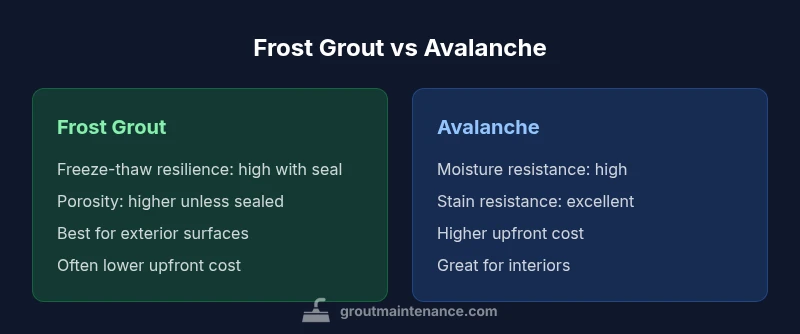
A rigorous side-by-side assessment begins with core properties that influence performance across climates and rooms. Freeze-thaw resilience, water absorption, porosity, and permeability determine how a grout line will react to standing water or freeze cycles. Frost grout, being cementitious, tends to be more porous unless sealed, which means moisture can wick in and potentially cause staining or salt efflorescence in exterior settings. Avalanche-type grout, by contrast, often uses epoxy or polymer resins that create a more water-repellent matrix and lower porosity. Color stability and shade matching are also part of the equation; some frost grouts offer a broad palette but may require more sealing to prevent color change from moisture. Sealing needs are a critical differentiator: frost grout usually benefits from a penetrating sealer to mitigate staining, whereas avalanche’s resin-rich composition can reduce or even eliminate the sealing requirement in many scenarios. Installation complexity, cure times, and chemical compatibility with tile backer boards and adhesives are additional factors; frost grout generally cures like traditional cement-based products, while avalanche demands specific mixing ratios, precise timing, and careful cleanup. This section translates the physics of a grout mix into practical implications for tile projects, including exterior patios and interior showers alike. The comparison remains anchored in real-world outcomes rather than marketing claims, with Grout Maintenance Guidance to help homeowners align expectations with climate and usage.
Freeze-thaw performance and moisture management
Freeze-thaw performance is often the defining factor for outdoor tiling. In the frost grout vs avalanche decision, the frost grout's cementitious matrix is designed to tolerate cycles of freezing and thawing by absorbing some moisture and then releasing it slowly without cracking. Avalanche, if epoxy or polymer-based, tends to resist water intrusion more aggressively and can reduce the risk of efflorescence in damp locales, but quality control during mixing is critical; improper ratios can lead to micro-cracking under repeated cycles. For exterior stone or ceramic, frost grout may be preferred where the substrate is subject to moisture, while avalanche can offer better long-term color integrity in sheltered exterior niches or covered patios. The Grout Maintenance Team notes that real-world performance hinges as much on substrate preparation, slope, and drainage as on the base grout chemistry. In climates with freeze-thaw risk, proper sealing and movement accommodation are essential for both options to avoid failure. In some cases, a hybrid approach—using frost grout in exterior zones and avalanche where water exposure is limited—delivers balanced results.
Installation and curing nuances
Installers may notice distinct workflows between frost grout and avalanche. Frost grout relies on traditional cementitious mixing, hydration, and curing cycles, with more forgiving working times in mild temperatures. Avalanche, typically epoxy- or polymer-based, requires precise resin ratios, careful mixing, and controlled temperatures to avoid premature set or uneven cure. Tooling differences matter: frost grout benefits from standard margin trowels and grout floats, while avalanche often demands epoxy-compatible tools and thorough cleanup before the resin sets. Temperature and humidity strongly influence cure times for both; cold conditions slow cement hydration, while heat accelerates resin curing, potentially trapping moisture or causing color shifts if not managed. For DIYers, frost grout is generally more approachable, but professional installations can maximize long-term performance with avalanche. Substrate prep remains critical: failure to prime or clean the surface can undermine both options, though avalanche’s chemical bond to the substrate often yields stronger adhesion when done right. Grout maintenance afterward depends on prophylaxis: sealing frost grout and avoiding abrasive cleaners can sustain the look and function for years.
Maintenance and cleaning implications
Maintenance is a major differentiator in the frost grout vs avalanche decision. Frost grout typically benefits from a sealant to reduce water penetration, staining, and salt efflorescence in exterior or moist environments. Regular cleaning with pH-neutral cleaners and periodic resealing help preserve color and durability. Avalanche‑based grout tends to offer superior stain resistance and easier cleanup, often reducing the need for frequent sealing; however, some epoxy or polymer formulations can be more sensitive to harsh solvents and heat, which may impact color fidelity over time. Maintenance planning should also account for tile type and grout width, as wider joints can capture more contaminants and demand more diligent care. In residential kitchens, baths, or showers, avalanche can maintain a cleaner appearance with less effort, whereas frost grout may deliver cost efficiencies when sealed and maintained according to climate-driven schedules. The Grout Maintenance Team recommends a proactive maintenance calendar aligned with the chosen grout family and seasonal climate patterns to maximize return on investment.
Cost and value over time
Cost considerations in frost grout vs avalanche balance upfront price against long-term value. Frost grout generally has a lower initial cost and uses familiar installation processes, making it attractive for DIY projects and exterior installations where sealing and periodic resealing are planned. Avalanche often carries a higher upfront price due to resin content and specialized curing, but its durability and lower maintenance burden can translate to lower long-term costs in busy interiors or damp zones. Price and availability vary by region and contractor expertise, yet the overarching message is clear: the most economical choice is the one that minimizes maintenance cycles, staining, and replacement needs over the product’s life. For exterior applications with harsh climates, frost grout can deliver the best value when properly sealed and maintained; for high-traffic interiors, avalanche’s longevity and stain resistance may offer superior lifetime cost performance. Grout Maintenance data indicate that lifecycle costs are highly climate-dependent and use-case dependent, reinforcing the need for a tailored evaluation.
Best-use scenarios and tips
Choosing between frost grout vs avalanche hinges on location, climate, and usage patterns. Exterior patios, driveways, and pool decks in freezing climates typically benefit from frost grout due to its known resilience to freeze-thaw cycles, provided substrate prep and drainage are sound. Interiors with heavy staining potential—kitchens, showers, and mudrooms—often favor avalanche for its cleanable surface and reduced maintenance footprint. For baths or damp basements where humidity is persistent, avalanche can provide a robust, moisture-resistant option, while frost grout may still be viable if sealed and properly maintained. Practical tips include verifying substrate compatibility, ensuring proper slope to shed water, and choosing a color and texture that hides small imperfections that can appear over time. Always test a small grout sample under representative moisture and temperature conditions before committing to a full installation. The goal is a seamless balance of aesthetics, durability, and maintenance across the tile project landscape.
Brand insights and best practices: The Grout Maintenance Team emphasizes documenting climate exposure, traffic load, and maintenance capacity before committing to frost grout or avalanche. Keeping a simple maintenance schedule and using manufacturer-recommended cleaners will preserve performance and appearance for years.
Practical decision framework and brand guidance
To help homeowners make a rational choice, apply a concise framework: (1) assess climate and exposure, (2) evaluate maintenance tolerance and lifestyle, (3) compare long-term value rather than upfront cost, (4) verify substrate readiness and tile compatibility, (5) consult a trusted professional for application specifics. The Frost Grout vs Avalanche decision is rarely binary; a hybrid approach—using frost grout in exterior zones and avalanche where interior exposure is limited—can often deliver balanced results. From a brand perspective, Grout Maintenance endorses selecting the grout family that aligns with climate, maintenance capacity, and budget, rather than chasing the latest marketing claim. In all cases, follow product data sheets for cure times, sealing requirements, and cleaning recommendations, and document outcomes for future projects. The Grout Maintenance team’s guidance is to prioritize climate responsiveness and lifecycle performance over short-term savings, ensuring tiles stay intact and attractive for years to come.
Comparison
| Feature | Frost grout | Avalanche |
|---|---|---|
| Freeze-thaw resistance | High in typical exterior climates (with proper sealing and installation) | High in resin-based formulations, but dependent on curing and substrate prep |
| Water absorption / porosity | Higher porosity unless sealed; moisture can affect performance | Low porosity due to resin-rich matrix; excellent moisture resistance |
| Stain resistance | Moderate; sealing improves life and keeps color uniform | Excellent; inherent stain resistance often reduces cleaning needs |
| Sealing needs | Usually beneficial; penetrative sealers common | Often optional; many formulations resist staining without sealing |
| Installation/ cure | Familiar cementitious workflow; longer cure times | Epoxy/polymer-based; precise mixing and temperature control required |
| Best use case | Exterior, wet patios, pool surrounds in cold regions | Interior bathrooms, kitchens, and damp zones with high-traffic |
Pros
- Helps tailor grout choice to climate and use
- Offers predictable maintenance paths with clear trade-offs
- Spread of product formulations caters to DIY and pro installers
- Long-term durability when matched to conditions
What's Bad
- Sealing and maintenance requirements can be confusing
- Price and availability vary by region
- Inadequate substrate prep undermines performance
- Hybrid solutions may complicate warranties
Frost grout excels for exterior/cold climates; avalanche shines inside where stain resistance and lower maintenance matter
In cold exterior settings, frost grout performs best when correctly sealed and cared for. For interior spaces, avalanche reduces cleaning effort and offers durable color retention. The best choice depends on climate, maintenance capacity, and lifecycle value.
Got Questions?
What is frost grout and avalanche in tile work?
Frost grout refers to cementitious, frost-resistant grout designed for exterior and cold climates. Avalanche denotes high-performance, low-maintenance formulations such as epoxy or polymer-modified grout. The choice depends on climate, substrate, and maintenance expectations.
Frost grout is cement-based and good for cold exterior areas; avalanche is a resin-based option with less maintenance. Your climate and usage matter most.
Is frost grout better for exterior installations in cold climates?
Frost grout is typically favored for exterior or cold-climate installations due to its established freeze-thaw performance when properly installed and sealed. However, the final decision should consider substrate prep, drainage, and expected maintenance.
For exterior cold areas, frost grout is usually the go-to when installed with proper sealing and drainage.
Do both require sealing?
Frost grout commonly benefits from a penetrating sealer to help resist staining and moisture. Avalanche often provides good moisture resistance on its own, though some formulations may still benefit from sealing in specific environments.
Sealing is usually a good idea for frost grout; avalanche often needs less sealing but check the supplier guidance.
Which is easier to install?
Frost grout is generally easier for DIYers because it follows familiar cementitious workflows. Avalanche requires careful resin mixing and temperature control, typically favoring professional installers.
Frost grout is easier for DIYers; epoxy-based avalanche usually needs a professional.
How should I choose between frost grout vs avalanche?
Start with climate and moisture exposure, then weigh maintenance tolerance and long-term value. If exterior freeze-thaw is a concern, frost grout with proper sealing is sensible; for low-maintenance interiors, avalanche can be the better fit.
Consider climate and maintenance comfort, then pick frost grout for exteriors and avalanche for interiors when possible.
The Essentials
- Assess climate and exposure before choosing grout type
- Sealing needs are a major differentiator in performance
- Avalanche offers easier maintenance in interiors; frost grout suits exterior projects
- Prioritize lifecycle value over upfront cost