Grout and Sealer in One: A Practical Comparison for DIY Tile Care
A detailed, analytical comparison of grout and sealer in one products versus traditional grout plus separate sealer. Learn when hybrids save time and when they compromise durability, with practical tips for homeowners and DIYers.


According to Grout Maintenance, grout and sealer in one products promise a simpler, faster tile solution by combining color, sealing, and protection in one step. This comparison highlights where hybrids shine and where traditional grout with a separate sealer performs better, helping homeowners decide quickly which approach fits their project. The analysis emphasizes tests in real-world tile installations and cautions about long-term durability in high-traffic areas.
What grout and sealer in one actually are
Grout and sealer in one products are marketed as a single-step solution that combines grout fill, color, and surface sealing into one formulation. For homeowners, the appeal is immediate: fewer bags, fewer tools, and a shorter overall project timeline. On paper, the concept seems ideal for lightweight renovations, small bathrooms, or quick kitchen updates. In practice, however, the performance depends on how the product is formulated, the porosity of the tile, and the level of traffic the space will receive. The Grout Maintenance team highlights that while these hybrids can simplify application, they may trade off long-term stain resistance and cleaning ease in comparison to dedicated sealants or epoxy grout. For best results, always test on a small area first and follow product-specific curing instructions to avoid uneven coloration or adhesion issues.
Beyond convenience, hybrids often claim additional benefits such as color retention, mildew resistance, and easier maintenance. Yet, homeowners should evaluate whether short-term savings align with anticipated wear, especially in damp environments like showers or mudrooms. The choice should balance project scope, expected life of the installation, and the willingness to perform maintenance over time. Overall, grout and sealer in one can be a pragmatic choice for low- to moderate-traffic areas where quick turnaround matters, but it’s not inherently superior in every scenario.
The convenience vs durability trade-off
The primary appeal of a grout-and-sealer-in-one product is convenience: a single product means fewer steps, less time on hands and knees, and a cleaner shopping list. For small bathrooms, laundry nooks, or back-splash tiling in kitchens, the one-step approach can deliver satisfactory results with minimal downtime. However, convenience often comes at the cost of ultimate durability. Traditional grout paired with a dedicated sealer is designed to maximize long-term performance: the grout is chosen for porosity and color stability, while the sealer provides targeted protection against water ingress and staining. In high-traffic areas such as entryways or busy showers, the extra layer of protection from a separate sealer can translate into better maintenance intervals and longer intervals between resealing.
From a maintenance perspective, two-step setups tend to offer clearer maintenance cycles: clean, reseal, and recoat on a schedule. One-step hybrids may mask issues initially but could require earlier intervention if the surface becomes chalky, discolored, or shows uneven wear. For DIYers prioritizing speed, a grout-and-sealer-in-one may check the right boxes, provided the project scope is modest and the environment is controlled. For homeowners who demand longevity and easier future rehab, traditional methods often win in the long run.
Chemistry and performance: how the hybrid works
Hybrid grout-and-sealer products blend polymer-modified grout with sealant properties. Some formulations rely on surface sealing that forms a protective film during curing, while others embed sealer-like polymers within the grout matrix to offer some degree of water resistance. The chemistry can influence how the material responds to moisture, temperature changes, and cleaning agents. A key distinction is between surface-protective films and penetrating barriers. Surface films can be susceptible to wear in high-traffic zones or aggressive cleaners, whereas penetrating seals tend to offer longer-lasting protection but may not be compatible with all tile backs or grouts.
In practice, the best-performing hybrids balance film formation with meaningful absorption into the grout pores. When a product emphasizes a balanced approach, you may observe improved stain resistance and easier cleanup in the short term. When a product leans heavily toward a film-forming approach, durability hinges on the integrity of that film across multiple wash cycles and cleaning regimes. Homeowners should consider the tile type, substrate, and expected maintenance routine when weighing these formulations. Grout Maintenance’s guidance suggests reviewing product data sheets for porosity compatibility and curing times to avoid premature film degradation or uneven coloration.
Real-world performance across common rooms
Showers and damp bathrooms are the most testing environments for grout products. A one-step hybrid may simplify installation in a small shower niche or a guest bathroom with limited use, but it often struggles to maintain stain resistance against hard water minerals and soap scum over time. In kitchens or laundry rooms where spills are frequent but moisture exposure is moderate, hybrids can perform admirably if the grout is accompanied by a sealed surface. In contrast, traditional grout with a dedicated sealer tends to excel in porous stone tiles or dark grout colors, where stain resistance and color longevity are critical.
Users should monitor for signs of wear such as micro-scratches, yellowing, or chalkiness, especially in extremes of heat and humidity. The decision might hinge on the room’s function: for a mudroom with heavy foot traffic, the durability argument favors a two-step approach; for a light-installed backsplash, a one-step solution can offer a balanced outcome without complicating maintenance. Real-world outcomes confirm that no single method universally outperforms the other; the best choice depends on project scope, tile type, and anticipated care.
Practical testing in a hidden corner, followed by a small-scale application in an inconspicuous area, can reveal how well the product resists staining and wear in your specific conditions. Grout Maintenance recommends documenting results with photos and notes to track performance over time.
Installation considerations: prep, application, curing, and cleanup
Proper prep is essential regardless of the approach. For hybrids, cleaning the tile surface, removing efflorescence, and ensuring a dry, dust-free substrate helps the single-step product bond evenly. Use non-acid cleaners or mild soap alternatives during prep to avoid reacting with the grout binder and the protective film. When applying a one-step product, keep the surface OTR (open tile room) dry during cure, and avoid foot traffic until the product achieves sufficient hardness as stated by the manufacturer.
For traditional grout plus sealer, mixing grout to the recommended consistency and wiping excess mortar promptly remains crucial. After curing, apply the penetrating or surface sealer in the recommended number of coats, allowing adequate dwell time between applications. Curing times can vary with humidity and temperature; always follow the manufacturer’s guidelines. Cleanup for hybrids often involves mild cleaners to prevent softening the surface film, while traditional methods allow aggressive cleaning intervals once the sealer has cured. In both cases, test a small area to confirm adhesion, color retention, and ease of cleaning before expanding to the full project.
Tile compatibility and grout types: where hybrids fit best
Porous or color-sensitive grout can benefit from a hybrid when the color retention and wipe-off stability are key. However, some natural stone tiles may require a broader approach with a dedicated sealer to avoid blotching or discoloration of the grout’s appearance. Epoxy grouts often perform differently than cement-based grouts; hybrids that rely on film-forming sealers may not pair well with certain stone or highly textured tiles. When choosing a grout type, consider porosity, expected moisture exposure, and whether a surface seal is adequate for the substrate. For most ceramic and porcelain installations in moderate environments, hybrids can work effectively if you select a product that explicitly notes compatibility with the tile type and adhesive system. For high-porosity materials like unglazed terracotta, traditional grout plus a penetrating sealer tends to provide more predictable results over the long term.
Maintenance implications: cleaning, resealing, and replacement cycles
Maintenance is a core differentiator. Hybrid grout-and-sealer products often reduce the number of maintenance steps but may require resealing sooner than a dedicated sealer in demanding environments. Depending on the product, routine cleaning should avoid harsh solvents that degrade the protective film. In a shower or spa area, plan for more frequent inspections for film wear and color changes. Traditional grout and sealer setups typically offer longer intervals between resealing, provided the grout color and porosity are well matched to the sealer’s properties. Create a simple maintenance calendar: quarterly cleanings, annual resealing, and periodic color checks. Keeping a log helps track when performance begins to degrade and informs timely refreshment of the grout system.
Cost considerations and value over time
Cost dynamics depend on project size and the environment. Hybrid products often carry a lower upfront cost due to fewer materials and simpler workflows, which is attractive for small updates or DIY beginners. However, the long-term cost can rise if wear is more pronounced or if resealing is needed sooner than with traditional methods. Conversely, separate grout and sealer steps generally require more initial investment but can extend intervals between maintenance, especially in damp areas or spaces with heavy use. When calculating value, consider not just the per-project cost but the lifetime maintenance cost, including potential repairs or replacements of damaged grout or tiles. Grout Maintenance’s analysis suggests that for multi-room remodels, the two-step approach often proves more cost-efficient over a 5–10 year horizon, particularly in high-moisture zones.
Choosing the best approach for different rooms and budgets
The final decision should align with room function, budget, and maintenance capacity. In low-traffic rooms like powder baths or guest rooms, a grout-and-sealer-in-one product can deliver satisfactory results with minimal effort. For busy showers, kitchens, or mudrooms where moisture and scrubbing are routine, a traditional grout plus sealer pathway offers more reliable protection and easier long-term maintenance. If you anticipate frequent cleaning with strong agents, verify that the hybrid product resists typical cleaners without compromising the grout color or film integrity. Always consider tile type compatibility, porosity, expected life, and your willingness to perform periodic resealing before making a choice.
Comparison
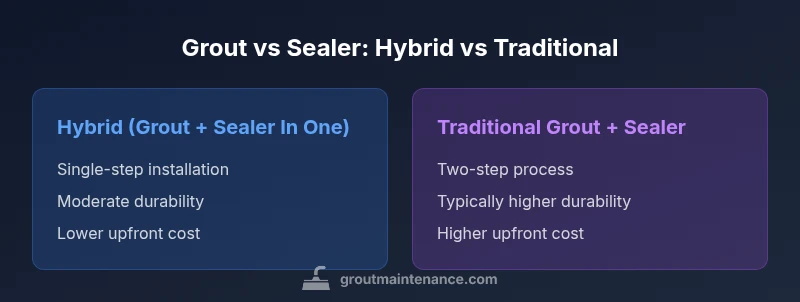
| Feature | Grout and sealer in one | Traditional grout + sealant |
|---|---|---|
| Application Steps | Single-step | Two-step |
| Durability/ Longevity | Moderate; varies by product | Typically longer-lasting with proper sealing |
| Stain Resistance | Good to moderate; depends on film integrity | High; depends on sealer quality and maintenance |
| Maintenance Ease | Lower maintenance upfront but potential earlier reseal | Higher maintenance; clear reseal schedules |
| Water Repellency | Film-forming or surface-protective; variable | Penetrating sealer offers dependable water barriers |
| Tile Compatibility | Broad but may favor non-porous tiles | Excellent with porcelain/ceramic; watch for stone |
| Cost/Value | Lower initial cost; potential higher long-term costs | Higher upfront; often lower long-term total cost |
| Best For | Small, low-traffic projects | Showers, floors, high-traffic areas |
Pros
- Faster project completion for small spaces
- Lower upfront material cost
- Simplified maintenance for low-traffic areas
- Fewer products to store and manage
What's Bad
- Potentially reduced long-term durability in damp environments
- Limited color stability and staining resistance with some formulations
- May require resealing earlier than traditional methods
- Not all tile types are universally compatible
Hybrid grout-and-sealer is best for quick, low- to moderate-traffic projects; traditional grout with a dedicated sealer is preferable for showers and high-traffic areas.
If time is the main constraint and the space has modest moisture exposure, hybrids offer a practical solution. For bathrooms and high-use rooms, expect greater longevity and easier long-term maintenance from the traditional two-step approach.
Got Questions?
Is grout and sealer in one truly cheaper than separate steps?
In many cases, hybrids reduce upfront costs due to fewer products and quicker installation. However, long-term maintenance can negate initial savings if resealing is needed sooner or performance declines in moisture-heavy spaces. Consider total cost of ownership over the expected life of the installation.
Hybrids can save money upfront, but you may pay later if you reseal or replace earlier than with a traditional setup.
Will hybrids darken grout color?
Some grout-and-sealer in one products can slightly alter the shade of the grout as they cure. This is more noticeable with dark or highly pigmented colors. Always test on a small area and review a sample before full application.
A small test patch will show if the color shifts occur before you commit.
Are there tile types where hybrids are not recommended?
Yes. Highly porous natural stones or unglazed tiles may require a dedicated sealer to achieve consistent color and moisture protection. Check the tile manufacturer's recommendations and the product data sheet.
Some tiles work better with traditional grout and sealers; verify compatibility first.
How long does a hybrid grout/sealer last compared to separate steps?
Durability varies by product and environment. Generally, traditional grout with a solid sealer offers longer protection in moisture-prone spaces, while hybrids may perform well in lighter use zones for several years with proper care.
Longevity depends on environment and product quality; test area and follow care guidelines.
Can I use a sealer on existing grout without removing it?
Some penetrating sealers can be applied to existing grout, but results vary. For best outcomes, consult the product instructions and consider a test patch to avoid color changes or incomplete coverage.
Check the product directions and test first.
Does a grout-and-sealer product prevent mold and mildew?
Hybrid products can reduce surface penetration and make cleaning easier, but mold and mildew prevention depends on proper ventilation, cleaning frequency, and maintenance. They are not a substitute for good bathroom ventilation.
Good ventilation and routine cleaning matter as much as the product you choose.
The Essentials
- Assess project scope before choosing a method
- Prioritize durability in showers and high-traffic rooms
- Factor in maintenance time and cost when planning
- Test a small area first to verify performance
- Choose tile compatibility carefully with your selected method