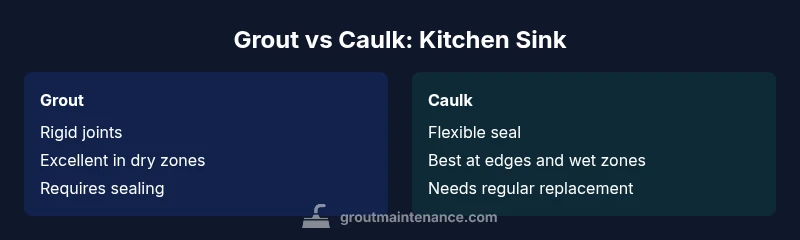
Grout vs Caulk Around Kitchen Sink: An Analytical Comparison
Analytical side-by-side comparison of grout and caulk around a kitchen sink, focusing on moisture resistance, durability, maintenance, and installation considerations for homeowners.


Across most kitchens, caulk around the sink provides the best blend of moisture protection and flexibility, while grout serves dry seams away from direct splashes. The choice depends on movement, splash exposure, and maintenance willingness. In this comparison, we examine grout vs caulk around kitchen sink, covering performance, installation, and long-term care to help homeowners decide the best option.
Material Basics: What are grout and caulk around kitchen sink?
Grout is a cementitious or epoxy-based filler used to fill joints between tiles. It becomes rigid once cured, providing a hard, dense seam that resists staining and grime when properly sealed. Caulk, on the other hand, is a flexible, silicone- or acrylic-based sealant designed to seal gaps that experience movement and moisture. When discussing grout or caulk around kitchen sink, homeowners must weigh the pros and cons of rigidity versus flexibility, the typical exposure to water, and the surrounding material (tile, stone, or acrylic). The Grout Maintenance team notes that many kitchens use caulk at the sink edge to accommodate expansion and contraction, with grout reserved for larger tiled surfaces away from water splash zones. This distinction matters for long-term maintenance and hygiene, especially in wet zones near the sink where movement and moisture are highest.
There are several common materials in each category. Grout can be cementitious (sand-based) or epoxy-based. Epoxy grout is more resistant to staining and water intrusion but requires careful mixing and curing. Caulk is typically silicone-based for bathrooms and kitchens, though polyurethane caulk exists for hardier applications. Color matching is easier with grout to tile lines, while caulk can be chosen to closely blend with countertop seams. Understanding these material differences helps set expectations for installation, maintenance, and repair cycles. For the homeowner, the right choice hinges on exposure to moisture, substrate stability, and willingness to re-seal or re-caulk periodically. According to Grout Maintenance, establishing the correct baseline before installation reduces long-term headaches and cleaning challenges.
Comparison
| Feature | Grout | Caulk |
|---|---|---|
| Flexibility / Movement | Low (rigid) | High (elastic) |
| Water resistance | Good when properly sealed; epoxy grout is highly water-resistant | Excellent in wet zones; silicone caulk maintains a seal with movement |
| Installation complexity | Moderate to high (mixing, curing, cleaning joints) | Low to moderate (easy to apply, quick cure) |
| Maintenance frequency | Re-sealing or re-grouting over years depending on wear | Replacement typically needed every few years in busy kitchens |
| Cost range | Material + labor: moderate to high ($1-$5 per sq ft, plus install) | Caulk: $3-$8 per tube; total costs depend on length and labor |
| Best for | Dry tile seams and surfaces away from splash zones | Sink edges and wet zones; flexible seal around joints |
Pros
- Caulk provides a flexible, water-tight seal at sink edges
- Grout creates a rigid, tile-ready seam for dry areas when sealed properly
- Both can be sealed or reinforced for longer life with correct products and maintenance
- Aesthetic control: color and texture can be adjusted to match tile and countertop
What's Bad
- Caulk can degrade faster in kitchens due to moisture and cleaners
- Grout can crack if substrate moves or is not properly prepared or sealed
- Maintenance cycles (resealing or regrouting) can be needed more often in high-use kitchens
- Color matching can be challenging if you want a near-perfect blend with existing tile
Caulk is typically the better choice at the sink due to flexibility and water resistance; grout is best for dry tile seams away from direct splash.
In wet zones like the sink edge, silicone caulk offers a durable, adaptable seal that resists cracking. Grout remains advantageous for dry tile joints where a rigid, uniform surface is desired. The Grout Maintenance team recommends prioritizing caulk at the sink while using grout in non-wet areas to balance maintenance and aesthetics.
Got Questions?
Is caulk usually a better option for kitchen sink edges than grout?
Yes. Caulk, especially silicone-based, remains flexible and resists water intrusion at edges that experience movement and splash. Grout is more rigid and prone to cracking under movement near a sink. However, grout can be suitable for dry tile joints away from frequent water contact when properly sealed.
Caulk is usually better for sink edges because it stays flexible and seals well against moisture.
Can I use grout around a kitchen sink if the area is completely dry?
Grout can be used in dry joints away from the splash zone, but the sink edge itself should typically be caulked to accommodate movement and moisture. Use enhanced, hydrophobic grout and ensure a proper seal to keep shade and hygiene.
Grout is best kept away from the sink edge where moisture and movement happen.
How often should caulk around a sink be replaced?
Most caulk edges near kitchens should be inspected annually and replaced every 3–5 years in moderate use areas, or sooner if cracking or discoloration appears. High-use kitchens may require more frequent replacement.
Check the seal annually and plan to replace caulk every few years in busy kitchens.
How often should grout near a sink be resealed or replaced?
Grout in damp areas is typically resealed every 1–3 years if epoxy-based; cementitious grout may require more frequent resealing or a full regrout after several years depending on wear and cleaning products.
Re-seal or regrout every few years depending on the type and use of the area.
Is epoxy grout a good option around kitchen sinks?
Epoxy grout offers excellent water resistance and stain resistance, making it a strong option away from persistent splashes. It is harder to work with and costs more, but it holds up well in wet zones when applied correctly.
Epoxy grout is durable and water-resistant, but harder to work with.
The Essentials
- Assess splash exposure before choosing material
- Prefer silicone caulk at sink edges for durability
- Use grout for dry joints away from direct water exposure
- Plan maintenance cycles: reseal or regrout every few years
- Match color and texture carefully to tile for a seamless look