Grout or Caulk Around Tub: A Practical Comparison for DIYers
Learn how to decide between grout and caulk around a tub, comparing durability, moisture sealing, and maintenance with practical DIY guidance from Grout Maintenance.


Silicone caulk around tub edges handles movement and moisture best; use grout for tile joints, and epoxy grout where maximum stain resistance is desired.
Understanding the Decision: grout or caulk around tub
When you tackle bathroom maintenance or a remodel, the question often comes down to one phrase: grout or caulk around tub. This choice isn’t about a single material being universally “better.” It hinges on movement, moisture exposure, and how you intend to clean and maintain the area. According to Grout Maintenance, most homeowners benefit from treating tub edges with a flexible sealant while reserving grout for the tile joints that need rigidity. The goal is to create a moisture barrier that won’t crack or peel under daily use, while keeping the tile joints strong and visually consistent. In practical terms, think of a hybrid approach: silicone caulk at the tub perimeter and tile grout where tiles meet each other. This hybrid strategy leverages the strengths of both materials and is a sensible starting point for most bathrooms.
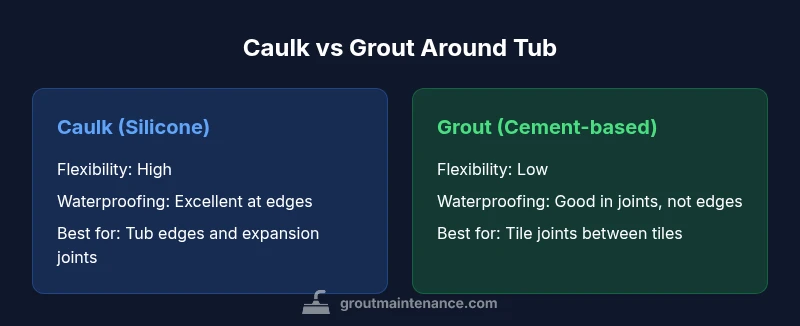
Across many bathroom configurations, the key factors are water exposure, substrate movement, and the tile layout. Tub edges experience the most continual moisture, temperature shifts, and minor shifting from settling or use. A flexible sealant like silicone caulk can absorb this movement without cracking, staying watertight when properly installed. Grout, by contrast, creates a hard, dense joint between tiles that resists staining and helps maintain tile alignment. However, it lacks the flexibility needed at dynamic edges and corners near a tub.
In short, the grout or caulk around tub decision should balance movement and moisture: caulk at the edges for a flexible, water-tight seal, and grout between tiles for durable, cleanable joints. This approach is consistent with professional practice and aligns with the guidance of the Grout Maintenance team, who emphasize selecting materials by location and stress. The goal is a long-lasting bathroom that cleans easily and resists mold and water damage over time.
-50-150 words?
Comparison
| Feature | Caulk (silicone) | Grout (cement-based) |
|---|---|---|
| Flexibility | High (excellent for movement) | Low (rigid and prone to cracking) |
| Waterproofing at edges | Excellent when applied properly, continuous at joints | Good in tile joints but prone to cracking with movement |
| Durability in showers | Excellent lifespan at seal lines with maintenance | Good for tile joints but vulnerable to moisture-induced staining or cracking |
| Maintenance needs | Low maintenance; reseal or replace periodically | Requires cleaning and occasional regrouting or resealing |
| Color options | Wide silicone color range; easy to match | Many grout colors; color stability varies with use |
| Best uses | Tub edges, seams, expansion joints | Tile joints between tiles near tub area |
| Cost/value | Moderate cost with long-term flexibility | Typically lower upfront cost but higher lifetime maintenance risk |
Pros
- Caulk provides a flexible, watertight seal at tub edges
- Silicone caulk resists cracking in wet areas
- Epoxy grout offers superior stain resistance for tile joints
- Color options are abundant for both materials
- Maintenance cycles are predictable with proper products
What's Bad
- Grout can crack with substrate movement near tubs
- Caulk can degrade due to mold and soap scum
- Epoxy grout can be harder to install and more costly
- Replacing grout or caulk around tub can require careful cleaning to avoid damage
Silicone caulk around tub edges; epoxy grout for tile joints where durability and stain resistance are priorities.
For tub surrounds, use silicone caulk at the edges to accommodate movement and moisture. Use epoxy grout for adjacent tile joints when you want maximum resistance to stains and moisture. This hybrid approach provides flexibility where needed and durability where it matters most.
Got Questions?
What is the main difference between grout and caulk around a tub?
Grout forms rigid joints between tiles, while caulk provides a flexible, waterproof seal at tub edges. The choice depends on movement and moisture exposure in the area.
Grout is rigid; caulk is flexible. The right mix depends on movement and moisture near the tub.
Can I use grout around the tub edges?
Grout around tub edges is generally not ideal because edges experience more movement and water exposure. Seal edges with caulk instead, and reserve grout for the tile joints themselves.
Grout at the edges isn’t ideal; use caulk there and grout between tiles.
Which is better for a wet bathroom environment?
Caulk, especially silicone-based, is typically best at edges since it remains flexible and watertight. Grout can be used between tiles but should not be relied on for edge seals in wet zones.
Caulk handles moisture better at edges; grout is best between tiles.
How long does caulk around a tub last?
Caulk life depends on product quality and maintenance. With proper cleaning and mildew prevention, silicone caulk can last several years in typical bathrooms.
Caulk lasts several years with proper care.
Is epoxy grout suitable around tubs?
Epoxy grout offers excellent stain and moisture resistance for tile joints, but it is usually more costly and can be trickier to install. It can be used in tile areas away from direct edge movement.
Epoxy grout is great for joints but can be pricier and trickier to install.
How do I replace grout or caulk around a tub?
Start by removing the old material carefully, clean the joints, let dry completely, and apply the appropriate product with proper curing time. Always follow manufacturer instructions for best results.
Remove old material, clean well, and reseal with the right product.
The Essentials
- Assess movement and moisture before choosing materials
- Use silicone caulk at tub edges for flexibility and seal
- Choose epoxy grout for high-moisture tile joints for durability
- Regular cleaning and mold prevention extend seal life
- Avoid cement grout in moving or edge joints near the tub