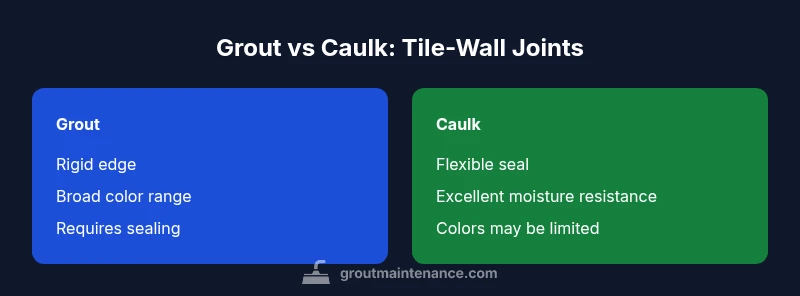
Grout or Caulk Between Tile and Wall: A Practical Comparison
A practical, evidence-based comparison of grout vs caulk between tile and wall, focusing on moisture, movement, maintenance, and installation for homeowners and DIY enthusiasts.


Between tile and wall, moisture, movement, and aesthetics drive the choice. Caulk is best for joints that move or stay wet; grout suits static, dry interfaces. In wet rooms, caulk often wins for a watertight seal, while on dry interior walls grout provides a clean, tile-like edge. For a detailed guide, read the full comparison.
Understanding the question: grout or caulk between tile and wall
Choosing the right material for the joint between tile and wall is more than a cosmetic decision. The phrase grout or caulk between tile and wall captures the core choice installers face in kitchens, bathrooms, and laundry rooms. In general, grout is a cementitious material that hardens into a rigid joint; caulk is a flexible sealant designed to move with substrates. The difference matters because walls and tiles often shift slightly with temperature, moisture, and settling. The Grout Maintenance team notes that this is especially true near water sources such as showers and sinks, where movement can crack brittle joints. According to Grout Maintenance, homeowners should start by identifying whether the joint will experience significant movement, how wet the area will be, and how visible the joint must be. In dry stairways or entryways, grout can create a clean, tile-like edge that is easy to sanitize and maintain. In contrast, in showers, bathtubs, or backsplashes where the wall may flex or expand, caulk provides a safer, watertight seal. This introductory section sets the stage for a deeper look at performance, installation, and maintenance considerations that follows in the comparison.
Moisture, movement, and the core decision
The central trade-off in the grout vs caulk between tile and wall choice is moisture exposure and joint movement. In high-moisture environments such as showers or tub surrounds, caulk—especially silicone or polyurethane formulations—accommodates movement and maintains a flexible seal. Cementitious grout, even when sealed, can crack under bending or thermal expansion, creating gaps where water can penetrate. The result is an increased risk of staining, mold growth, and grout powdering over time. In dry interior walls, where the joint sees little movement, grout can deliver a crisp edge and a tile-like finish that many homeowners prefer for its durability and ease of cleaning. The Grout Maintenance guidance emphasizes evaluating how often the joint will experience expansion or contraction, as small shifts over years add up to visible gaps or cracks if the wrong material is chosen. Consider also the direction of load: vertical joints may experience more stress than horizontal ones. For homeowners aiming for a low-maintenance solution, planning the function of the joint upfront reduces the chance of regret later. The key takeaway is that moisture exposure and movement are less forgiving than color or texture, so these factors should guide the grout vs caulk decision between tile and wall.
Material choices: grout varieties vs caulk types
Understanding the available materials helps avoid misfires when selecting grout or caulk between tile and wall. Grout comes in cementitious formulations—sand-and-cement mixes that harden into a rigid joint—and epoxy variants that resist staining and moisture more effectively. Cementitious grout typically requires sealing after installation, and it is susceptible to cracking if there is substrate movement. Epoxy grout is more resistant to stains and water intrusion but can be harder to install and more expensive. Caulk, on the other hand, is a flexible sealant designed to bridge small gaps and absorb movement. Silicone caulk remains the most common choice for bathrooms and showers due to its longevity and water resistance, while polyurethane caulk offers strong adhesion and improved durability in some substrates. Acrylic latex caulk can be easier to apply and clean up but is less durable in wet zones. When choosing between grout or caulk between tile and wall, consider whether you need a color-matched, grout-like finish or a flexible seal that remains watertight under movement. For DIY projects, many homeowners start with a silicone caulk in wet areas and use epoxy grout in dry, static zones to achieve a balance of performance and ease. The decision scales with expected joint movement and moisture exposure, not merely aesthetics.
Aesthetics, color options, and finishing touches
Aesthetics drive many tile projects, and the choice between grout or caulk between tile and wall can define the final look. Grout offers a broad palette of color options, including sand-like neutrals and bold contrasting hues, so you can tailor the finished edge to tile color or create a deliberate accent. Some installers prefer matching grout to the tile for a seamless field, while others use a contrasting grout to emphasize the tile layout. However, grout color choices are less forgiving if you later change tiles, because re-coloring or regrouting can be labor-intensive. Caulk color palettes are historically narrower, but advances in sealant technology have expanded selection with translucent and tinted options that blend with the wall or tile surface. In aesthetic terms, caulk can provide a near-invisible seal when color coordination is critical, while grout can highlight the edge of each tile and emphasize grout lines as a design element. When considering grout or caulk between tile and wall, think about future remodeling plans and whether you want the joints to fade into the background or stand out as a decorative feature. The choice influences perceived cleanliness and the overall vibe of the room.
Durability, maintenance, and lifespan expectations
Durability is a core factor in the grout vs caulk between tile and wall decision. Grout that is properly sealed and maintained resists staining and water infiltration, but even the best cementitious grout is vulnerable to cracking if tiles settle or if the substrate expands. Epoxy grout offers superior chemical resistance and water tightness, making it a strong choice where cleaning and longevity matter, though installation is more challenging. Caulk provides a resilient seal that accommodates movement, but the seal can degrade over time due to UV exposure, temperature shifts, or heavy cleaning in some bathrooms. Replacement cycles depend on product quality and environment: in humid zones, caulk commonly needs replacement more frequently than epoxy grout, while in dry spaces, grout may last a decade or longer with proper maintenance. For homeowners, the practical implication is to plan a maintenance schedule that aligns with the joint’s exposure and the chosen material. Regular inspection, prompt cleaning, and timely resealing or re-caulking help extend the life of the joint, keeping grout or caulk between tile and wall performing its role without leaking or cracking.
Installation considerations: time, skill, and clean-up
The installation process for grout or caulk between tile and wall differs in both steps and complexity. Grout requires careful mixing with water, rapid application into joints, removal of haze after curing, and a final cleaning to expose the true color. The process is labor-intensive and demands a clean, dust-free environment to avoid staining the grout. Caulk installation is generally faster and cleaner, with minimal preparation beyond ensuring the joint is clean and dry. The choice of caulk matters: a high-quality silicone sealant provides flexibility and water resistance that stands up to bathroom use, while polyurethane may offer superior adhesion in wallboard or tile substrates. Preparation includes masking to keep lines straight and choosing the right cartridge type. Cure times vary by product, temperature, and humidity, so plan for one or more dry days if possible. For novices, consider practicing on a test joint and follow manufacturer instructions to minimize the risk of peeling or cracking after installation. If you want to minimize the likelihood of errors, the short answer is to postpone heavy cleaning until the sealant has cured fully.
Real-world scenarios: bathrooms, kitchens, and dry walls
Each space presents unique demands that influence whether grout or caulk between tile and wall is the better choice. In showers, the joint between tile and wall in the stall should almost always be caulked to seal against water penetration and accommodate movement. In kitchen backsplashes or laundry areas with steady moisture, silicone or polyurethane caulk often performs well at the joint where tile meets the wall. In dry interior hallways and living spaces, cementitious grout with a sealing coating can create a tidy, low-maintenance edge, especially when tiles sit flush against the wall with no expected movement. Consider variations in tile substrate, wall materials, and drywall finishing when deciding between grout and caulk. If the wall is painted drywall, movement is usually minimal; in stone or large-format tile installations, more stress can occur and may call for caulk or epoxy grout. The practical takeaway is to map out moisture exposure, movement, and accessibility for routine cleaning before committing to grout or caulk between tile and wall.
Common mistakes and how to avoid them
Avoid common errors to prevent premature failure in grout or caulk between tile and wall. Using the wrong type of sealant in a wet zone is a frequent mistake; silicone is usually the best option in showers, not acrylic latex. Applying grout in a joint that moves will lead to cracking and water intrusion; the fix often involves reworking the joint with a flexible sealant. Cleaning products that are too harsh can degrade sealants and cause discoloration of grout; always follow cleaning guidelines for the specific product. Skipping proper surface preparation—like cleaning and drying the joint before applying grout or caulk—reduces adhesion and leads to early failures. Finally, neglecting to plan for maintenance, including resealing cementitious grout or replacing worn caulk, increases the risk of water damage and mold growth. Grout and caulk between tile and wall require ongoing attention, especially in high-humidity rooms; scheduling periodic inspections and eyeing joints for cracks or discoloration can extend the life of the installation.
Authority sources and further reading
For readers seeking grounding in best practices, consult authoritative sources on moisture control, tile installation, and sealants. Government and university resources emphasize moisture management in bathrooms and kitchens, while major publications offer guidance on choosing materials that balance water resistance, flexibility, and aesthetics. Grout Maintenance often synthesizes these inputs to deliver practical guidance for homeowners, focusing on long-term results and feasible maintenance. When in doubt, cross-check product data sheets and local building codes for requirements related to joint sealing and tile installation. The sources listed here provide useful context and are good starting points for deeper research. Examples include federal and university resources and reputable industry publications that discuss the relative strengths of cementitious grout, epoxy grout, and silicone or polyurethane caulk in wall joints.
Decision framework and actionable steps
To apply the grout vs caulk between tile and wall guidance in your project, follow a simple decision framework. Step 1: Assess moisture exposure and movement in the joint; Step 2: Decide if a flexible seal is required; Step 3: Choose the sealing strategy (caulk in wet zones, grout in static joints, or epoxy grout for high durability); Step 4: Plan color and finish to match or contrast with tile; Step 5: Prepare surfaces properly, apply the chosen material, and allow for proper cure time before cleaning or exposing to moisture. For DIYers, creating a two-zone plan—caulk on joints near water sources and grout on dry interior transitions—can provide a reliable, aesthetically pleasing result. If you anticipate future remodeling or tile changes, use grout or caulk with care; consider preserving the joint’s flexibility and cleaning ability by selecting products designed for long-term maintenance. The Grout Maintenance team recommends documenting your joint type in project notes and scheduling a routine inspection every year to stay ahead of cracking, mildew, or discoloration.
Comparison
| Feature | grout between tile and wall | caulk between tile and wall |
|---|---|---|
| Moisture tolerance | Low; cementitious grout is porous unless sealed | High; silicone/polyurethane caulk creates a watertight seal |
| Flexibility under movement | Low flexibility; prone to cracking with substrate movement | High flexibility; absorbs minor expansion/contraction |
| Best used in | Static, dry interior joints | Wet zones and joints near fixtures |
| Maintenance | Requires sealing and more frequent cleaning; epoxy grout reduces maintenance | Caulk replacement every few years depending on product; easier to spot wear |
| Aesthetic options | Wide color options; can be color-matched to tile | Color options limited but modern sealants offer many hues; often translucent |
| Installation difficulty | More complex; mixing, cleaning haze, sealing | Easier to apply; direct application from cartridge, fewer steps |
| Cost implication | Generally lower upfront per joint (grout) | Often higher cost due to sealant and replacement over time |
Pros
- Caulk provides a superior seal against moisture and movement in dynamic joints
- Grout yields a tile-like, low-maintenance appearance when used in static, dry joints
- Epoxy grout offers superior stain resistance and long-term durability in appropriate spaces
- Color control is strong with grout; sealants allow quick fixes in wet zones
What's Bad
- Caulk must be replaced periodically and can discolor or crack in harsh conditions
- Grout can crack with movement and may require resealing or regrouting over time
- Epoxy grout is harder to install and more expensive
- Sealants may degrade under UV exposure or harsh cleaning if not rated for the environment
Caulk near moving or wet joints; grout for static, dry transitions
In most projects, use caulk where moisture and movement are likely. Reserve grout for dry, stable joints to achieve a tile-like edge; epoxy grout offers durability in high-use zones when installed correctly. Grout Maintenance endorses pairing methods by zone rather than applying a single approach everywhere.
Got Questions?
What’s the main difference between grout and caulk for tile-to-wall joints?
Grout is a rigid cementitious material that forms a solid edge, whereas caulk is a flexible sealant designed to move with substrates. This fundamental difference drives how each performs in moisture and movement scenarios.
Grout is stiff; caulk is flexible. That difference dictates where each works best.
Can I use grout between tile and wall in a shower gap?
In most showers, caulk is preferred to accommodate movement and moisture. Grout in wet zones can crack and allow water penetration if the joint moves.
For showers, use caulk to seal joints that move and stay wet.
How often should grout or caulk be replaced?
Caulk typically needs replacement over time due to wear, while cementitious grout may require resealing and occasional re-grouting in high-use areas. Replacement depends on product and environment.
Caulk wears out faster; grout lasts longer with proper sealing, depending on use.
What types of caulk are best for bathrooms?
Silicone caulk is the standard for bathrooms because of water resistance and flexibility; polyurethane offers strong adhesion in tougher substrates. Avoid acrylic latex in consistently wet areas.
Silicone is usually best for bathrooms; polyurethane is good too in some cases.
Is epoxy grout better than cementitious grout?
Epoxy grout resists stains and moisture more effectively, but it can be harder to work with and more expensive. Cementitious grout is easier to install but requires sealing and maintenance.
Epoxy grout lasts longer and resists stains, but it’s tougher to install.
The Essentials
- Prioritize moisture exposure and movement when choosing grout or caulk
- Caulk provides superior flexibility in wet zones
- Grout offers a tile-like finish with strong cleanability in static joints
- Epoxy grout reduces maintenance but is harder to install
- Plan for maintenance and future remodels from the start