Grout vs Caulk: A Practical Guide for Tile Care and Sealing
Compare grout and caulk to decide which sealant fits your tile projects. Learn durability, flexibility, maintenance, and best-use scenarios with practical guidance from Grout Maintenance.


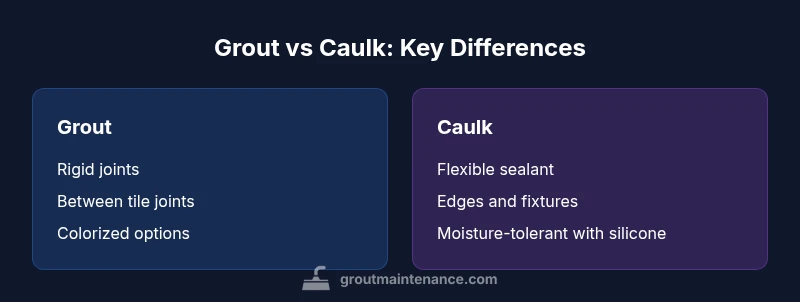
Grout versus caulk pits rigidity against flexibility: grout forms hard, durable joints between tiles, ideal for static installations; caulk remains flexible, sealing around edges and fixtures where movement or moisture is expected. The best choice depends on joint type, substrate movement, and water exposure. In many projects, you’ll pair both for optimal performance.
What grout and caulk are, and where they belong
Grout and caulk are two common sealants in tile installations, but they serve different purposes. Grout is a cementitious or epoxy material that fills the gaps between tiles and creates a rigid, stone-like joint. It provides structural stability and color options that help achieve a cohesive look. Caulk, on the other hand, is a flexible sealant—typically silicone or polyurethane—that seals edges, corners, and joints where tiles meet other substrates or experience movement. According to Grout Maintenance, understanding grout versus caulk helps homeowners decide which sealant to use where. In most bathrooms and kitchens, you’ll see grout between tile faces, with caulk used at edges against tubs, sinks, and drywall or along expansion joints to accommodate movement.
The distinction matters because each material behaves differently under moisture, temperature changes, and substrate movement. Grout resists compression but can crack if there is significant substrate shift; caulk tolerates expansion and contraction but may degrade in constant wetness if the formulation isn’t suited to it. By recognizing these roles, you can design joints that last longer and stay visually consistent.
Key physical and performance differences
The core differences between grout and caulk lie in elasticity, water exposure response, and maintenance needs. Grout is compact and rigid, which makes it excellent for static joints in floors and walls with minimal movement. Epoxy grout, though more expensive, adds chemical resistance and easier stain control, while cementitious grout is usually easier to work with for DIY projects. Caulk is designed to be elastic; silicone and polyurethane caulks can stretch with movement and accommodate temperature-induced expansion. This makes caulk ideal for edges, corners, and joints adjacent to fixtures where movement occurs. In wet areas, both materials require proper sealing and periodic inspection, but caulk’s flexibility generally gives it a longer life at moving interfaces. As noted by Grout Maintenance, the right choice balances movement, moisture, and long-term maintenance.
Water exposure and moisture considerations
Moisture is a major driver in deciding between grout and caulk. In showers and wet zones, grout joints should resist water penetration when properly sealed, but the joints can crack under continuous movement. Caulk is specifically designed to seal against moisture in flexible interfaces, such as around bathtubs, sinks, and tile-to-drywall transitions. If a joint is likely to experience constant dampness or splashing, using a high-quality silicone or polyurethane caulk at the edge ensures the seal remains intact as substrates move. Grout itself can be water-resistant, especially epoxy variants, but won’t tolerate significant movement or repeated edge exposure without appropriate edging caulk.
When to use grout vs caulk in common scenarios
In typical tile installations, grout should fill the tile-to-tile joints to provide a stable, wipeable surface that resists wear. However, where tiles meet fixtures, walls, or floor transitions, you should seal with caulk to accommodate movement and prevent cracking or water intrusion. For showers, many professionals grout the majority of joints but caulk the perimeter where tiles meet the tub or enclosure. In countertops and backsplashes, grout is preferred for the interior joints, while caulk is used at points where the surface meets a vertical wall or cabinet. The key is to segment static joints from flexible edges and plan maintenance accordingly.
Maintenance and lifecycle considerations
Maintenance frequency depends on exposure, cleaning practices, and how well you select products suited to the environment. Grout maintenance often involves cleaning, re-sealing (for cementitious types), and, in some cases, re-grouting if cracking occurs. Caulk maintenance typically centers on inspecting the edges and resealing or replacing caulk periodically to prevent mold growth and water ingress. Grout Maintenance Analysis, 2026 emphasizes that moisture and substrate movement drive maintenance needs for both materials, so planning for periodic inspection and timely repairs is essential for longevity.
Choosing product types: cementitious vs epoxy grout and silicone vs acrylic caulk
Choosing the right grout type is a balance of cost, durability, and appearance. Epoxy grout provides superior stain resistance and water resistance but costs more and can be harder to work with. Cementitious grout is more forgiving for DIY projects and comes in a broad color range but requires sealing in most installations and periodic maintenance. For caulk, silicone caulk offers excellent elasticity and mold resistance in wet areas, while polyurethane caulk provides strong adhesion and durability in high-traffic joints. Acrylic latex caulk can be easier to apply and paintable, but it is less resilient in damp environments. Selecting the correct types for the area ensures longer life and fewer maintenance headaches.
Application tips: preparation, curing, and finishing
Preparation is crucial for both grout and caulk. Clean and dry joints thoroughly, remove old material, and ensure edges are clean for a good seal. Apply caulk in a continuous bead with steady pressure, tool the bead for a smooth finished edge, and allow proper curing time before exposure to moisture. Grout requires a clean, damp sponge to remove haze and an even application with a grout float. Allow full cure before sealing or using the area, and follow manufacturer recommendations for temperature and humidity during cure. Proper surface prep and curing are critical to achieving a long-lasting, attractive result.
Common mistakes and troubleshooting
Common mistakes include applying grout to damp surfaces, overwatering during cleanup, or failing to seal cementitious grout when required. For caulk, common issues are improper bead size, failure to smooth the seam, and using the wrong type of caulk for a wet environment. If you notice cracking, mold, or peeling, reassess substrate movement, moisture exposure, and product compatibility. In many cases, resealing or replacing the offending joint with the correct material solves the problem. Regular inspection helps catch issues before they escalate.
Quick-start decision framework
Use this 3-step framework to decide grout versus caulk quickly: 1) Assess movement and substrate flexibility at the joint; 2) Evaluate moisture exposure and edge presence; 3) Choose grout for static, interior tile joints and caulk for edges, fixtures, and expansion joints. When in doubt, consult a tile professional and verify product compatibility for your specific substrate and climate.
Comparison
| Feature | Grout | Caulk |
|---|---|---|
| Elasticity / Movement Accommodation | Low (rigid; can crack with movement) | High (flexible; tolerates expansion/contraction) |
| Moisture Tolerance in Joints | Excellent in static joints with proper sealing (epoxy or cementitious variants) | Excellent at flexible edges and wet interfaces |
| Best Use Location | Between tile joints on floors/walls (static joints) | Edges, corners, and joints near fixtures or transitions |
| Appearance & Color Options | Wide color range; consistent grout color across joints | Varies by product; commonly fewer color options but selectable with sealant color |
| Repair / Maintenance Effort | Regrouting is labor-intensive; involves removing and applying new grout | Caulk maintenance is often quicker but requires periodic replacement |
| Typical Cost Considerations | Labor for regrouting can be significant; material costs vary | Caulk is generally less expensive upfront; replacement costs depend on area size |
Pros
- Grout provides rigid, durable joints with color customization
- Caulk offers superior flexibility to handle movement and vibration
- Both materials can be sealed to extend life and improve moisture resistance
- Epoxy grout adds excellent stain resistance and long-term cleanliness in challenging areas
What's Bad
- Grout can crack under significant substrate movement and moisture cycling
- Caulk can degrade in continuous wet environments if low-quality or not suited for moisture
- Maintenance may be required more frequently for silicone caulk in dry climates
Grout is ideal for static tile joints; caulk protects edges and edges near fixtures.
For most tile installations, pair grout between tiles with caulk at edges and transitions. This approach minimizes crack risk and water intrusion while allowing movement and easy maintenance.
Got Questions?
What is the primary difference between grout and caulk?
Grout fills gaps between tiles to create a rigid joint, while caulk seals edges and accommodates movement with elasticity. Each serves a distinct purpose in tile installations.
Grout fills joints and stays rigid, while caulk seals flexible edges and moves with surfaces.
Can grout be used instead of caulk in wet areas?
Grout can be used between tiles in wet areas if the joints are static and properly sealed, but caulk should be used at edges and around fixtures where movement occurs or where edges meet other materials.
Grout is for static joints; caulk should seal edges and motion joints.
How often should caulk be replaced in bathrooms?
Caulk in bathrooms should be inspected regularly and replaced when signs of wear, cracking, or mold appear. The replacement interval varies with environment and product quality.
Inspect caulk routinely and replace when it shows wear or mold.
Is epoxy grout better than cementitious grout for showers?
Epoxy grout offers superior stain and water resistance, which is beneficial in showers, but it costs more and can be harder to work with. Cementitious grout is more DIY-friendly but requires sealing.
Epoxy grout resists stains and water well but is pricier and trickier to install.
Can I install silicone caulk over old grout?
In most cases, caulk should be applied to clean, dry surfaces and edges. If old grout remains on surfaces you plan to seal, remove it first to ensure a proper seal and adhesion.
Usually, you should remove old material before caulking for a good seal.
The Essentials
- Assess movement before choosing materials
- Use grout for tile-to-tile joints; caulk for edges and fixtures
- Select epoxy grout for high-stain areas or heavy use
- Opt for silicone or polyurethane caulk in wet zones
- Plan regular inspections and timely resealing or replacement