Tile Caulk vs Grout: A Practical Side-by-Side Guide
Analytical guide comparing tile caulk vs grout to help homeowners choose the right joint material for showers, backsplashes, and floors, with practical tips and a side-by-side table.


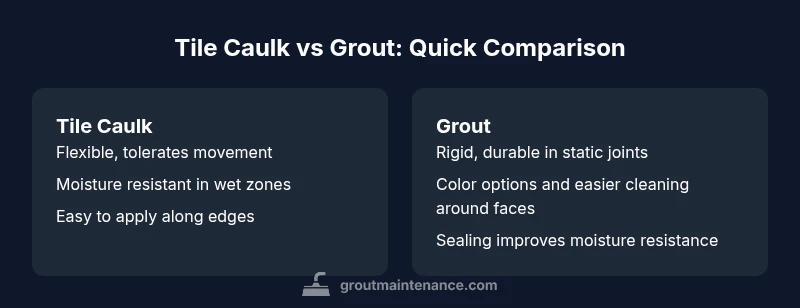
The short answer is tile caulk vs grout are not interchangeable; each serves a different job in tile joints. Caulk (typically silicone) seals edges with movement, like showers and countertops, offering high water resistance and flexibility. Grout (cement-based) forms a rigid, stain-resistant joint for static tiles in floors or backsplashes, but requires sealing and maintenance to prevent cracking.
The Core Roles: What Each Material Does
In tile installations, two main products dominate the joints: tile caulk and grout. While both are used to seal or fill joints, tile caulk vs grout perform fundamentally different jobs. This section lays the groundwork: caulk is a flexible sealant designed to accommodate movement and moisture at corners and expansion joints, often silicone-based. Grout is a cementitious filler that creates a hard, uniform surface between tiles and provides structural rigidity. Understanding these roles is essential for making informed decisions in kitchens, bathrooms, and showers. According to Grout Maintenance, understanding how caulk and grout behave under moisture and movement helps homeowners avoid common failures. The choice is not about which is more durable overall, but about which material best fits the joint’s function, exposure, and expected maintenance over time. For new renovations, map each joint to its primary task: movement vs static filling, water exposure, and how much cleaning and sealing you’re willing to perform. A proper plan minimizes rework and reduces the chance that you’ll end up replacing large sections later. By recognizing the distinct strengths of caulk and grout and reserving each for its ideal role, you can achieve durable finishes that both look good and stand up to daily use. The practical effect is fewer call-backs and a cleaner overall tile installation. In the end, choosing tile caulk vs grout is about aligning material properties with joint demands to achieve reliable performance.
Comparison
| Feature | tile caulk | grout |
|---|---|---|
| Water resistance | High (caulk) | Moderate (grout, when sealed) |
| Flexibility/movement tolerance | High (caulk) | Low (grout) |
| Best working joints | Edges, corners, wet zones | Static joints between tiles |
| Aesthetic options | Many colors in silicone caulk; clear options | Color-matched grout options; texture variety |
| Application complexity | Easier at edges and irregular profiles | More prep and mixing; needs sealing |
| Durability under wear | Variable; depends on maintenance | Typically robust in static joints when sealed |
| Maintenance needs | Periodic replacement; mold checks in wet areas | Sealing and routine cleaning; resealing over time |
| Typical cost | Lower upfront cost for caulk | Higher upfront cost for grout and sealant |
Pros
- Caulk tolerates movement, reducing crack risk in dynamic joints
- Superior water resistance in wet areas
- Easier to apply along irregular edges and corners
- Good color matching options for a seamless look
What's Bad
- Caulk may degrade faster in heavy moisture zones and require replacement
- Grout can crack if movement occurs and may require more maintenance
- Sealing grout adds maintenance steps and costs
Hybrid approach is often the best path
Caulk handles movement and moisture at edges while grout provides durable, static joints. A hybrid strategy optimizes durability, aesthetics, and maintenance for most tile installations.
Got Questions?
What are the main functional differences between tile caulk and grout?
Caulk is a flexible sealant designed to absorb movement and seal wet edges; grout is a hard filler that fills tile joints and supports the tile surface. Both have their uses; choose based on movement, moisture exposure, and maintenance preferences.
Caulk handles movement and moisture best, while grout provides rigidity for static joints; both have proper places in tile work.
Can I replace grout with caulk in existing joints?
In most cases, not across the board; caulk can be used at edges where movement or water exposure is high, but grout is needed for broad flat joints to maintain tile alignment. Replacing requires removing existing grout and applying caulk in appropriate locations.
Usually you should not replace all grout with caulk. Use caulk for edges and grout for static joints, and take out old grout first.
How long does tile caulk last in a shower?
Quality silicone caulk can last several years in a shower with proper maintenance, but it will eventually degrade due to moisture, mold, and movement. Inspect yearly and replace when signs of wear appear.
A good silicone caulk in a shower lasts several years if you keep it dry and clean.
Is sealed grout better than unsealed grout?
Sealed grout resists moisture and staining more, but sealing does not make grout waterproof. Regular maintenance and resealing help keep color and porosity low. If you have hard water or frequent splashes, sealing is advisable.
Sealed grout resists moisture better, but you still need to clean and reseal periodically.
What is the best practice for kitchens and backsplashes?
For kitchens, use grout on static joints and caulk at vertical transitions or areas with movement or heat exposure. This hybrid approach provides durability and reduces cracking risk in high-use areas.
In kitchens, combine grout for flat joints and caulk at edges where movement happens.
Do caulk and grout require sealing?
Grout—yes, typically sealing helps; caulk—only some types require sealing. Silicone caulk itself is a waterproof sealant, while some acrylic caulks may need sealing to prevent moisture infiltration, depending on the product.
Grout usually needs sealing; many caulks are waterproof by design, but check your product instructions.
The Essentials
- Identify joints with movement or moisture and assign caulk
- Reserve grout for static joints to maximize longevity
- Hybrid installations often deliver best results
- Plan maintenance cycles for caulk replacement and grout sealing
- Choose color and finish to match tile and joints